# Ancient Footprints Reveal Paranthropus boisei Traveled in Groups 1.4 Million Years Ago
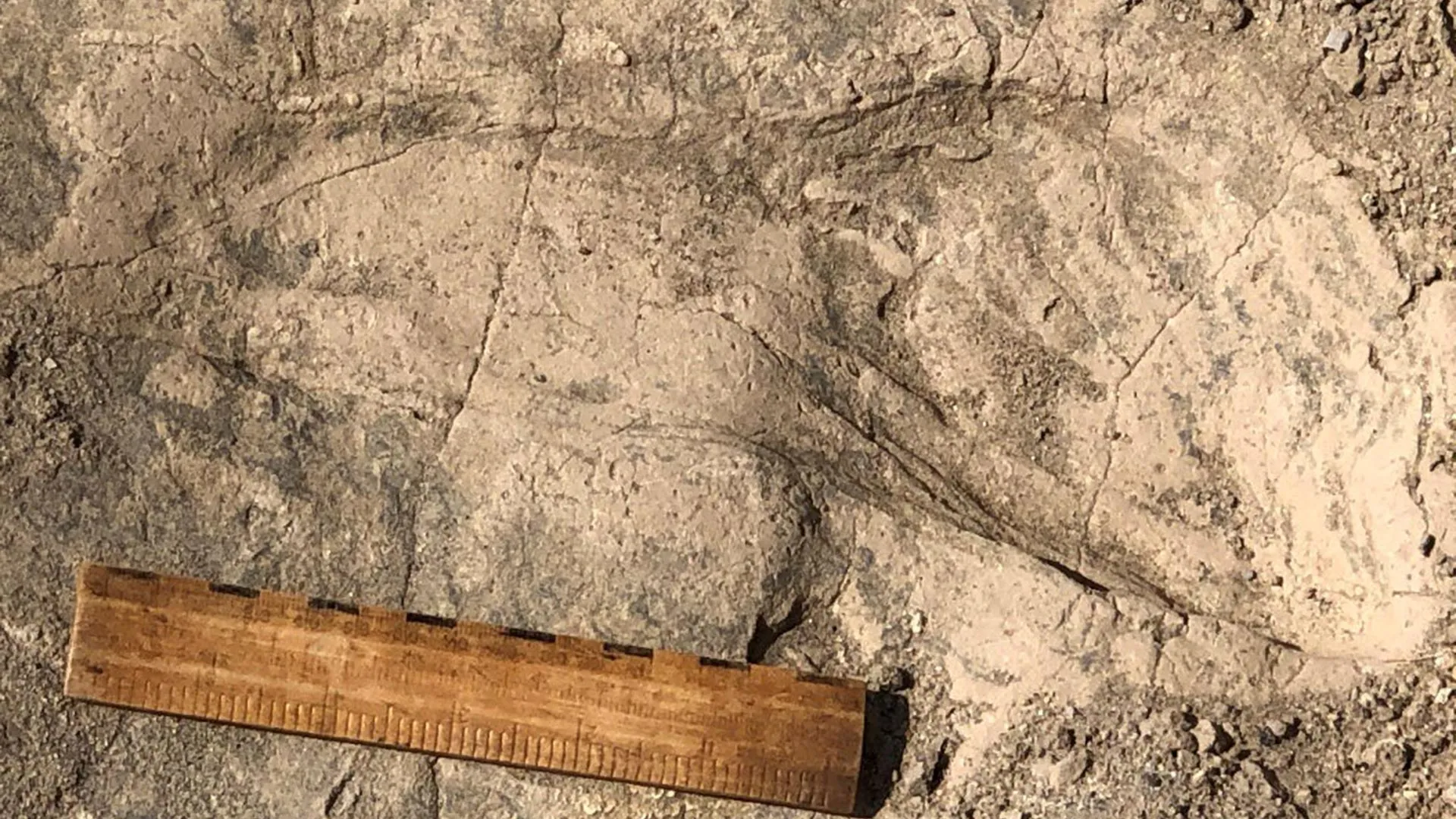
Fossilized footprints discovered in Kenya document what may be one of the oldest records of group travel among human ancestors. The tracks, preserved in volcanic ash from 1.4 million years ago, show that at least eight Paranthropus boisei individuals walked together across the landscape, offering rare behavioral evidence about these extinct relatives.
The finding challenges previous assumptions about Paranthropus boisei social structure and body size. Some individuals who made the footprints reached surprisingly large proportions, comparable to modern humans in stature. This contradicts earlier estimates suggesting these creatures were uniformly smaller and more ape-like than previously documented.
Paranthropus boisei roamed Africa between roughly 2.3 and 1.2 million years ago. They possessed robust skulls and powerful jaws adapted for processing tough plant material, earning them the nickname "Nutcracker Man." However, their social behaviors remained largely mysterious because direct fossil evidence of group activity is extremely rare in the paleoanthropological record.
The Kenyan footprints provide that missing window. Researchers identified multiple track patterns in the same sediment layer, indicating these individuals traversed the terrain together rather than leaving solitary prints separated by time. The variation in footprint size suggests a mixed group, possibly including adults and younger individuals or males and females of different sizes.
This discovery carries weight beyond simple documentation. If Paranthropus boisei did indeed travel collectively, it indicates a level of social coordination and group cohesion that researchers had not definitively established. Modern humans and some other primates travel in family units or larger groups for protection, resource sharing, and social bonding. Finding evidence that Paranthropus boisei engaged in similar behavior pushes back the timeline for when such social complexity emerged in the human lineage.
The footprint evidence also complicates the picture of body size diversity within the species. Dental and skeletal remains suggested Paranthropus boisei exhibited sexual dimorphism, with males notably larger than females. The footprints now provide direct locomotion evidence supporting this variation, and some individuals approached sizes that blurred the distinction between Paranthropus and contemporary Homo species.
Preserved footprints offer advantages over skeletal remains. Bones tell us what bodies looked like; footprints reveal how organisms actually moved and interacted with their environment. Weight distribution, stride length, and walking speed all appear in track geometry. The Kenyan site captured these dynamics in a single moment frozen by volcanic activity, essentially creating a snapshot of ancient behavior.
Dating the prints proved critical. The team used potassium-argon radiometric dating on the volcanic ash layer, establishing the 1.4-million-year timeline with reasonable precision. This places the tracks squarely within the Paranthropus boisei range and during a period when early Homo species also occupied Africa, making the group dynamics question even more interesting.
Future research may uncover additional track sites or refine understanding of whether such group travel represented normal behavior or an unusual circumstance. The discovery invites paleontologists to search more deliberately for footprint evidence at other African sites, potentially revealing more about daily life among our ancient relatives.