# Chimpanzees in West Africa Maintain Rock-Throwing Tradition at Sacred Trees
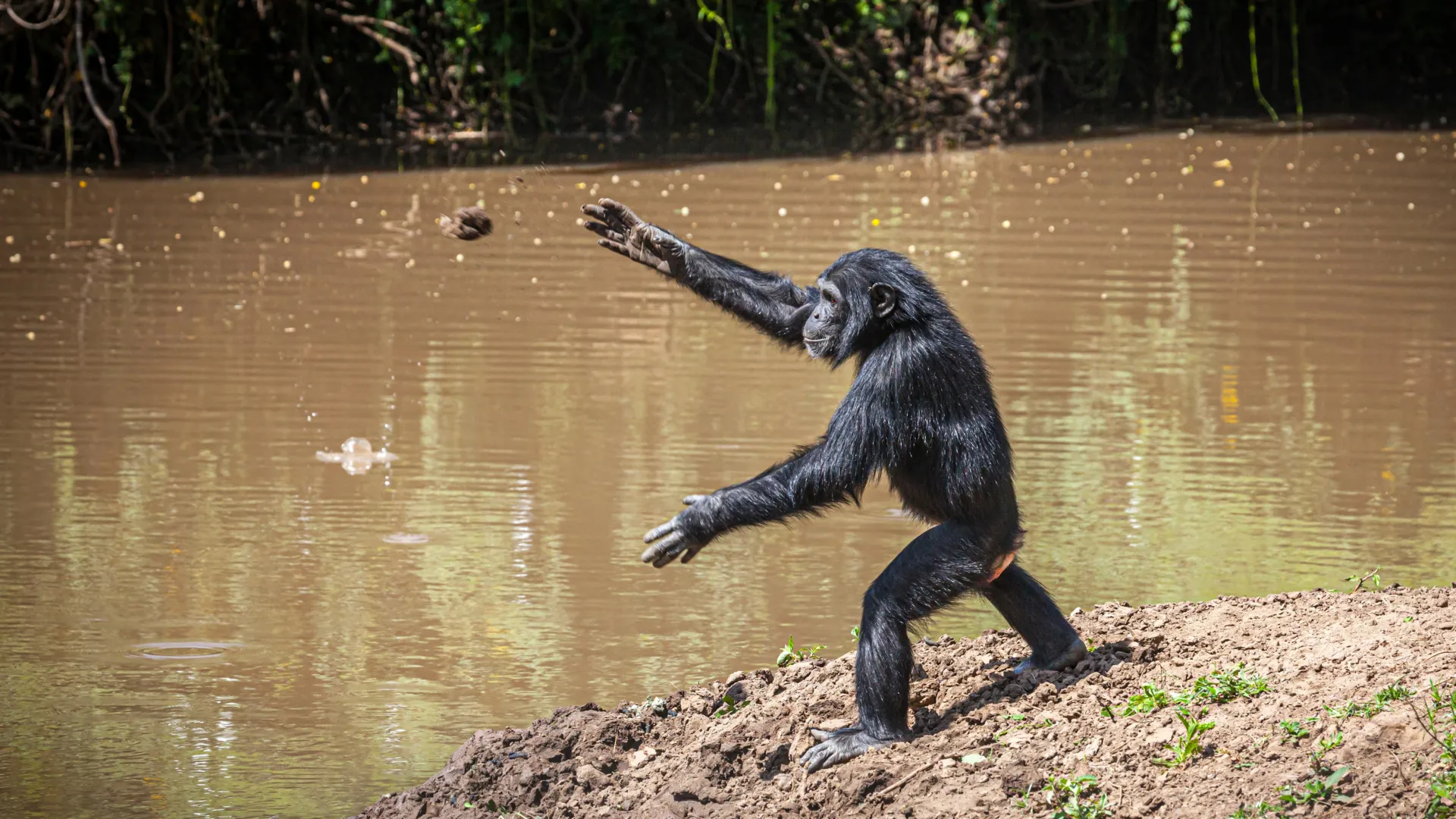
Chimpanzees in West Africa have developed a persistent habit of hurling rocks at specific trees, accumulating stone piles that persist for over a decade. This behavior, documented through camera traps and audio recordings, suggests a learned cultural practice rather than instinctive activity, raising questions about the cognitive and social dimensions of primate behavior.
The observations come from ongoing research in West African chimpanzee populations, where researchers have identified consistent rock-throwing patterns directed at particular trees. These accumulated stone piles serve as physical evidence of repeated visits and coordinated action by multiple individuals. The durability of these sites indicates that chimpanzees return to the same locations repeatedly, suggesting the trees hold specific meaning for the animals.
Researchers currently investigate three primary hypotheses about the function of this behavior. The first suggests the activity serves as a form of communication between group members, with the acoustic impact of stones striking trees conveying information across the landscape. The second posits that rock-throwing represents territorial signaling, allowing chimpanzees to mark and maintain boundaries with neighboring groups. A third explanation proposes a more symbolic or ritualistic dimension, potentially linked to social bonding or group identity.
The use of camera traps and audio recording equipment has become essential to understanding who participates in stone-throwing and how other chimpanzees respond to it. These technologies allow researchers to observe behavior patterns without direct human presence, which could alter natural actions. Acoustic recordings capture the sounds produced during throwing events, providing data on frequency, intensity, and timing of activities.
This behavior distinguishes itself from other known chimpanzee tool use primarily through its apparent lack of immediate practical utility. Unlike tool use for extracting termites or cracking nuts, rock-throwing at trees produces no food reward or obvious survival advantage. This disconnect from functional necessity strengthens the cultural interpretation, suggesting chimpanzees transmit this behavior socially across generations rather than developing it independently.
The observation aligns with broader scientific understanding of chimpanzee cultural diversity. Different populations across Africa exhibit distinct tool-use practices, social rituals, and foraging techniques that vary by geography and group. These variations represent genuine cultural traditions maintained within communities, not merely individual variations in behavior.
The research contributes to debates about the cognitive capacities of non-human animals. Sustained, directed activity without immediate reward requires planning, memory, and motivation that extends beyond basic survival instincts. The persistence of the behavior across multiple individuals and extended timeframes demonstrates social learning and cultural transmission comparable to human practices.
Ongoing data collection will reveal patterns about which individuals initiate rock-throwing sessions, whether specific age or sex groups predominate, and how the behavior spreads through populations. Seasonal variations may also emerge, potentially linking the activity to breeding cycles or other temporal biological rhythms.
This research expands understanding of chimpanzee cognition and social complexity, revealing that primate cultures encompass behaviors that serve psychological or social functions beyond immediate ecological necessity. Such findings reshape how scientists conceptualize the divide between human and animal behavior, demonstrating that cultural practices and symbolic activity exist across the primate order.