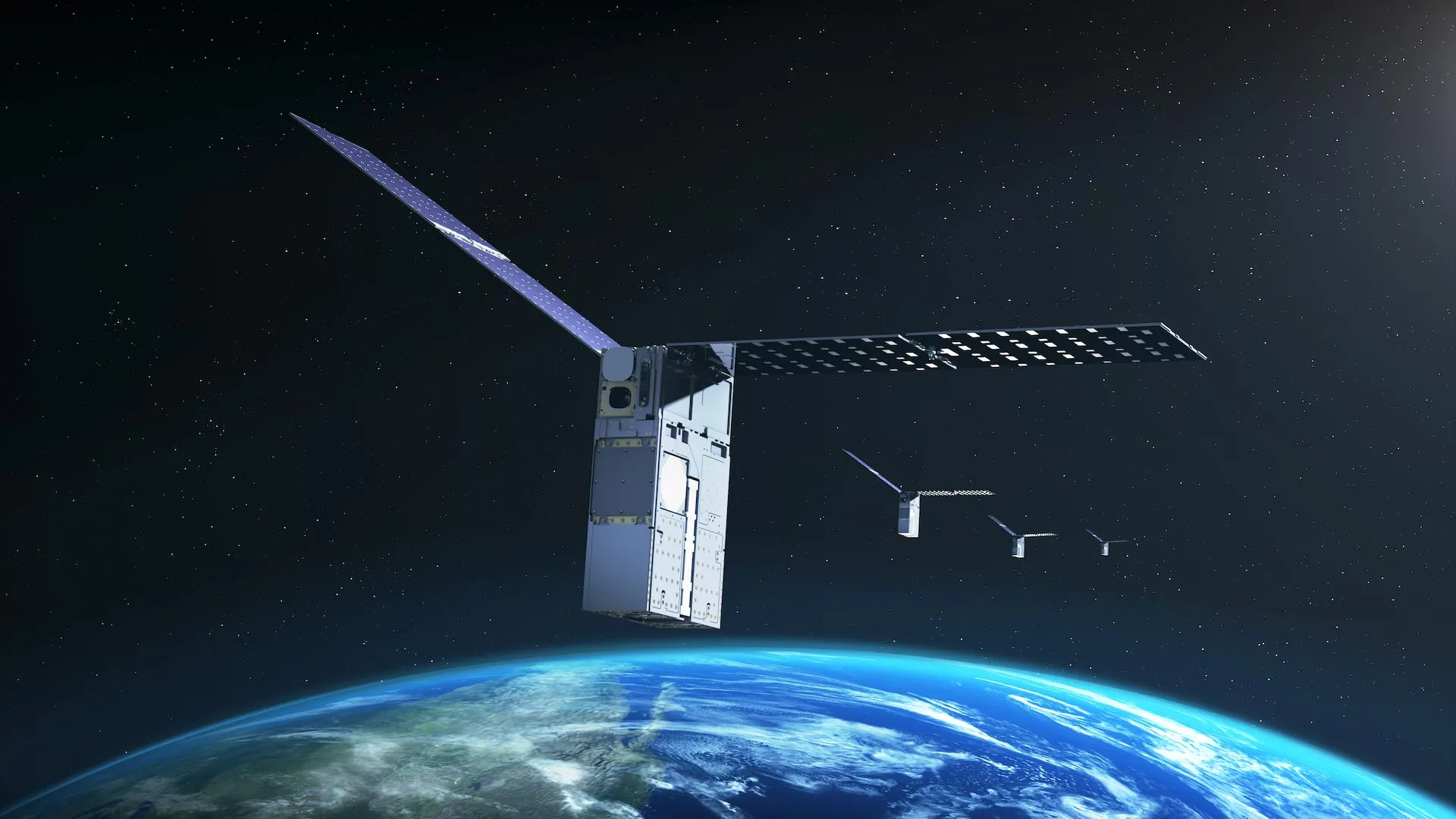
NASA researchers have demonstrated a novel navigation system that allows orbiting spacecraft to determine their position and trajectory by identifying other satellites and debris as natural landmarks, eliminating dependence on ground-based GPS signals.
The system, called FALCON, completed its inaugural test over a three-day period and autonomously refined the orbital measurements of over 200 space objects in Earth orbit. The capability addresses a critical challenge in space operations: GPS signals weaken or disappear entirely at high altitudes and in certain orbital regimes, leaving spacecraft without reliable position data.
FALCON uses onboard cameras and image processing to identify nearby satellites and debris fragments, calculating distances and angles to these objects with sufficient precision to determine the spacecraft's own location and velocity. The system then transmits corrected orbital data back to Earth, improving the accuracy of space object catalogs maintained by NASA and the Space Force's Space Operations Command.
This autonomous approach offers several operational advantages. Spacecraft no longer require constant communication with ground stations or GPS constellations to maintain accurate positional awareness. The system proved capable of refining orbits for objects ranging from large operational satellites to smaller debris pieces, a feat that typically required laborious ground-based radar tracking or manual analysis.
The test results carry implications for space traffic management, a growing concern as the number of satellites in low Earth orbit accelerates. Companies like SpaceX, Amazon, and others are deploying megaconstellations containing thousands of satellites. Better orbital knowledge reduces collision risks and helps coordinate increasingly crowded orbital zones. Accurate debris tracking also supports space situational awareness efforts.
FALCON's demonstration occurred during a period of heightened focus on space sustainability. The Department of Defense and NASA have jointly emphasized the need for improved orbital tracking as orbital debris populations grow and operational satellite numbers increase. Defunct satellites and spent rocket stages now number in the hundreds of thousands, creating collision hazards for active spacecraft.
The system's ability to work autonomously without human intervention or ground-based infrastructure proves particularly valuable for deep space missions or spacecraft operating beyond low Earth orbit, where GPS signals prove unreliable or absent entirely. NASA has not disclosed which spacecraft carried the FALCON system or whether additional orbital platforms will receive it.
The technology also demonstrates practical applications for future autonomous space operations. As NASA and commercial entities pursue missions to lunar orbit and beyond, spacecraft must navigate independently without relying on Earth-based infrastructure. FALCON represents an incremental step toward fully autonomous deep space navigation capabilities.
Researchers have not released detailed technical specifications about FALCON's accuracy thresholds or computational requirements. Future development work likely will focus on scaling the system for broader deployment across NASA's spacecraft fleet and evaluating performance in different orbital environments. The test results suggest the approach merits investment in operational implementation across both government and commercial satellite operators.