# Ancient Fossil Reveals Insects' Gradual Path to Land
Insects did not leap from water to land in a single evolutionary bound. Instead, a newly discovered 324-million-year-old fossil shows that early insects spent an extended period living in both environments, gradually shedding their aquatic traits before fully conquering terrestrial ecosystems.
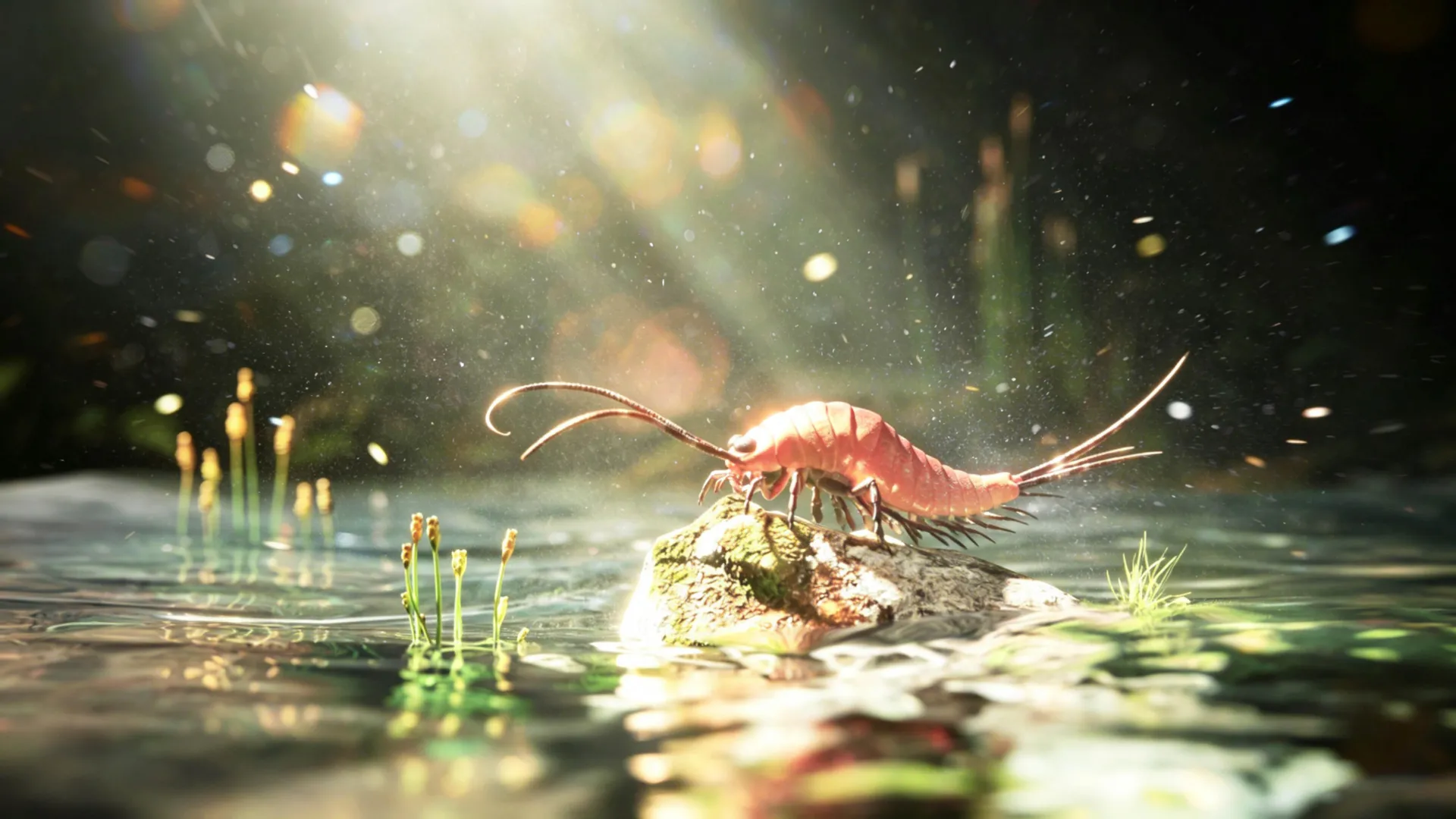
The fossil reveals a species that retained paddle-like abdominal limbs, structures that functioned in water but became vestigial as insects evolved into the six-legged forms we know today. This discovery fills a critical gap in the evolutionary record, demonstrating how one of nature's most successful animal groups made the transition from ocean to land.
The specimen dates to the Carboniferous period, an era when amphibious creatures dominated freshwater environments. Researchers identified this ancient insect as part of a lineage that persisted in a semi-aquatic state far longer than previously understood. The paddle-like appendages suggest these early insects still relied on water habitats, using their abdomens for swimming even as they developed other adaptations for life on shore.
Modern insects possess six legs and lack abdominal limbs entirely. The newly identified fossil demonstrates an intermediate stage where insects retained ancestral aquatic features while gradually acquiring terrestrial capabilities. This amphibious phase likely lasted millions of years, providing time for the neural, muscular, and skeletal systems to reorganize around a legs-only locomotion strategy.
The evolutionary pressure to remain partially aquatic made sense given the ecosystem of the Carboniferous period. Terrestrial environments offered new food sources and reduced predation from larger aquatic predators, yet aquatic habitats still provided refuge and abundant resources. By maintaining the ability to thrive in both settings, early insects maximized their survival odds during environmental fluctuations.
Scientists have long debated whether major transitions in animal evolution occur rapidly or gradually. This fossil supports the gradualist view, at least for insect terrestrialization. The specimen reveals that natural selection favored flexibility over specialization during this critical period. Insects that could exploit both water and land resources outcompeted purely aquatic or purely terrestrial competitors.
The Carboniferous period offers exceptional conditions for fossilization due to widespread coal swamps and lakes. These environments preserved organisms with remarkable detail, allowing researchers to observe soft tissue impressions and appendage structure. The paddle-like abdominal limbs visible in this specimen would vanish in the fossil record within a few million years, making this discovery a rare window into evolutionary transition.
Understanding how insects conquered land illuminates broader patterns in evolution. Other major groups, including amphibians and tetrapods, similarly relied on amphibious phases to establish themselves in new environments. The insect fossil demonstrates that successful invasions of new habitats typically require intermediate forms that maintain ties to ancestral environments.
Modern insects comprise over a million described species, occupying nearly every terrestrial and freshwater habitat on Earth. Their success traces directly to innovations forged during the Carboniferous. The ability to fly, which appeared shortly after full terrestrialization, amplified their dominance. But the foundation rested on the patience of their ancestors, who spent millions of years learning to walk on land while keeping one foot in the water.