# Deep Earth Forces Explain Why Antarctica Froze Before the Arctic
The question of why Antarctica's ice sheets formed roughly 14 million years ago, while the Arctic remained ice-free for another 10 million years, has puzzled climate scientists for decades. New research now points to a surprising answer: slow-moving waves of hot rock rising from deep within Earth's mantle.
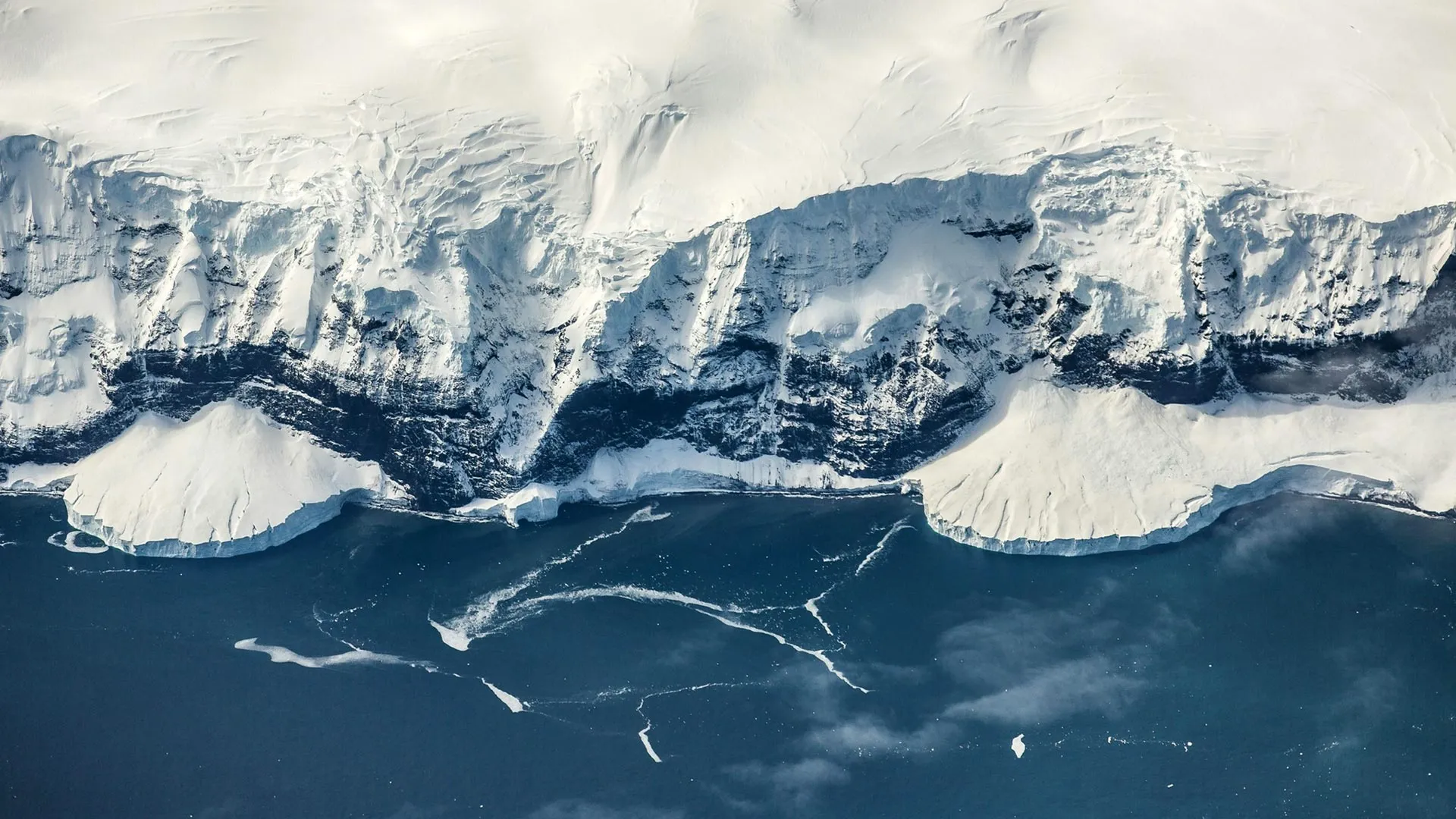
These mantle plumes gradually lifted East Antarctica over millions of years, pushing the continent higher and creating the elevated terrain necessary for permanent ice to accumulate. The mechanism works through a process called "dynamic topography," where convection currents in Earth's interior reshape the planetary surface over geological timescales.
The research team found that as East Antarctica rose, the newly formed mountains and high plateau created an environment cold enough for snow and ice to persist year-round, even during warmer global conditions. This topographic elevation proved decisive. When glaciers finally established themselves, their white surfaces began reflecting solar radiation back into space, amplifying the cooling effect through a feedback loop known as the albedo effect. This self-reinforcing process locked in the ice sheets for millions of years.
The Arctic, by contrast, remained lower in elevation during this period. Without similar mantle-driven uplift, the Arctic ocean and surrounding landmasses stayed at altitudes where temperatures remained too warm for permanent ice formation, despite operating under the same global climate conditions as Antarctica.
This discovery bridges a long-standing gap in paleoclimatology. Scientists have long recognized that global temperatures alone cannot explain regional ice sheet distribution. The finding shows that solid Earth processes interact with climate in ways previously underestimated. The deep interior of our planet, constantly churning with heat and convection, directly influences habitability at the surface.
The research also clarifies why Antarctica developed its massive ice sheets so much earlier than the Arctic. The mantle dynamics beneath Antarctica created the topographic prerequisite for glaciation. The Arctic lacked this geological advantage during the same period, meaning colder global temperatures were necessary before ice could establish there.
This work carries implications beyond pure geology. Understanding how Earth's interior influences climate and habitability improves models of past climate change and helps predict future ice sheet behavior. As the planet continues warming, knowing how mantle dynamics interact with ice sheets could refine projections of sea level rise and ice stability in polar regions.
The timing of Antarctic glaciation remains a baseline for paleoclimate research. Scientists now recognize that when examining ice sheet formation on Earth or potentially on other planets, geological structure matters as much as atmospheric composition. Elevation shapes climate outcomes in ways that atmospheric models alone cannot capture.
This integration of mantle dynamics with surface climate represents a shift toward more comprehensive planetary science. Researchers increasingly view Earth as a coupled system where deep processes and surface phenomena remain inseparably linked across geological timescales.