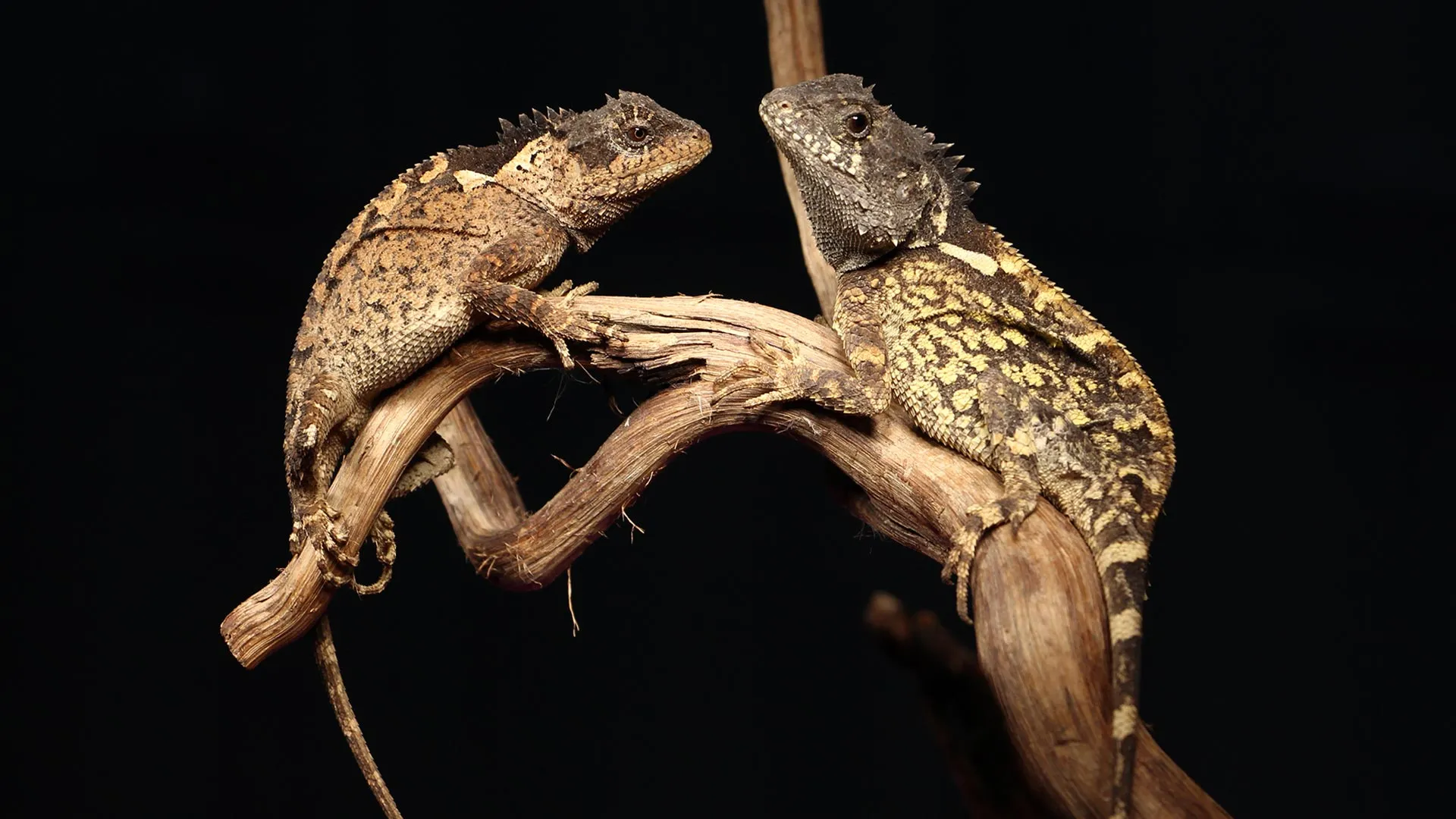
Researchers have identified a previously unknown species of lizard in Thailand's remote mountain forests and christened it Acanthosaura syrax, honoring the dragon character Syrax from HBO's "House of the Dragon."
The discovery represents a small but striking addition to Thailand's herpetological catalog. The yellowish mountain horned dragon inhabits only a narrow band of high-elevation forest terrain, making it one of Thailand's most geographically restricted reptile species. Its limited range and distinctive coloration mark it as genuinely novel to science.
The team documented the species' morphology and habitat requirements with sufficient detail to establish it as a discrete taxon. No journal citation accompanies this announcement, but the ScienceDaily report indicates the work proceeded through formal taxonomic channels. Mountain horned dragons belong to the genus Acanthosaura, a group of small, spiny-headed agamid lizards distributed across Southeast Asia. Most species occupy lowland or moderate elevations, making this high-altitude specialist an ecological outlier within its genus.
The naming choice reflects a broader trend in taxonomy where scientists draw from popular culture when christening new species. Previous examples include dinosaurs named after fictional characters and insects bearing names from celebrities. The Syrax reference works on two levels: the character itself embodies the qualities of a formidable dragon, while the fictional universe depicts dragon-human bonds that hinge on environmental stewardship and territorial preservation. This metaphorical alignment with conservation themes appears intentional.
The species' extreme endemism, confined to a narrow elevational band, creates both scientific opportunity and conservation urgency. Restricted-range species function as ecological indicators and often require targeted protection strategies. Researchers argue that this dragon could serve as a "flagship species" for mountain habitat conservation in Thailand, using its charismatic profile and rarity to galvanize broader protection efforts for cloud forests and montane ecosystems.
Thailand's montane regions face mounting pressure from agricultural expansion, logging, and climate-driven habitat shifts. Species confined to narrow elevation zones face particular vulnerability because they cannot easily shift their ranges to track changing temperatures and precipitation patterns. A warming climate could compress the suitable habitat band even further, squeezing this newly described species into an ever-tighter geographic box.
The discovery underscores how incompletely scientists understand Southeast Asia's biodiversity despite centuries of field research. Thailand alone harbors thousands of reptile species, many in remote or rarely surveyed regions. Each year brings descriptions of new endemic species, suggesting that substantial undocumented diversity persists in understudied mountain ranges and forest systems.
Conservation action for Acanthosaura syrax remains in early stages. No protected area status has been reported, though Thai wildlife authorities may incorporate the species into existing national park or wildlife sanctuary designations. Habitat mapping and population surveys would provide baseline data for monitoring long-term trends. International trade restrictions under CITES could extend additional protection if the species proves appealing to the reptile pet trade.
The Syrax dragon announcement demonstrates how taxonomy operates at the intersection of science and culture. Formal species description establishes the evolutionary and ecological reality of this lizard. The pop culture naming choice amplifies public attention and conservation interest. Together, they create momentum for protecting a creature most people never knew existed until now.