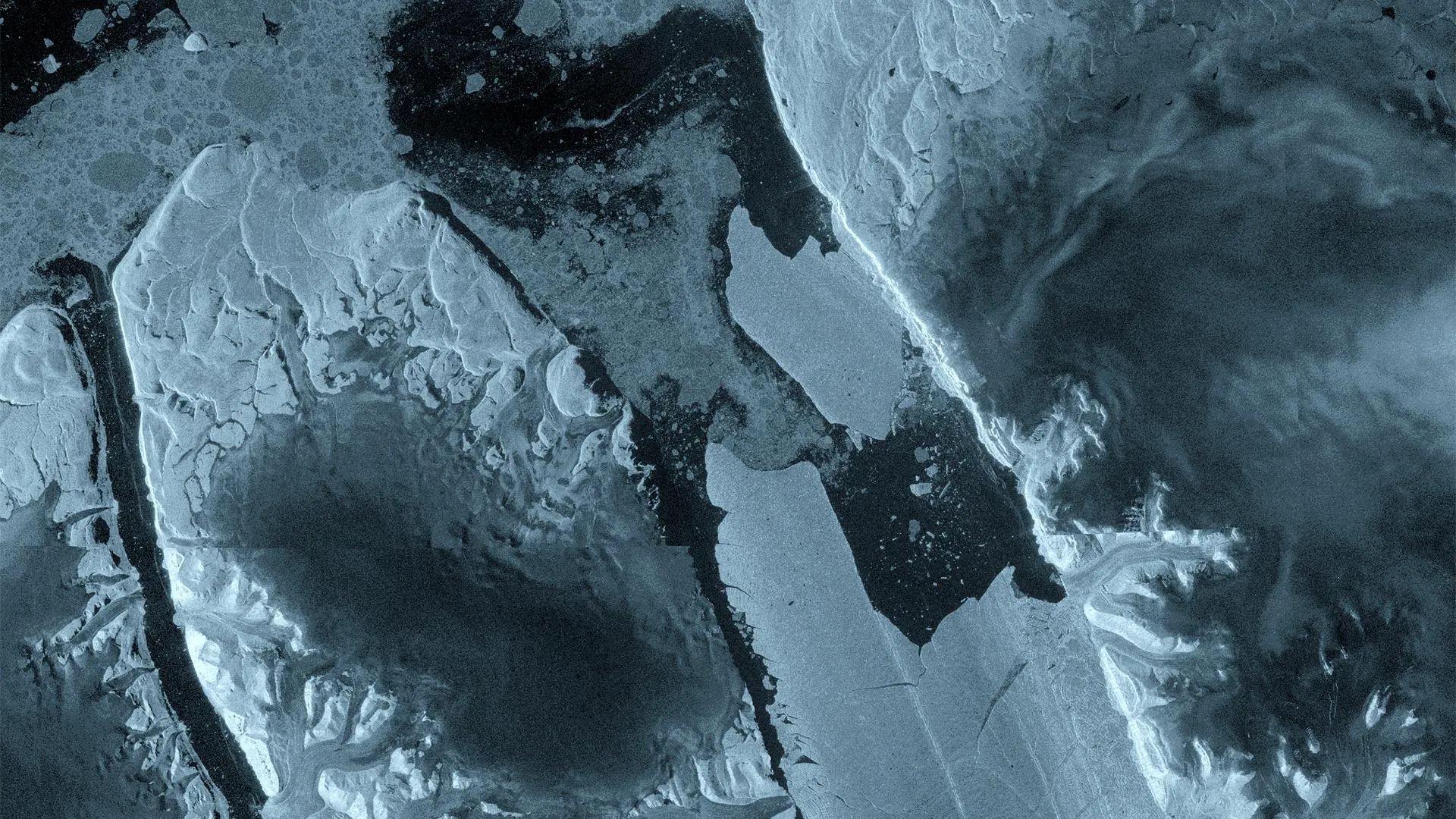
A massive ice island the size of Manhattan has detached from Greenland's Petermann Glacier, marking the largest calving event at the glacier since 2012. Satellites documented the fracture of the 76-square-kilometer slab in real time, tracking cracks that spread rapidly before the break occurred on August 4. Scientists monitoring the glacier warn that two even larger sections could eventually separate, posing potential risks to Arctic shipping routes as the fragments drift and disintegrate across the North Atlantic.
The Petermann Glacier, located in northwestern Greenland, regularly sheds icebergs through calving, but the pace and scale of recent events have accelerated. The August break represents a dramatic release of ice from a glacier already thinned and destabilized by warming Arctic waters. Research teams now face the challenge of tracking the drifting ice island as it fragments into smaller pieces that could threaten maritime traffic in one of the world's busiest emerging shipping corridors.
Petermann has a history of major calving episodes. A 2012 event produced a similar-sized fragment, and scientists note the current trajectory suggests the glacier may be entering a more active phase. The rapid spread of cracks before the August break provided advance warning but little opportunity for intervention. Satellites equipped with radar and optical sensors captured the process with unprecedented detail, allowing researchers to understand the mechanics of how massive ice shelves fail.
The broader context involves Greenland's accelerating ice loss. The island's glaciers are shedding roughly 280 billion tons of ice annually, a rate that has quadrupled since the 1990s. The Petermann Glacier sits particularly high on researchers' watch lists because of its connection to fjord systems that funnel warm Atlantic water directly beneath the glacier's floating shelf. This undercutting from below weakens the ice structure and triggers calving events.
The newly formed ice island will be catalogued and monitored by agencies tracking Arctic maritime activity. Large icebergs can pose navigation hazards and potentially disrupt shipping lanes that have become increasingly trafficked as Arctic sea ice retreats. Smaller fragments may spread across major shipping routes, requiring vessel operators to adjust courses and reduce speed. Insurance companies and maritime authorities factor iceberg probability into route planning and risk assessments.
Scientists emphasize the larger pattern. While individual calving events are dramatic and newsworthy, they reflect a glacier fundamentally out of balance. The Petermann is retreating, thinning, and shedding ice faster than accumulation from snowfall can replace it. The forecast of two even larger potential breakaways suggests the glacier has entered a destabilizing cycle where each loss of ice shelf reduces backpressure on the glacier's flow, allowing it to accelerate further and shed ice even more readily.
The August event underscores how Arctic ice dynamics have shifted from gradual, predictable processes to more abrupt, energetic transitions. Monitoring agencies will continue tracking both the drifting debris and the glacier's ongoing behavior. Understanding these calving mechanics helps researchers improve models predicting Greenland's future ice loss, a factor that directly influences global sea level rise projections.