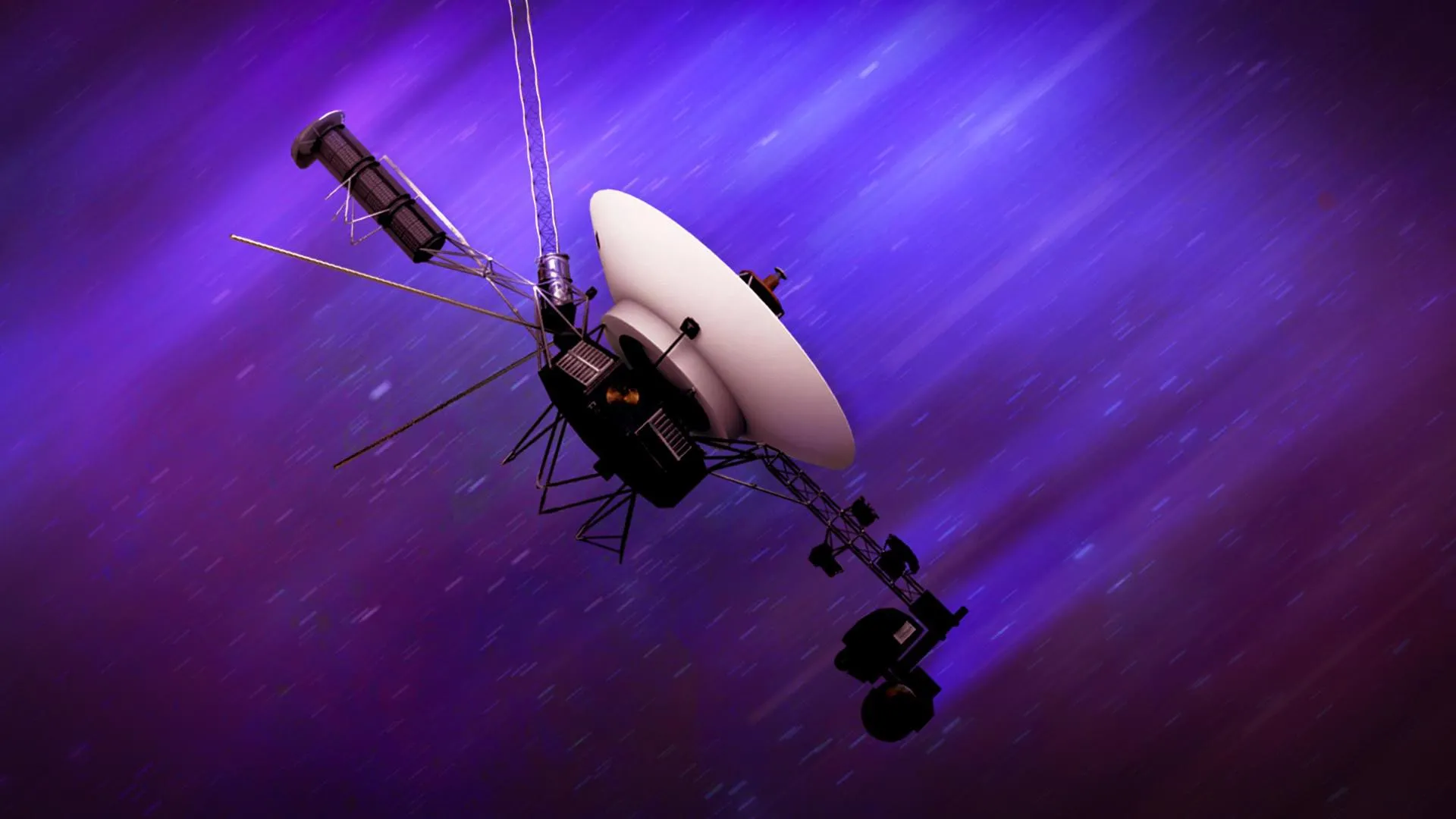
NASA engineers have extended the operational lifespan of Voyager 2 by executing a risky power-management operation they called the "Big Bang." The 47-year-old spacecraft, launched in 1977, was consuming power faster than its aging radioisotope thermoelectric generator could supply it.
The solution required engineers to simultaneously disable power-hungry instruments and systems while activating lower-power alternatives. The team had to maintain the spacecraft's internal temperature above the minimum survival threshold throughout the transition, a delicate balancing act given Voyager 2's distance of over 12 billion miles from Earth.
Voyager 2 remains the only spacecraft to visit Neptune and Uranus. It carries instruments studying the heliosphere, the bubble of solar wind surrounding our sun. As the spacecraft approaches the edge of interstellar space, losing it would eliminate humanity's only active probe transmitting data from the outer solar system.
The radioisotope thermoelectric generator that powers Voyager 2 produces electricity by converting heat from plutonium decay. This heat source degrades predictably over decades. NASA calculated the spacecraft would run out of power entirely by the early 2030s unless action was taken.
Engineers made the unprecedented decision to turn off nonessential systems and reroute power distribution across the spacecraft's three separate electrical buses. This required coordinating commands sent across 22.5 light-hours of communication delay. A miscalculation could have rendered the probe permanently inert.
The operation succeeded, buying Voyager 2 several additional years of functionality. Similar power-management strategies may now be applied to Voyager 1, its sister spacecraft, which continues transmitting data from even farther away.
Both Voyagers now face a gradual shutdown process over the coming decade. NASA has scheduled periodic power cutbacks to keep the probes operating as