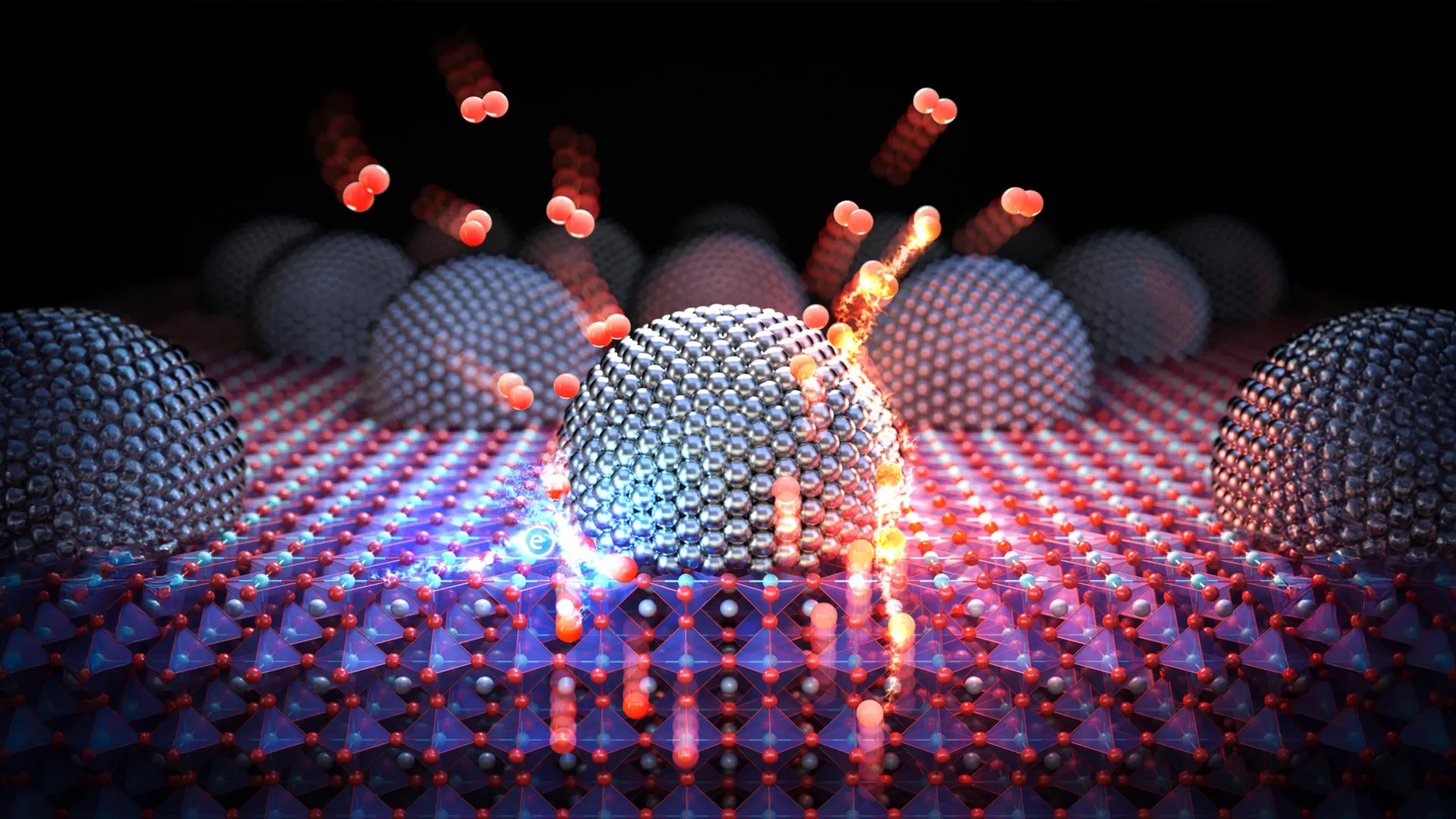
Researchers have identified a previously unknown switching mechanism in silver nanocatalysts that fundamentally changes how these materials function depending on the electrochemical direction of a solid oxide cell.
When a solid oxide cell generates electricity, the silver nanocatalyst performs its primary reactions at one location. When the same cell produces hydrogen instead, the catalyst automatically shifts its activity to a different site. This dynamic behavior had escaped detection until now.
The finding opens new pathways for engineering catalysts that work more efficiently across multiple applications. Clean power generation and green hydrogen production both rely on catalysts to speed up chemical reactions. A catalyst that intelligently adapts its behavior based on operational mode could substantially reduce energy losses in both processes.
Solid oxide cells operate at high temperatures and use ceramic electrolytes to move ions between electrodes. These systems show promise for reversible operation, meaning they can either convert hydrogen and oxygen into electricity or split water into hydrogen and oxygen. Silver nanocatalysts play a central role in these reactions, but their performance in dual-mode systems has remained suboptimal.
The discovery suggests that catalyst design has overlooked this hidden switching behavior. Rather than engineering a single optimal active site, researchers can now target designs that support beneficial switching. This adaptive approach mirrors how biological catalysts often shift their active regions to accommodate different chemical demands.
The research carries practical implications for hydrogen economy infrastructure. Green hydrogen production requires enormous energy inputs. More efficient catalysts could reduce the electricity needed to split water, making hydrogen a more viable fuel source. Simultaneously, improved catalysts for solid oxide fuel cells could increase their electrical output from the same amount of fuel.
Understanding this switching mechanism requires advanced characterization techniques. Researchers likely employed spectroscopy or microscopy methods to observe where reactions occur under different cell operating modes. Such detailed analysis of nanocatalyst behavior represents the foundation for rational catalyst design.
Further work must determine whether this switching behavior occurs in other