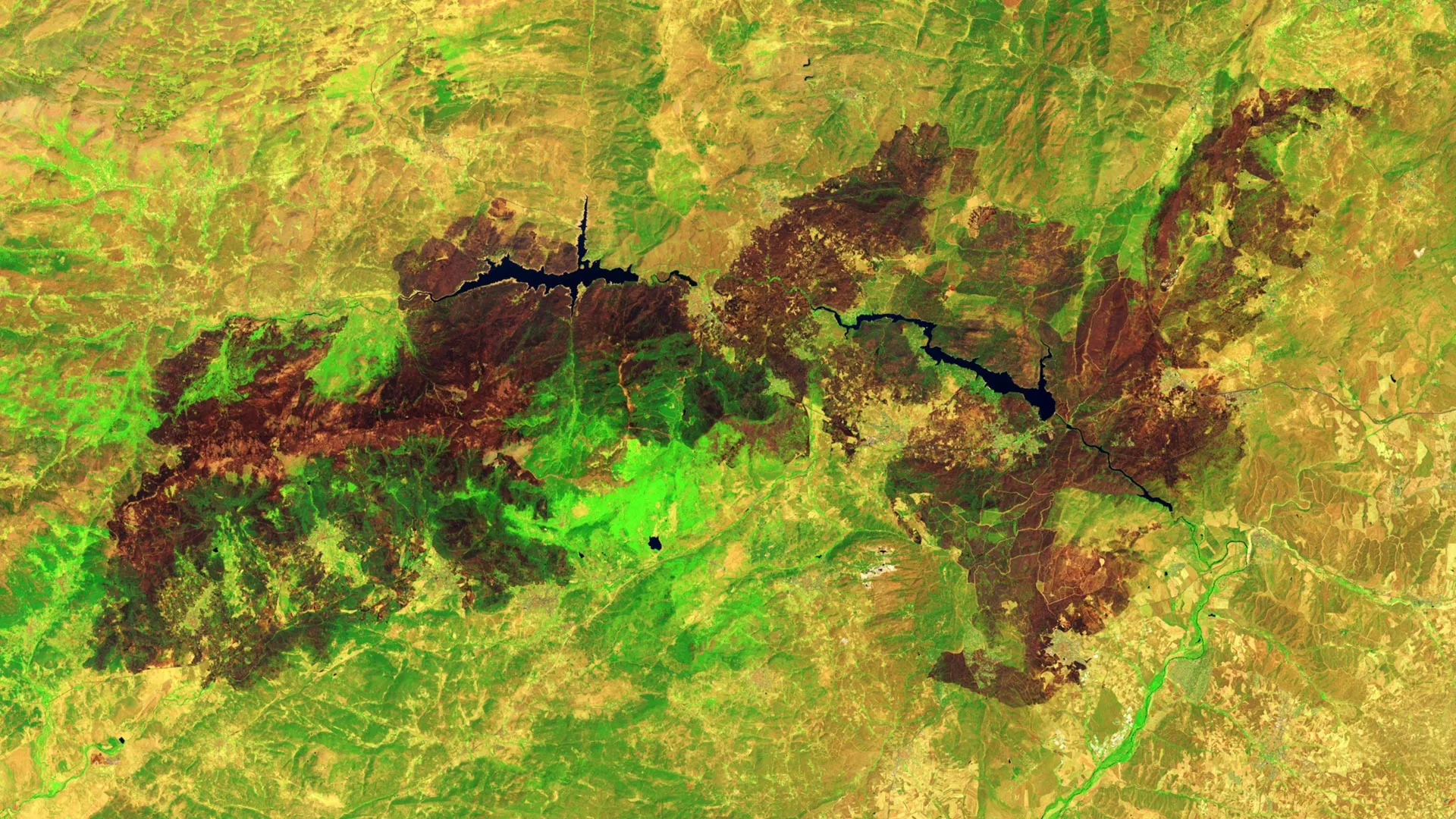
Extreme heat and drought conditions transformed European vegetation into explosive fuel this year, creating wildfires so intense they generated their own weather systems. In Spain, one blaze consumed an area roughly equivalent to New York City's total land area. A separate French fire produced a pyrocumulus cloud, a rare towering formation that develops when fire heat drives air high into the atmosphere.
These fires resulted from a dangerous convergence of factors. Unusually lush winter growth provided abundant fuel. Severe heat and prolonged drought dried that vegetation to tinder. Strong winds then accelerated fire spread across the landscape.
Pyrocumulus clouds represent one of the most extreme manifestations of fire intensity. When flames heat air rapidly, the air becomes buoyant and rises thousands of meters into the atmosphere. As the ascending air cools, moisture condenses into visible cloud structures. These formations can trigger their own wind patterns and sometimes produce lightning and precipitation, though rarely enough to help firefighting efforts.
The scale of these Spanish and French blazes reflects broader climate trends affecting Europe. Rising temperatures have lengthened fire seasons and increased the number of days with extreme fire danger. Mediterranean regions face particularly acute risk, as climate models project drier summers ahead.
These 2023 fires represent part of a pattern. Europe experienced record-breaking fire activity in 2022, and conditions continue deteriorating across much of the continent. Scientists attribute the intensification to climate change, which shifts atmospheric patterns and reduces summer precipitation in southern Europe.
The creation of fire-generated storms demonstrates how vegetation, weather, and climate interact at extreme scales. When fires become powerful enough to influence atmospheric conditions, they enter a new category of severity. Such phenomena remain relatively rare in documented history but may become more common if current warming trends persist.