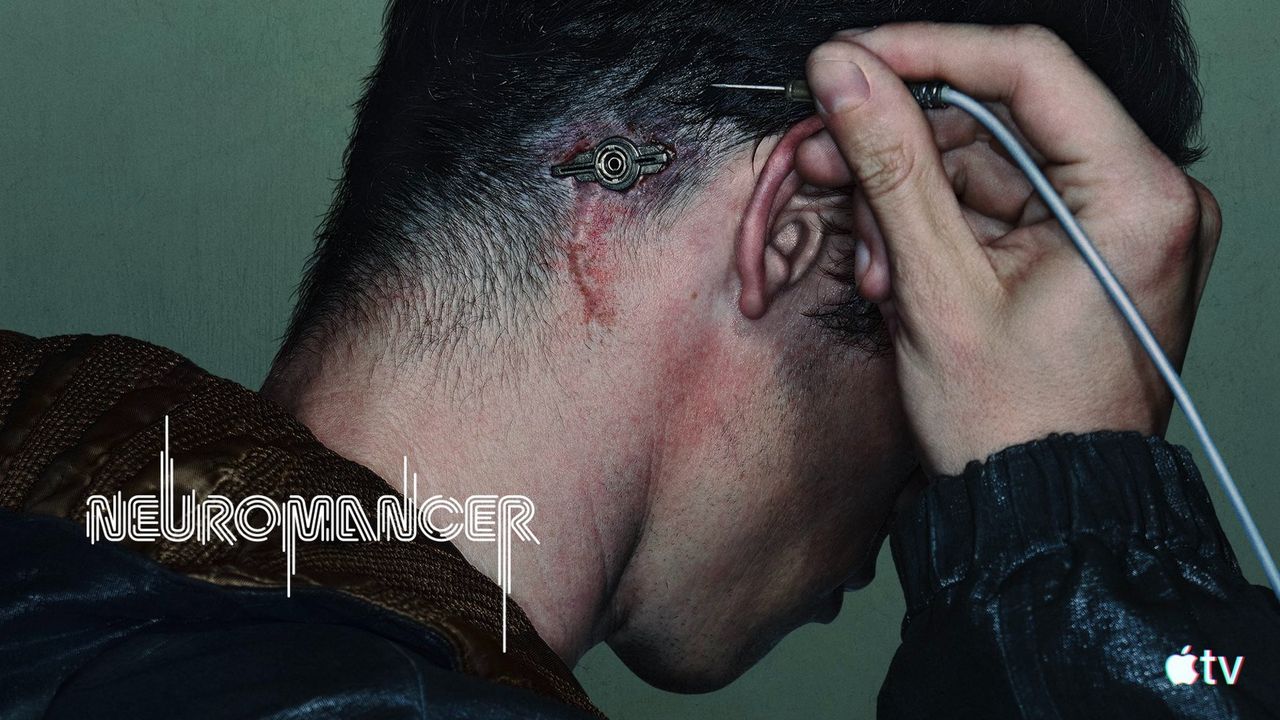
Apple TV is moving forward with a television adaptation of William Gibson's landmark 1984 novel "Neuromancer." The project released its first trailer, showcasing a cyberpunk aesthetic that brings Gibson's groundbreaking work to the screen for the first time with substantial production backing.
Gibson's novel stands as a foundational text in science fiction, introducing concepts like cyberspace and artificial intelligence that became central to how we imagine digital futures. The book follows Case, a washed-up computer hacker hired by a mysterious employer to pull off an impossible heist in a world of virtual reality, corporations, and sentient AI. Published in 1985, the novel won the Hugo, Nebula, and Philip K. Dick Awards, establishing Gibson as a visionary architect of cyberpunk aesthetics.
The adaptation has eluded successful production for decades despite numerous attempts. Previous efforts stalled in development hell, unable to capture Gibson's dense narrative and world-building with practical effects or earlier digital technology. Apple's involvement signals the streaming era finally has the technical sophistication and budget to realize this ambitious project.
The first trailer presents neon-soaked visuals, dystopian cityscapes, and digital interfaces that align with Gibson's 1980s vision of a near-future internet. The production appears committed to translating the novel's visual language directly to screen rather than updating the setting to contemporary times.
Gibson's influence on technology discourse cannot be overstated. He coined the term "cyberspace" in his 1982 short story "Burning Chrome" before expanding the concept in "Neuromancer." Tech pioneers and internet architects cite Gibson as a primary influence on their thinking about digital networks and virtual worlds. The novel's exploration of consciousness, corporate power, and technological transcendence shaped decades of sci-fi storytelling and genuine technological development.
Whether Apple's adaptation captures Gibson's philosophical depth