# Amateur Astronomer Discovers Quebec Crater Hidden for 390 Million Years
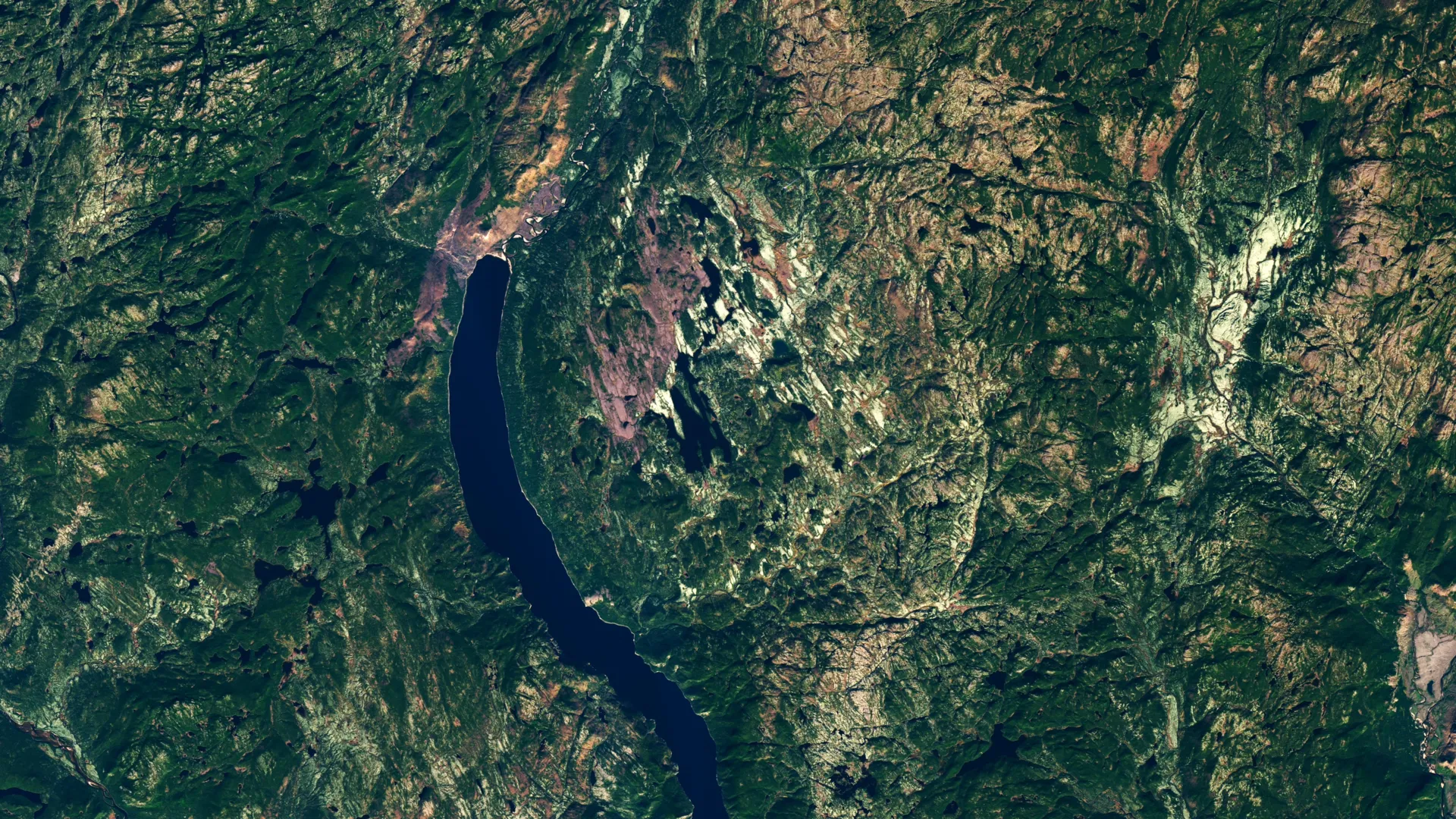
An amateur astronomer in Quebec stumbled upon one of Canada's most significant geological features while doing something mundane. Searching satellite maps for a camping location, the observer noticed a peculiar circular structure on the landscape. That casual discovery has now been confirmed as a 25-kilometer-wide impact crater dating back approximately 390 million years.
The crater remained geologically invisible to professional researchers despite its enormous size. Its discovery highlights how satellite imagery combined with curious observation can reveal Earth's hidden history. The amateur astronomer's find prompted scientists to investigate the site more thoroughly, launching a verification process that ultimately validated the crater's impact origin.
Geologists confirmed the crater's authenticity by identifying shatter cones within the rock formations. Shatter cones represent the telltale signature of impact events. When a meteorite or asteroid strikes Earth at extreme velocity, the resulting pressure waves create these distinctive cone-shaped fractures in bedrock. The presence of shatter cones removes any doubt about whether the circular structure resulted from an impact rather than geological processes like erosion or volcanic activity.
The crater formed during the Late Devonian period, a time when Earth's climate and ecosystems were undergoing dramatic transitions. Roughly 390 million years ago, the region that is now Quebec experienced a collision with a space object large enough to excavate a crater spanning 25 kilometers across. For context, that distance equals the width of many metropolitan areas. The impact released energy equivalent to multiple nuclear weapons detonating simultaneously.
Despite its massive size, the crater escaped detection for centuries. Erosion over hundreds of millions of years has obscured its original features. The terrain above the crater has been reshaped by glaciation during multiple ice ages. Vegetation and soil layers have accumulated across the structure. These factors combined to camouflage one of Earth's most dramatic geological events.
The discovery carries implications for understanding Canada's geological evolution and impact crater distribution globally. Scientists now recognize that significant impact structures can remain hidden beneath modern landscapes. This realization suggests that other unidentified craters may exist in less-explored regions worldwide. Satellite imagery technology continues to reveal geological secrets previously invisible to ground-based surveys.
The accidental nature of this find underscores how citizen science and amateur observation contribute to legitimate discoveries. The astronomer who noticed the unusual circular feature demonstrated that professional expertise alone cannot identify every geological landmark. Casual observers with access to satellite data and curiosity about their surroundings can make contributions to scientific knowledge.
The confirmation of shatter cones provides absolute geological proof of the impact origin. This validation transforms the discovery from an intriguing satellite anomaly into a recognized addition to Earth's catalog of impact craters. The crater now ranks among verified ancient impact structures, joining only a few hundred confirmed impact sites worldwide. Quebec's newest crater adds another chapter to our understanding of Earth's violent geological past and the ongoing threat posed by space objects.