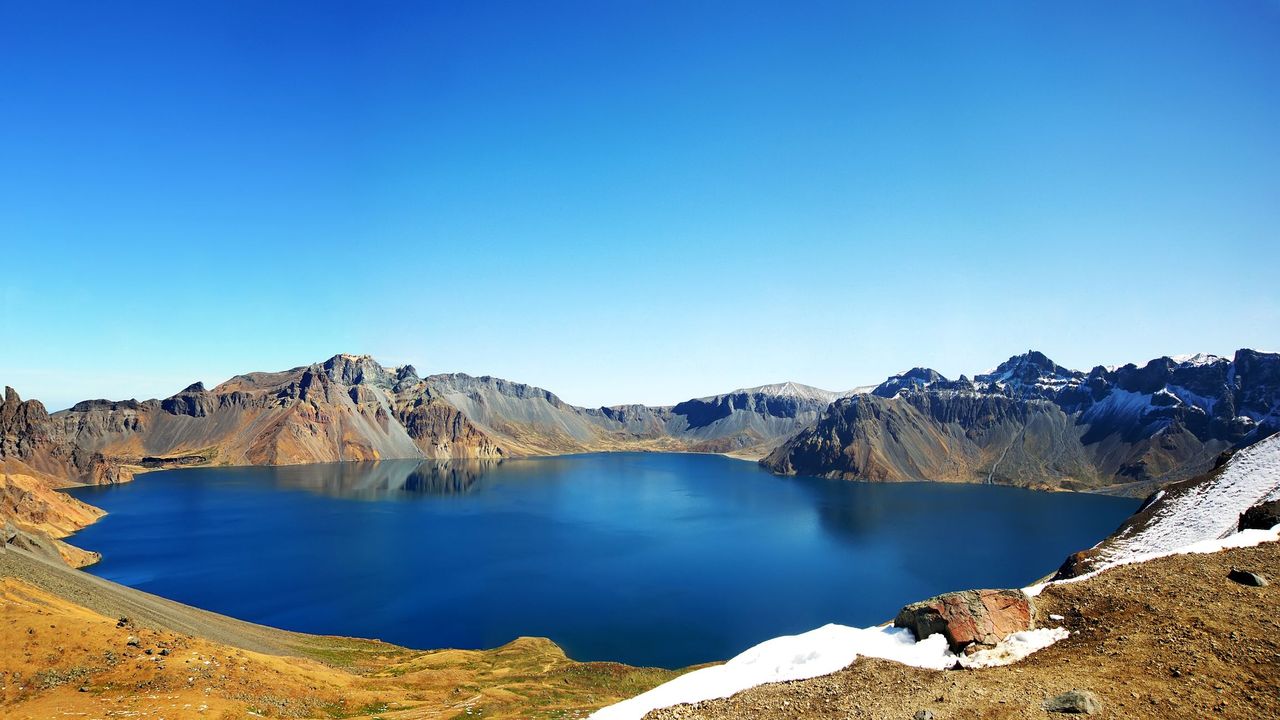
Heaven Lake, perched 7,200 feet above sea level on a volcanic summit, ranks as China's deepest lake and the highest and largest crater lake in Northeast Asia. The lake sits atop a massive volcano and straddles the border between China and North Korea, with the majority of its waters belonging to North Korean territory.
The lake's superlative status stems from its unique geography. Crater lakes form inside volcanic calderas after eruptions cease and water accumulates in the depression left behind. Heaven Lake's elevation makes it a rare phenomenon in the region, combining extreme altitude with significant depth. Its position on an active volcanic system distinguishes it from typical mountain lakes formed by glaciation or tectonic activity.
The geopolitical dimension adds complexity to scientific study of the site. The North Korean administration controls most of Heaven Lake's surface area, which complicates international research efforts and environmental monitoring. Access restrictions limit opportunities for Western scientists to conduct systematic studies on water chemistry, thermal activity, and biological ecosystems.
The volcanic foundation raises questions about the lake's thermal characteristics and the potential for ongoing geothermal activity beneath its surface. Crater lakes in volcanically active regions often exhibit unusual chemical compositions due to mineral-rich volcanic inputs and can support unique microbial communities adapted to extreme conditions.
Heaven Lake represents a convergence of geological extremes: elevation, depth, crater origin, and volcanic setting. Understanding such lakes contributes to broader knowledge of how volcanoes influence freshwater ecosystems and how crater morphology affects water stratification and circulation patterns.
The lake's location remains a logistical and diplomatic challenge for researchers. Future collaborative scientific ventures would require coordination between Chinese, North Korean, and potentially international institutions. Such partnerships could yield insights into how crater lakes in high-altitude volcanic zones respond to climate change and whether their ecosystems harbor novel organisms.