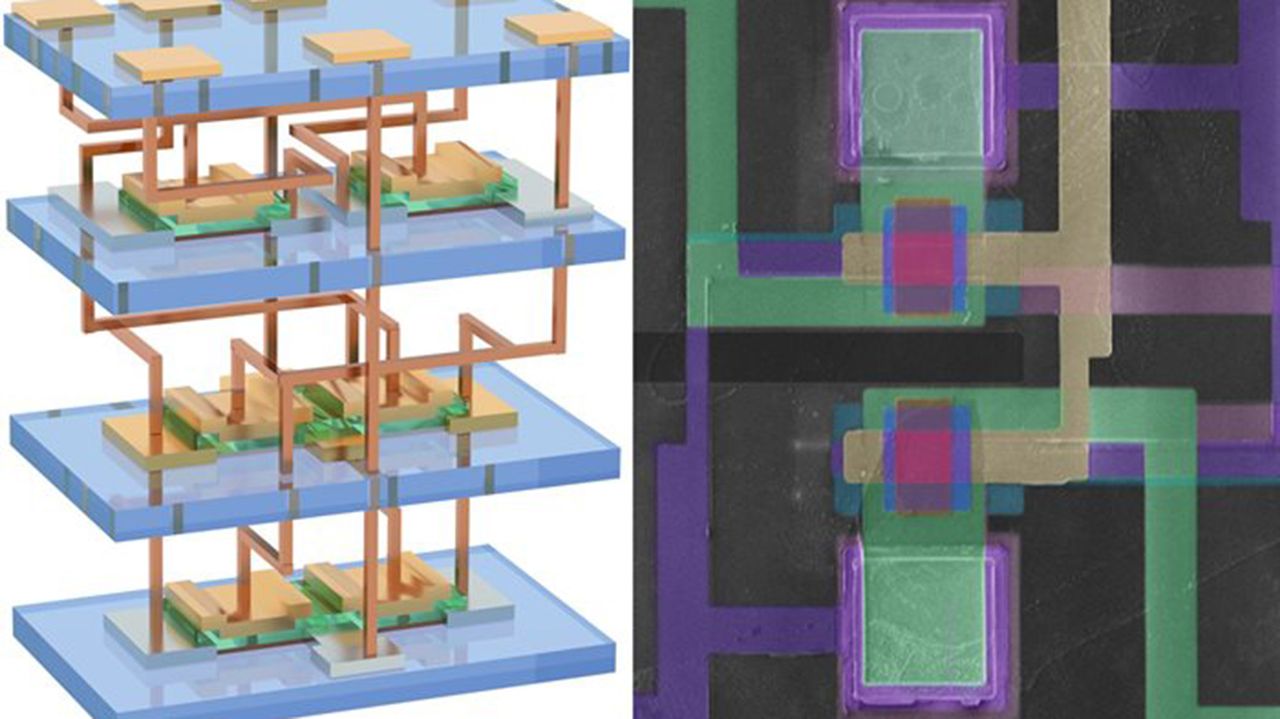
Engineers have developed a three-layer silicon chip architecture that prevents the thermal problems that previously plagued stacked circuits. The breakthrough addresses one of the main obstacles in chiplet technology, where smaller processor components stack vertically to increase computing density.
Previous attempts at 3D chip stacks generated excessive heat because current flows through multiple layers, concentrating thermal energy in confined spaces. Cooling these systems proved difficult and expensive. The new approach manages heat distribution across the vertical architecture, allowing the chip to maintain stable operating temperatures even under heavy computational loads.
The research team engineered thermal pathways that direct heat away from critical circuit areas and toward cooling systems more efficiently than traditional stacked designs. This involves strategic placement of heat-dissipating materials between silicon layers and optimized connection points that reduce resistance to heat flow.
The innovation matters because computing demands continue accelerating. Data centers, artificial intelligence systems, and consumer devices all benefit from higher processing power in smaller form factors. Traditional silicon chips have approached physical limits in how much circuitry engineers can squeeze into a given area. Vertical stacking multiplies available space without expanding the chip's footprint.
The team demonstrated that their three-layer configuration maintained performance stability during extended testing. They showed that clock speeds remained consistent and power consumption stayed within expected ranges. The chips did not degrade or fail due to thermal stress during the trials.
This work builds on earlier chiplet research but solves a specific engineering problem that prevented commercial deployment of thick silicon stacks. The thermal management solution appears applicable to even thicker designs in the future, potentially enabling four-layer or five-layer architectures.
The research community views this development as a practical step toward next-generation processors that could deliver significant performance gains. Manufacturers are already exploring how to incorporate similar thermal strategies into production designs. However, researchers caution that additional optimization remains necessary before these chips reach mainstream markets, and costs must decrease to compete with current manufacturing processes