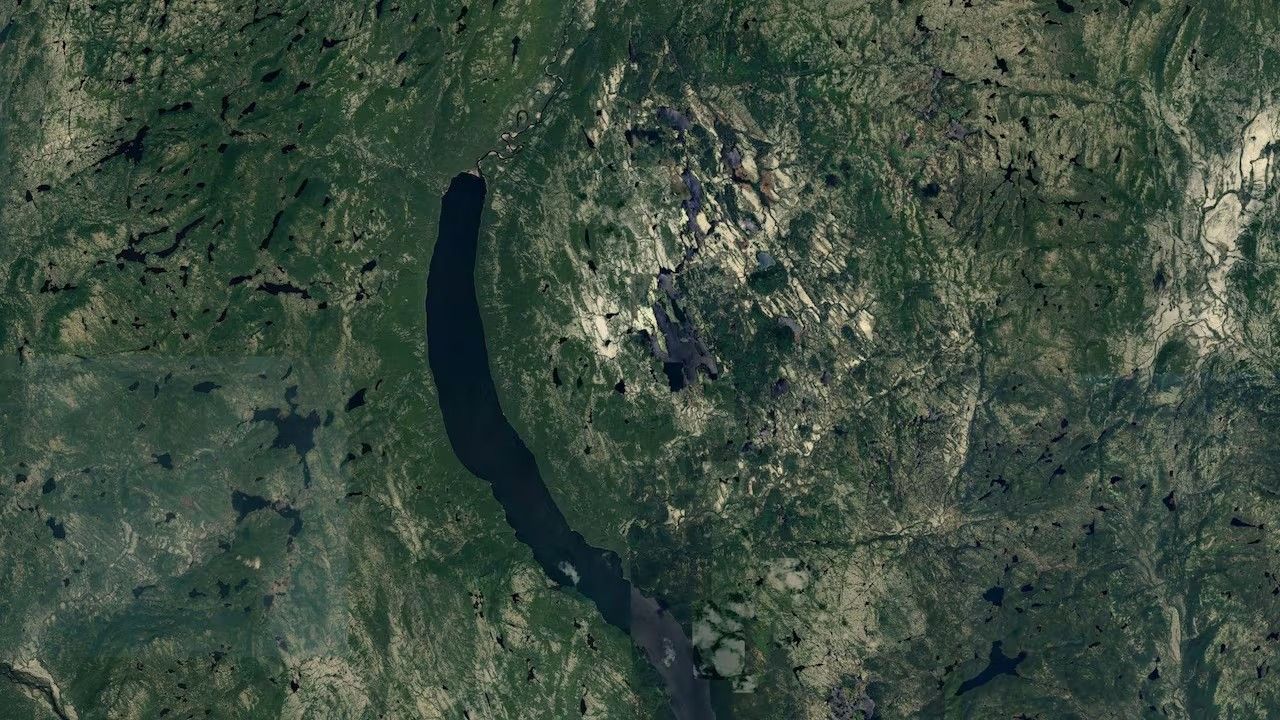
Joël Lapointe discovered an enormous crater while planning a camping route on Google Maps in Quebec's Côte-Nord region. Scientists have now confirmed the 15-mile-wide depression is an ancient meteor impact crater formed approximately 390 million years ago.
The discovery began casually. Lapointe, examining satellite imagery on Google Maps, noticed a striking circular indentation in the landscape. He reported the finding to researchers, who organized an expedition to investigate. The team conducted geological surveys and collected rock samples from the crater's rim and interior.
Analysis of the samples confirmed the crater's extraterrestrial origin. The impact occurred during the Devonian Period, when North America's interior was covered by shallow seas. The collision released enormous energy, vaporizing rock and excavating a massive bowl-shaped depression that persists as a landscape feature today, visible even in satellite imagery centuries later.
Lapointe described the fieldwork as grueling. "This was one of the most arduous expeditions I've ever done," he said, reflecting on the challenging terrain and remote location of the site in northern Quebec.
Impact craters provide windows into Earth's collision history. Scientists study them to understand planetary bombardment rates and the conditions that shaped our world. Finding and confirming new craters helps refine models of impact frequency and distribution across geological time.
The 390-million-year age places this impact in the late Devonian, a period marked by significant changes in Earth's biosphere and climate. The crater's excellent preservation suggests the Quebec site experienced relatively stable geology, allowing the feature to remain intact through subsequent erosion and tectonic activity.
The crater joins a growing list of confirmed impact structures globally. Researchers continue to scan satellite imagery and geological data to locate previously unknown impacts. Lapointe's accidental discovery via Google Maps underscores how modern technology enables scientists to identify features that field