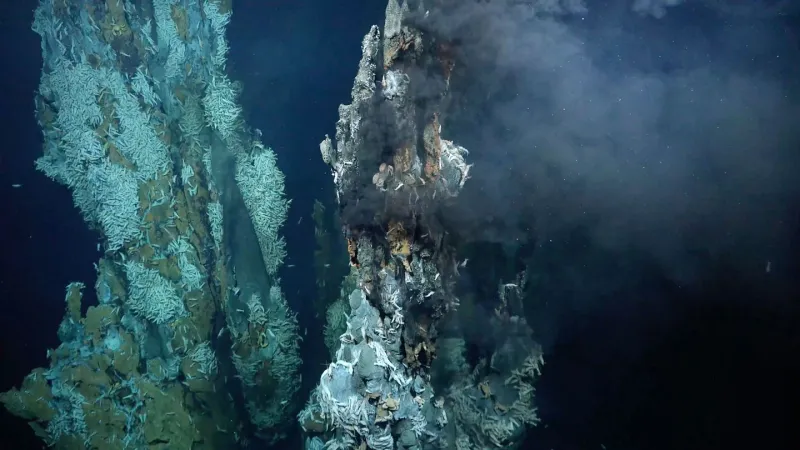
Deep-sea snails exploit a counterintuitive strategy to colonize distant hydrothermal vents, new research reveals. Rather than remaining in the depths, larvae of vent-dwelling snails hitch rides on surface ocean currents before sinking to the seafloor, according to findings published in recent marine biology research.
Scientists studying Alviniconcha snails, which cluster around deep-sea hydrothermal vents, traced the dispersal patterns of larvae through genetic analysis and oceanographic modeling. The larvae spend weeks or months drifting in surface waters thousands of meters above the vents before descending to colonize new vent sites. This strategy allows them to traverse vast distances between geographically isolated vents that would be unreachable through bottom-water transport alone.
The discovery fundamentally reshapes understanding of how deep-sea vent ecosystems maintain connectivity. Hydrothermal vents, scattered across the ocean floor at depths exceeding 2,000 meters, host unique chemosynthetic communities dependent on chemicals from the Earth's interior rather than sunlight. These oases harbor specialized organisms found nowhere else on the planet.
The snail larvae's reliance on surface currents reveals an unexpected link between the perpetually dark deep ocean and the sunlit surface. Though larvae cannot feed during their journey through surface waters, they apparently can survive on stored energy. This remarkable behavior requires larvae to undergo physiological changes to tolerate the dramatic environmental shifts between warm vent water and frigid surface conditions.
Understanding larval dispersal patterns holds implications for predicting how vent communities respond to environmental changes. Mining operations targeting mineral deposits around hydrothermal vents could fragment populations if they disrupt dispersal corridors. The research also illuminates how life colonizes extreme environments and adapts to conditions unlike any found elsewhere on Earth.
The findings underscore that even ecosystems appearing isolated from the