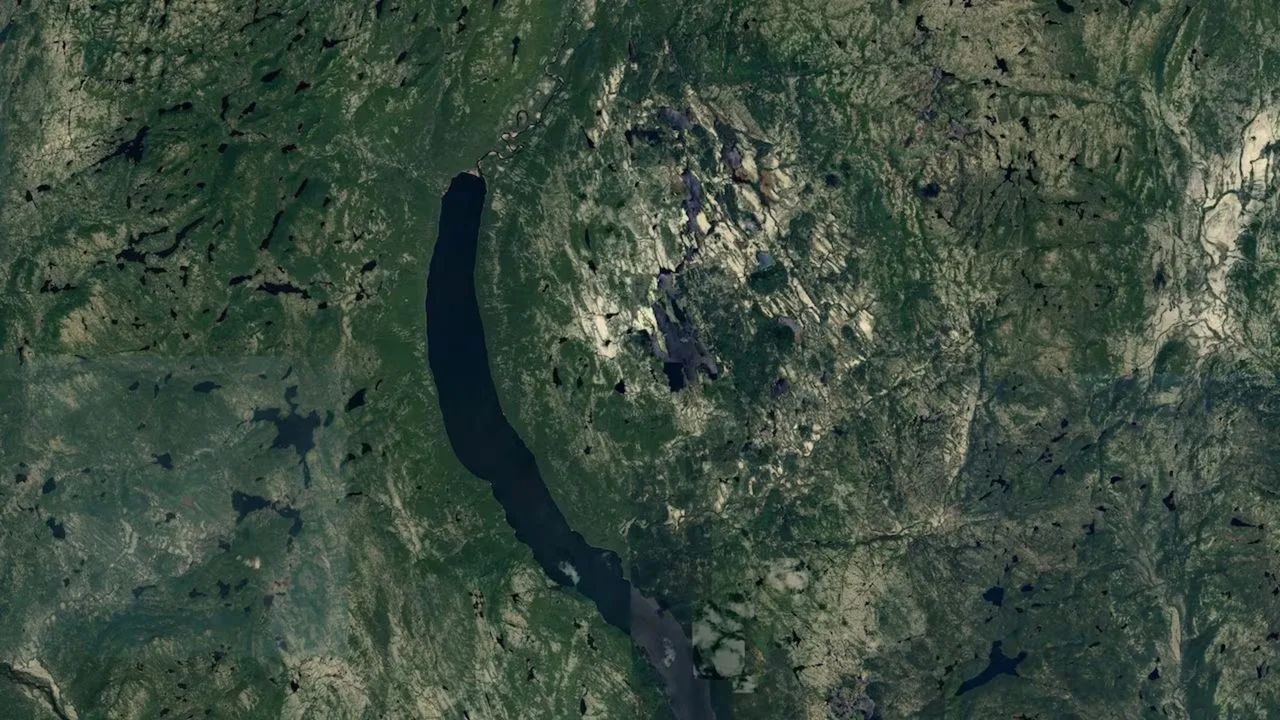
An amateur astronomer discovered what may be an ancient meteorite impact crater while preparing for a camping trip, visible on Google Earth. The feature bears the hallmarks of an impact site and researchers are now conducting microscopic analysis to confirm its origin.
The discovery highlights how readily available satellite imagery enables citizen scientists to make observations that professional astronomers might overlook. Google Earth's high-resolution photos have become an unexpected tool for geological research, allowing anyone with internet access to scan planetary surfaces for anomalies.
Impact craters form when meteorites strike planetary surfaces at high velocity, creating distinctive circular depressions rimmed by ejected material. The crater in question displays these characteristic features, though confirmation requires laboratory examination. Microscopic analysis can reveal shocked quartz and other minerals that form exclusively under the extreme pressures generated by impact events, providing definitive evidence.
The timing of this discovery underscores renewed scientific interest in impact geology. Understanding Earth's cratering history helps scientists assess long-term hazard risks and informs planetary defense strategies. Most of Earth's ancient craters have been obscured by erosion or plate tectonics, making new identifications valuable for reconstructing impact frequency over geological time.
This case also demonstrates the democratization of science through technology. Amateur astronomers and enthusiasts contribute significantly to astronomical surveys and geological discovery. Citizen science projects have previously identified exoplanet candidates, mapped lunar features, and documented atmospheric phenomena on distant planets.
The crater's exact location and age remain to be determined through detailed analysis. Researchers will examine rock samples to measure isotopic ratios and analyze the composition of impact-related minerals. These tests typically require weeks or months and involve specialists from universities or geological surveys.
If confirmed, this crater adds to the catalog of known impact structures on Earth. The most famous recent impact, the Chicxulub crater in Mexico, occurred 66 million years ago and marked the extinction of dinosa