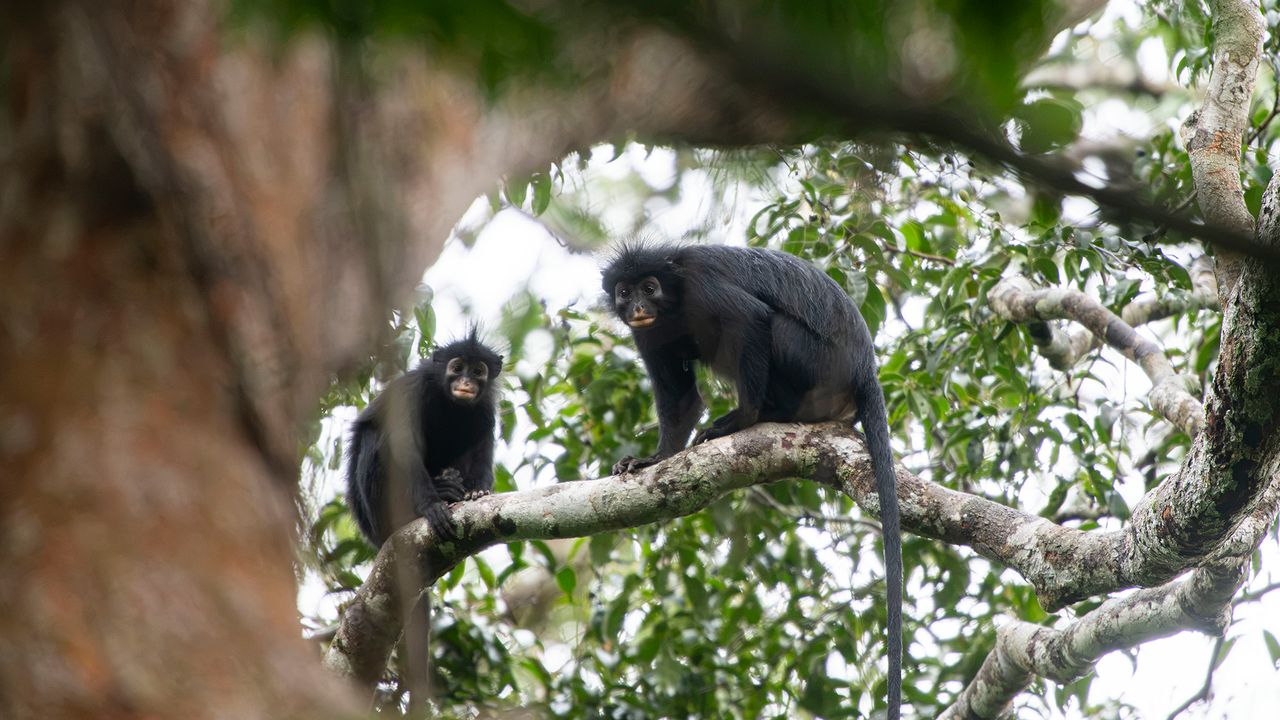
Scientists have formally identified a new monkey species living in the Congo rainforest, naming it *Colobus congoensis* after its forest habitat. The animal features distinctive orange lips and produces loud roaring and snorting vocalizations that distinguish it from related species.
The discovery represents a rare find in primate research. Large mammals, particularly primates, remain relatively well-documented across Africa, making the identification of an entirely new species uncommon. The orange-lipped colobus inhabits a remote region of the Congo Basin, where dense vegetation and difficult terrain have limited scientific access for decades.
Colobus monkeys belong to the Cercopithecidae family and are known for their leaf-eating diet and striking coloration patterns. The acoustic characteristics of *Colobus congoensis* set it apart from other colobus species documented in Central and West Africa. Researchers documented both the roaring calls and snorting vocalizations during field surveys, which serve social and territorial functions within the species' groups.
The formal scientific description involved morphological analysis, genetic comparison with related species, and behavioral observations. These combined approaches confirmed that *Colobus congoensis* represents a distinct evolutionary lineage rather than a regional variant of an existing species.
This discovery underscores how much remains unknown about primate diversity in Central Africa's vast rainforests. The Congo Basin spans multiple countries and contains habitats that researchers have explored incompletely. Each new species identification raises conservation concerns, as limited geographic ranges and undocumented populations make these animals vulnerable to habitat loss from logging, agriculture, and development.
The finding also highlights the value of sustained fieldwork in remote regions. Long-term research programs that maintain presence in difficult-to-access areas continue to yield biological discoveries. Future work will focus on understanding the species' range, population size, ecology, and conservation status. The discovery