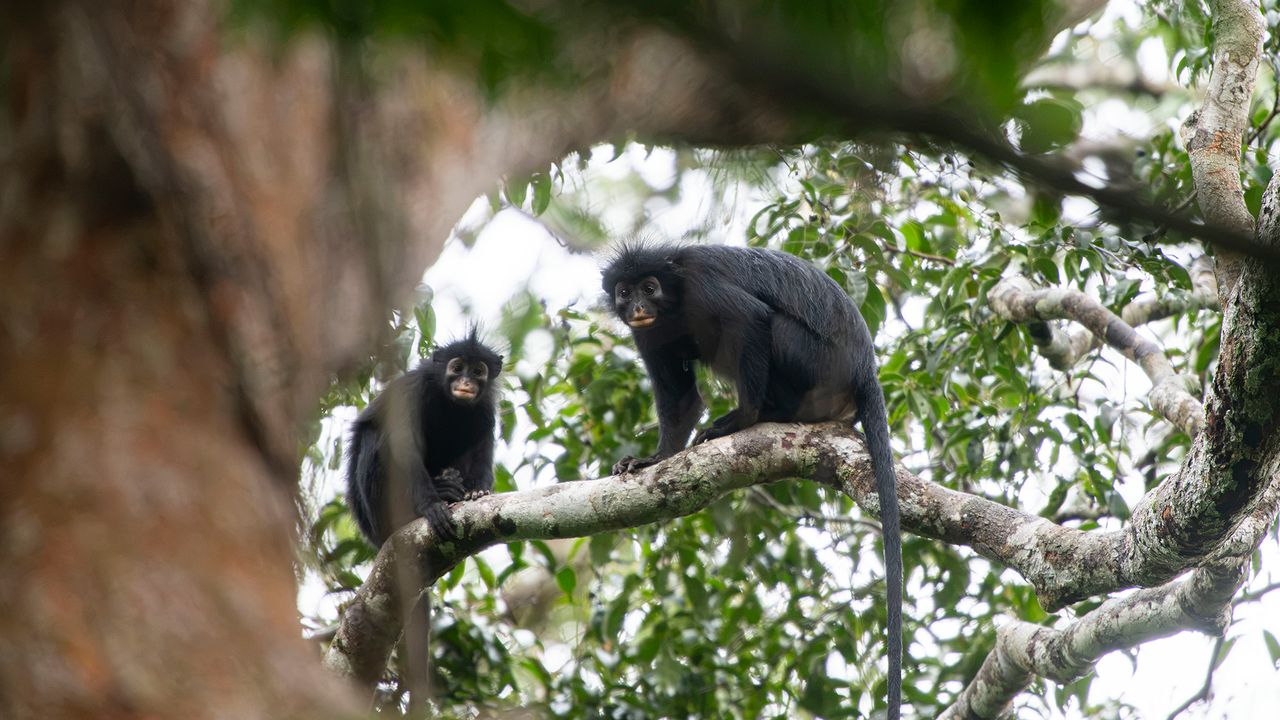
Researchers have identified a new species of monkey living deep within the Congo rainforest, officially described as Colobus congoensis. The primate distinguishes itself with orange-tinted lips and a distinctive vocalisation repertoire that includes both roaring and snorting sounds.
The discovery adds to the growing catalog of primates inhabiting Central Africa's remaining rainforest zones. Scientists conducted fieldwork to document the species' physical characteristics, behavior, and vocalizations before publishing their formal scientific description. The orange-lipped coloration serves as a key identifying feature that sets this colobus monkey apart from related species in the genus.
The vocalizations recorded from the population include deep roars and snorting calls, which researchers believe function in territorial communication and social bonding within groups. Such vocal behaviors remain understudied in many rainforest primate species, particularly in remote regions where access remains difficult.
The Congo rainforest spans multiple countries and represents one of Earth's biodiversity hotspots. Yet large areas remain poorly surveyed by scientists, meaning new species discoveries continue to emerge regularly. This monkey represents one more example of how inadequately documented the region's fauna remains.
Deforestation and habitat loss threaten rainforest primates across Central Africa. The classification of Colobus congoensis as a distinct species now creates opportunities for targeted conservation efforts focused on protecting its population and forest habitat. International conservation organizations typically increase monitoring and protection strategies once a species receives formal scientific recognition.
The research underscores how much biological diversity remains unknown despite centuries of scientific exploration. Remote rainforests continue yielding new species discoveries across multiple animal groups, from insects to large mammals. Each new species description illuminates gaps in our understanding of global biodiversity and highlights the urgency of preserving tropical ecosystems before species vanish before scientists even discover them.