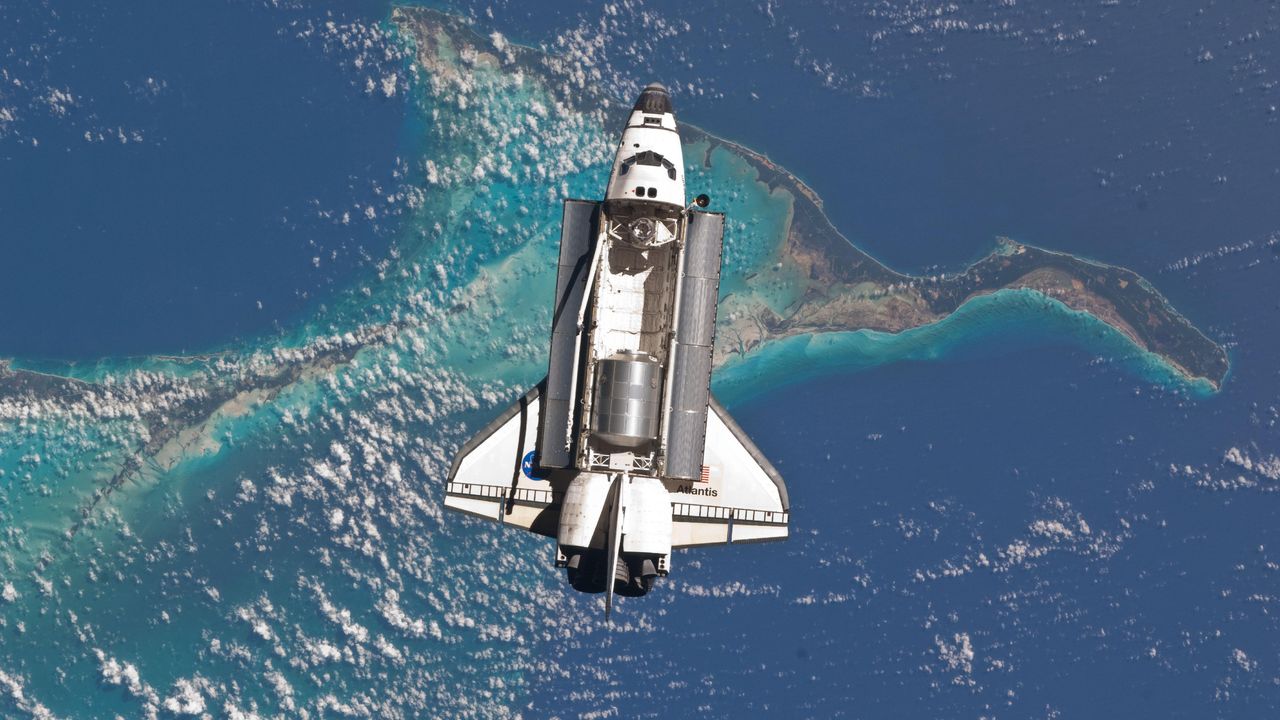
NASA's Space Shuttle Atlantis photobombed Earth in 2011, floating between the International Space Station and our planet in what would become the final such image ever captured. An astronaut aboard the station snapped the photograph as Atlantis approached for docking during its last operational mission, STS-135.
The image marks a symbolic endpoint for the shuttle program, which retired that same year after 30 years of spaceflight. Atlantis completed 33 missions over its lifetime, carrying astronauts and cargo to orbit and playing a central role in constructing and servicing the International Space Station.
The photobomb captures the shuttle in silhouette against Earth's curved horizon, a composition that crystallizes decades of human spaceflight achievement. For 15 years, this photograph has stood as the final visual record of an active shuttle in flight relative to the station it helped build.
The Space Shuttle program revolutionized orbital operations by introducing the first reusable spacecraft system. Shuttles ferried components for the ISS, deployed the Hubble Space Telescope, and conducted numerous scientific missions. But aging infrastructure, high operational costs, and two tragic losses in 1986 and 2003 prompted NASA to retire the fleet.
After 2011, NASA shifted to commercial partnerships and the Orion spacecraft for deep-space exploration. The remaining shuttles now reside in museums across the country. Discovery sits at the National Air and Space Museum in Washington, D.C., Endeavour at the California Science Center in Los Angeles, and Atlantis at the Kennedy Space Center in Florida.
This final Earth-shuttle intersection photograph endures as a poignant documentation of an era. It reminds observers of the shuttle's legacy while marking the transition to new spaceflight architectures. The image preserves a fleeting moment when one of humanity's most sophisticated machines made