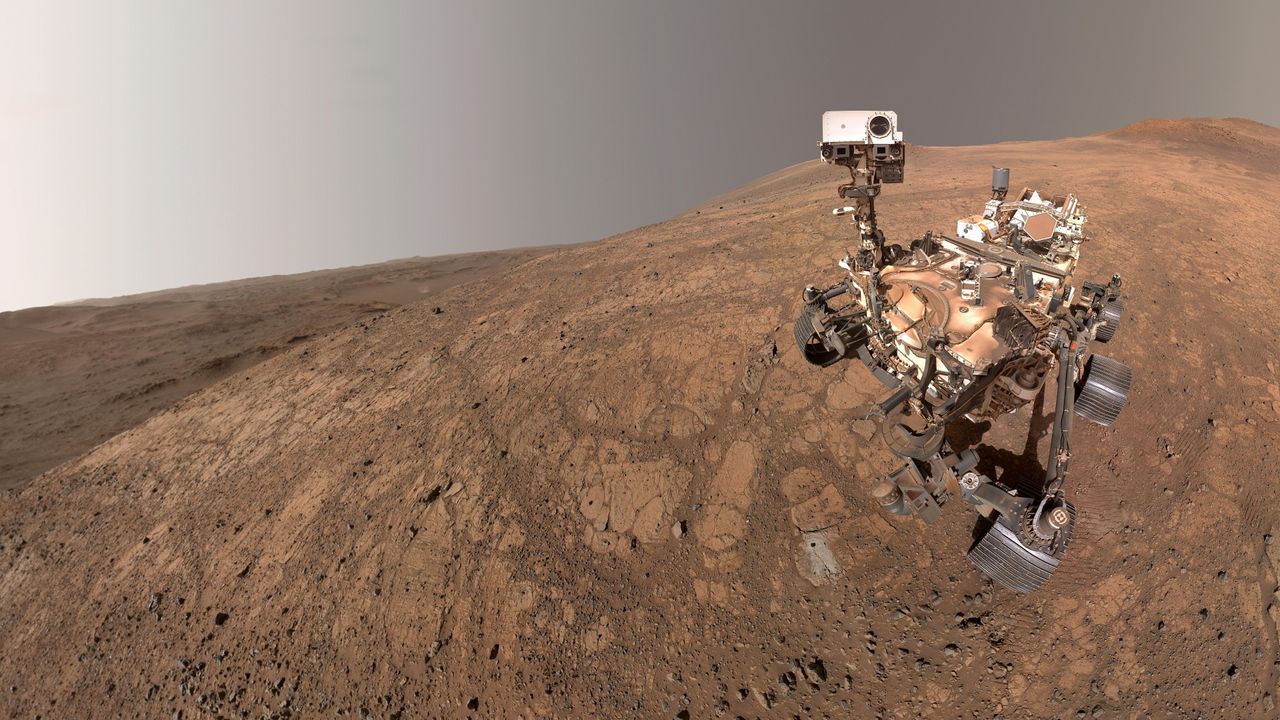
NASA's Perseverance rover has completed a marathon distance on Mars, traveling 26.2 miles across the Martian surface since its landing in February 2021. The milestone represents nearly four years of sustained exploration on a world defined by extreme conditions that would prove lethal to humans.
The achievement underscores the rover's durability in an environment where temperatures plummet to minus 195 degrees Fahrenheit and dust storms can obscure the sun for weeks. Perseverance was engineered to endure these conditions through protective thermal systems and redundant electronics, built to last at least two years but now operating well beyond that design specification.
A human attempting the same distance on Mars would face insurmountable obstacles. The thin atmosphere, only one percent as dense as Earth's, cannot sustain human respiration without pressurized suits. Low gravity at 38 percent of Earth's strength would alter muscle function and fatigue resistance. The Martian surface, covered in sharp regolith and jagged rocks, would shred standard hiking equipment. Radiation exposure, unfiltered by the planet's weak magnetic field, would accumulate to dangerous levels over the multiday journey any human would require.
The rover's wheel design, autonomy systems, and power management through radioisotope thermoelectric generators enabled marathon-distance travel. Perseverance covers roughly 0.16 miles per day on average, moving methodically to collect geological samples and search for signs of ancient microbial life. Its onboard cameras and scientific instruments operate in concert to maximize discovery per sol, the Martian day.
The marathon milestone serves primarily as a public relations moment, translating technical achievement into human-scale terms. For NASA and the Perseverance mission team, the distance traveled reflects successful engineering and operational planning that has kept the rover functioning through Martian dust storms, extreme temperature swings,