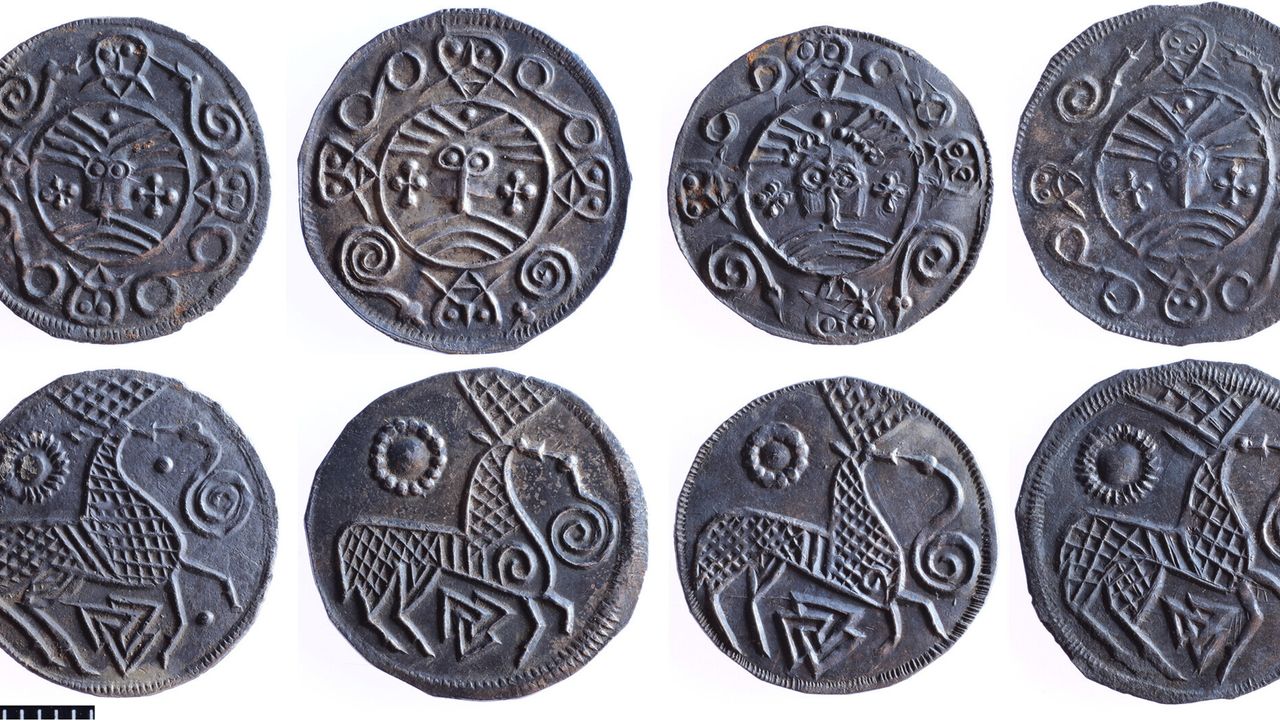
Researchers have discovered that Vikings melted down Islamic silver coins to create their earliest pennies, according to a new study analyzing a hoard found in Denmark.
The investigation reveals that the silver used in Viking Age coinage originated from the Islamic world, challenging conventional assumptions about Viking monetary practices and trade networks. Scientists examined the composition and isotopic signatures of silver from the Danish hoard to trace its geographic origin, demonstrating that Vikings sourced precious metals through extensive long-distance trade routes connecting Scandinavia to the Middle East.
This finding underscores the sophistication of Viking economic systems and their integration into international commerce during the early medieval period. Rather than relying solely on locally mined resources, Norse traders acquired Islamic coins through established trade channels and subsequently refined or reminted the silver for their own monetary needs. The practice reflects the pragmatic metallurgical knowledge Vikings possessed and their ability to identify and exploit valuable foreign currency.
The study provides concrete evidence that Viking expansion extended beyond raiding and settlement into complex commercial relationships with distant civilizations. Islamic coins circulated throughout Europe during this era, but this research documents the specific practice of Viking craftspeople processing these foreign coins into domestic currency. The isotopic analysis methodology allows researchers to fingerprint silver sources with precision, revealing trade patterns that written historical records often obscure.
The findings contribute to a broader scholarly reassessment of Viking Age societies as economically sophisticated and internationally connected rather than purely warrior-focused cultures. This evidence of deliberate silver sourcing and processing demonstrates organizational capacity and sustained economic planning. The research also illuminates why Islamic coins appear frequently in Viking archaeological contexts across Scandinavia and Eastern Europe. Rather than representing simple treasure hoarding, these assemblages document the material foundation of early Viking monetary systems and their dependence on resources flowing through Islamic trade networks.
The study expands understanding of medieval global commerce and challenges simplified narratives about isolated regional economies in early medieval Europe.