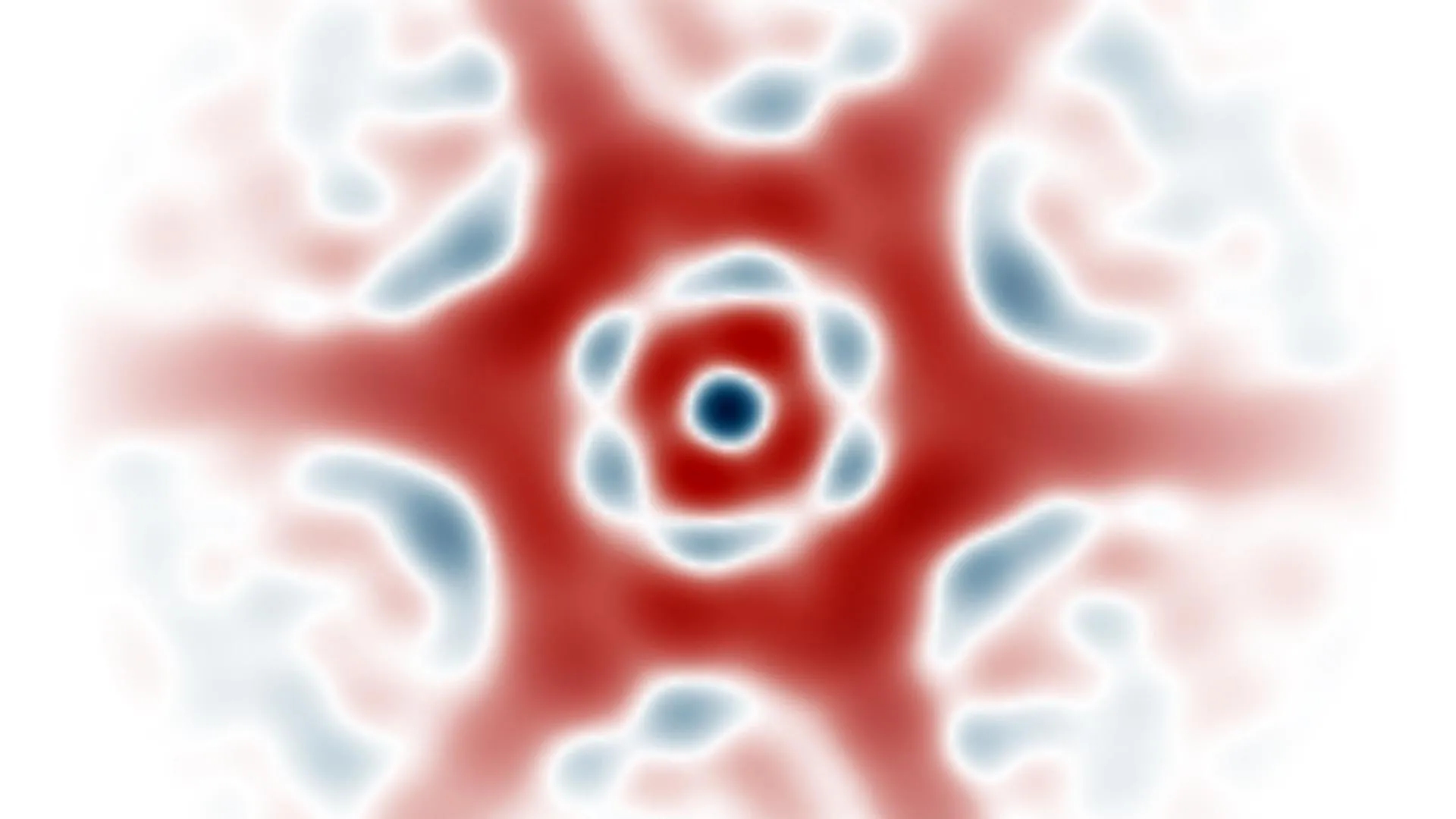
Physicists at Oxford University have engineered a novel quantum state that extends Schrödinger's famous thought experiment into stranger territory. The researchers created their system using quantum components themselves, rather than macroscopic objects, which fundamentally changes how superposition works at scale.
Schrödinger's cat, proposed in 1935, describes a paradox where a cat in a sealed box exists in a superposition of both alive and dead states until observed. This thought experiment highlights the gap between quantum mechanics at subatomic scales and the classical world we experience. Oxford's team has now constructed an analogous superposition using inherently quantum materials, creating what physicists call a "cat state" with properties that defy classical intuition.
The practical applications are substantial. The work promises to improve quantum computer resilience by creating systems less vulnerable to environmental interference and measurement errors. Current quantum computers struggle with decoherence, where quantum states collapse prematurely. States built from quantum building blocks could maintain their superposition longer, enabling longer, more complex calculations.
The research also deepens understanding of quantum mechanics itself. By constructing these hybrid quantum superpositions, scientists observe how quantum properties behave when scaled up, testing the boundaries between quantum and classical physics. This addresses fundamental questions about why we don't see macroscopic objects in superposition in everyday life.
The Oxford advance demonstrates that quantum engineering has matured beyond simple superpositions of basic quantum systems. Building quantum states from quantum components creates emergent properties that pure mathematical models alone might miss. This approach mirrors how complex systems often behave differently from their individual parts.
The findings contribute to the broader race toward practical quantum computing. Multiple institutions worldwide are pursuing different architectures for quantum advantage. Oxford's technique represents one pathway to more stable, controllable quantum states that could accelerate the timeline for commercially viable quantum systems capable of solving real-world problems in drug discovery, optimization, and