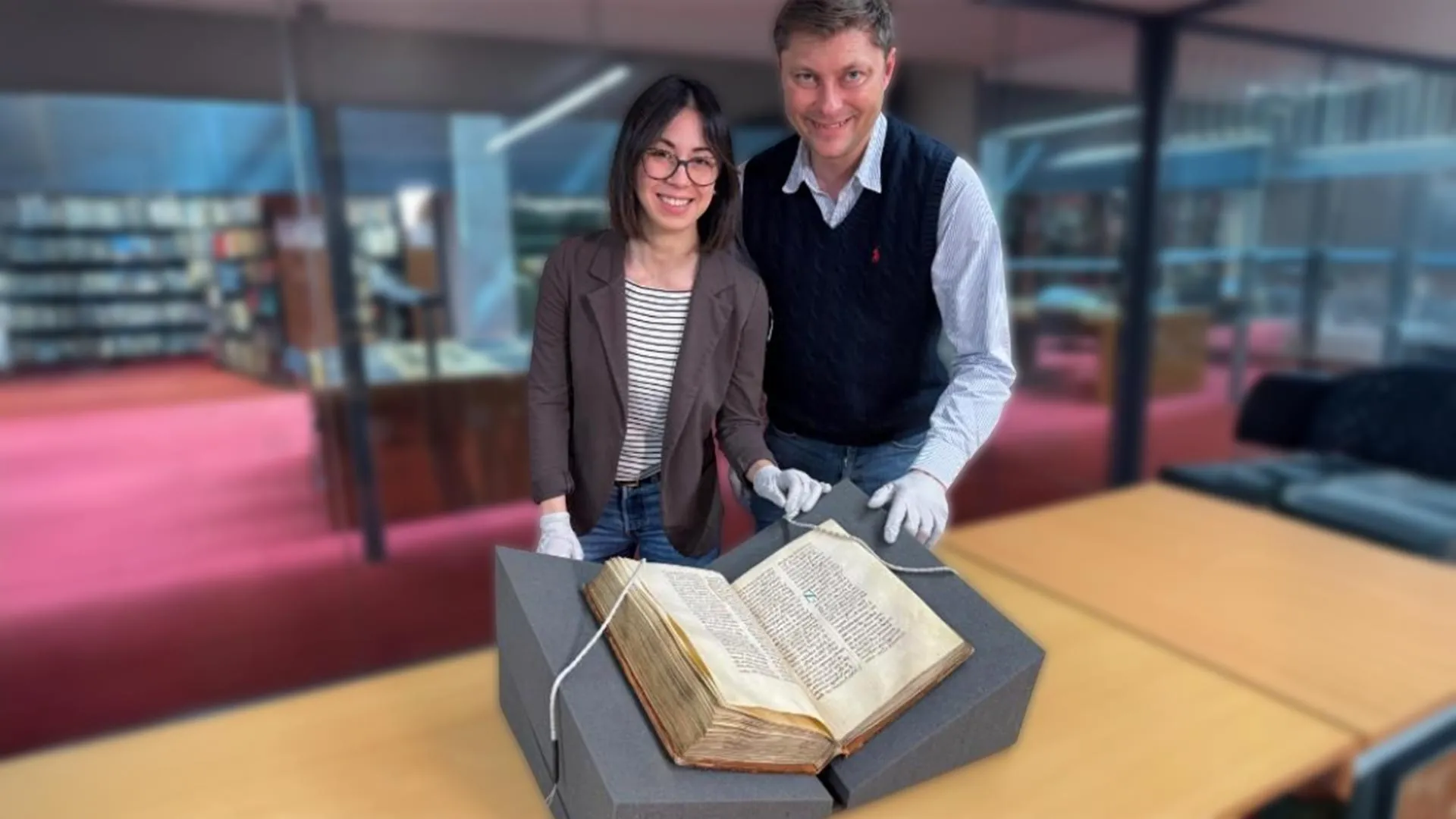
Researchers have recovered a remarkable 1,200-year-old manuscript in Rome containing Caedmon's Hymn, recognized as the oldest surviving poem composed in English. The manuscript had been hidden for decades and was previously thought lost entirely.
Caedmon's Hymn consists of just nine lines in Old English. According to historical accounts preserved by the Venerable Bede, an English monk wrote the poem after a divine vision inspired him to compose verses in his native tongue. Caedmon worked as a cowherd in seventh-century Northumbria, a region in northern England. The legend holds that he miraculously gained the ability to compose poetry following this dream, despite having no prior training as a poet.
The rediscovered manuscript provides one of the oldest surviving versions of this foundational English literary work. Before this recovery, scholars relied on copies made centuries after the original composition. Having access to an earlier manuscript allows researchers to study the text's original form more accurately and understand how Old English was written and pronounced in early medieval times.
The discovery underscores how fragile historical records remain. Manuscripts routinely disappeared during wars, natural disasters, and library relocations across Europe. That this particular text survived in a Roman archive and resurfaced after decades of obscurity highlights both the persistence of some documents and the precarious nature of cultural heritage preservation.
Caedmon's Hymn holds outsized importance in English literary history. It marks the earliest known point where someone deliberately composed verse in English rather than Latin, the dominant written language of medieval Europe. This moment represents a turning point when vernacular languages began gaining recognition as worthy of literary expression. The poem's survival across thirteen centuries, despite copying errors and manuscript loss, testifies to its cultural resonance throughout English history.