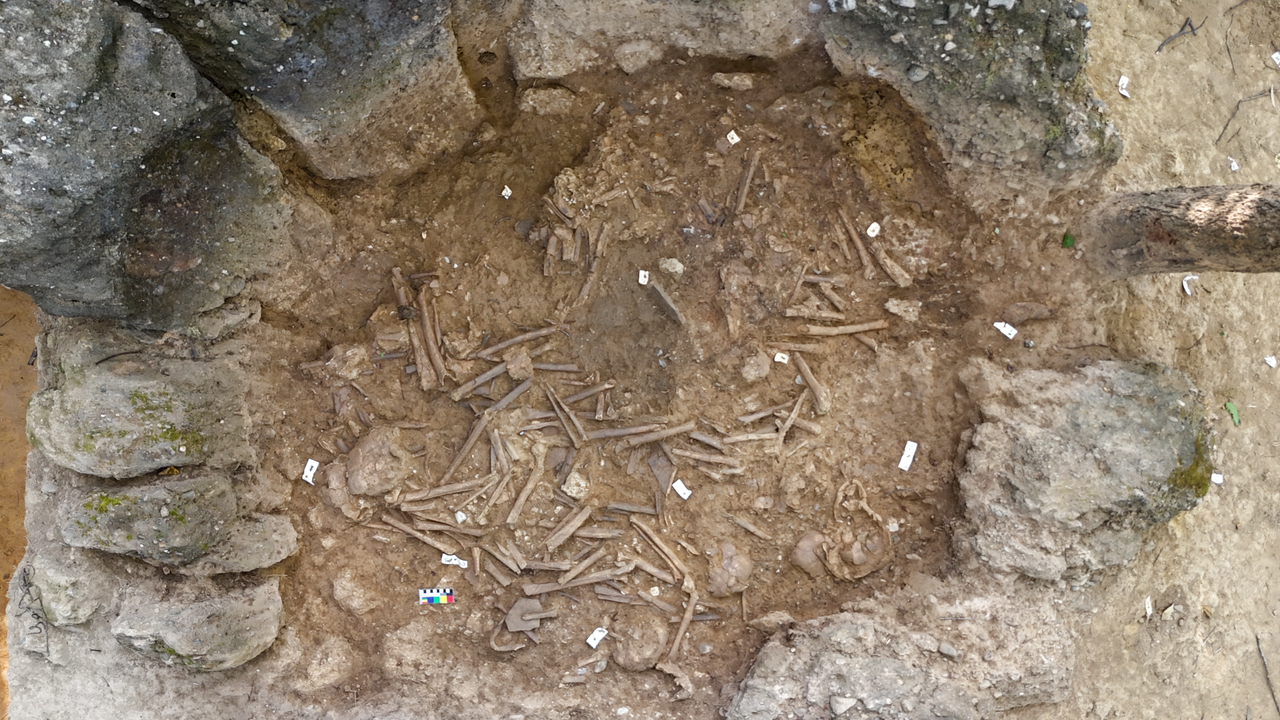
Archaeologists excavating a massive stone jar in Laos have uncovered evidence of a centuries-long funerary practice that challenges previous assumptions about the region's burial customs. The vessel, part of the enigmatic Plain of Jars site, contained multiple human skeletons spanning generations, suggesting it functioned as a communal burial chamber for over 1,200 years.
The Plain of Jars, scattered across central Laos, contains hundreds of stone vessels ranging from one to three meters tall. Their original purpose has remained one of Southeast Asia's archaeological mysteries since their discovery. Earlier theories proposed they served as rain collectors or fermentation containers, but this excavation provides concrete evidence they held human remains.
The research team documented skeletal material from different time periods within the single jar, indicating repeated use across centuries. The stratification of bones suggests the site served as a persistent ceremonial burial ground rather than a one-time interment location. This pattern of generational reuse reveals sophisticated funeral practices among ancient Laotian communities.
The jar's construction from stone and its monumental scale point to considerable labor investment, reflecting the cultural importance these communities placed on their dead. The deliberate placement of remains inside the vessel suggests intentional mortuary ritual rather than casual deposition.
This discovery helps contextualize the broader Plain of Jars complex within a funerary framework. The hundreds of similar vessels scattered across the landscape may represent an entire sacred burial field serving communities over centuries. Dating the skeletal material remains ongoing, but initial analysis suggests occupation spanning multiple cultural periods.
The study adds Laos to the archaeological conversation about Iron Age Southeast Asian burial traditions. Prior research focused heavily on burials from contemporary sites in Thailand and Vietnam, leaving Laotian practices comparatively understudied. This excavation demonstrates that the Plain of Jars was no anomaly but a deliberately maintained cemetery reflecting deep cultural continuities.