# Summary
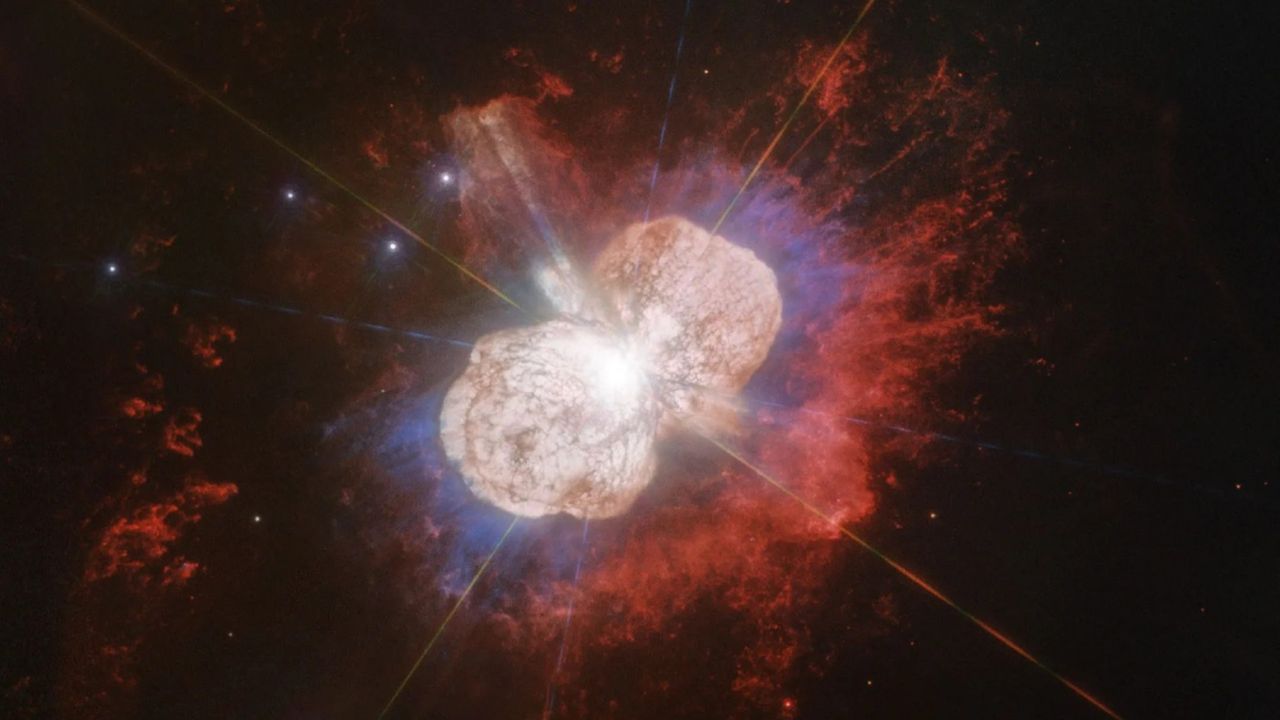
Stars sometimes erupt violently without triggering a full supernova explosion, baffling astronomers who study these "supernova impostors." The phenomenon occurs through what researchers call eruptive mass loss, where stellar surfaces suddenly expel enormous quantities of material into space.
These outbursts can rival supernova brightness yet leave the star intact. The star survives and continues burning. Scientists observe the explosions clearly but remain uncertain about the underlying mechanisms that trigger them.
Understanding eruptive mass loss matters because it reshapes how we interpret observations from telescopes. When astronomers detect a sudden brightening in the sky, they cannot always determine whether they are witnessing a true supernova or an impostor. This distinction carries weight for measuring cosmic distances and studying stellar evolution.
Researchers are gathering more data from events like these to build better models. They examine the composition of ejected material and measure how quickly the brightness fades. Each observation chips away at the mystery. Future space telescopes and ground-based surveys will capture more impostors in action, providing the detailed information astronomers need to finally explain why some stars throw tantrums without destroying themselves.