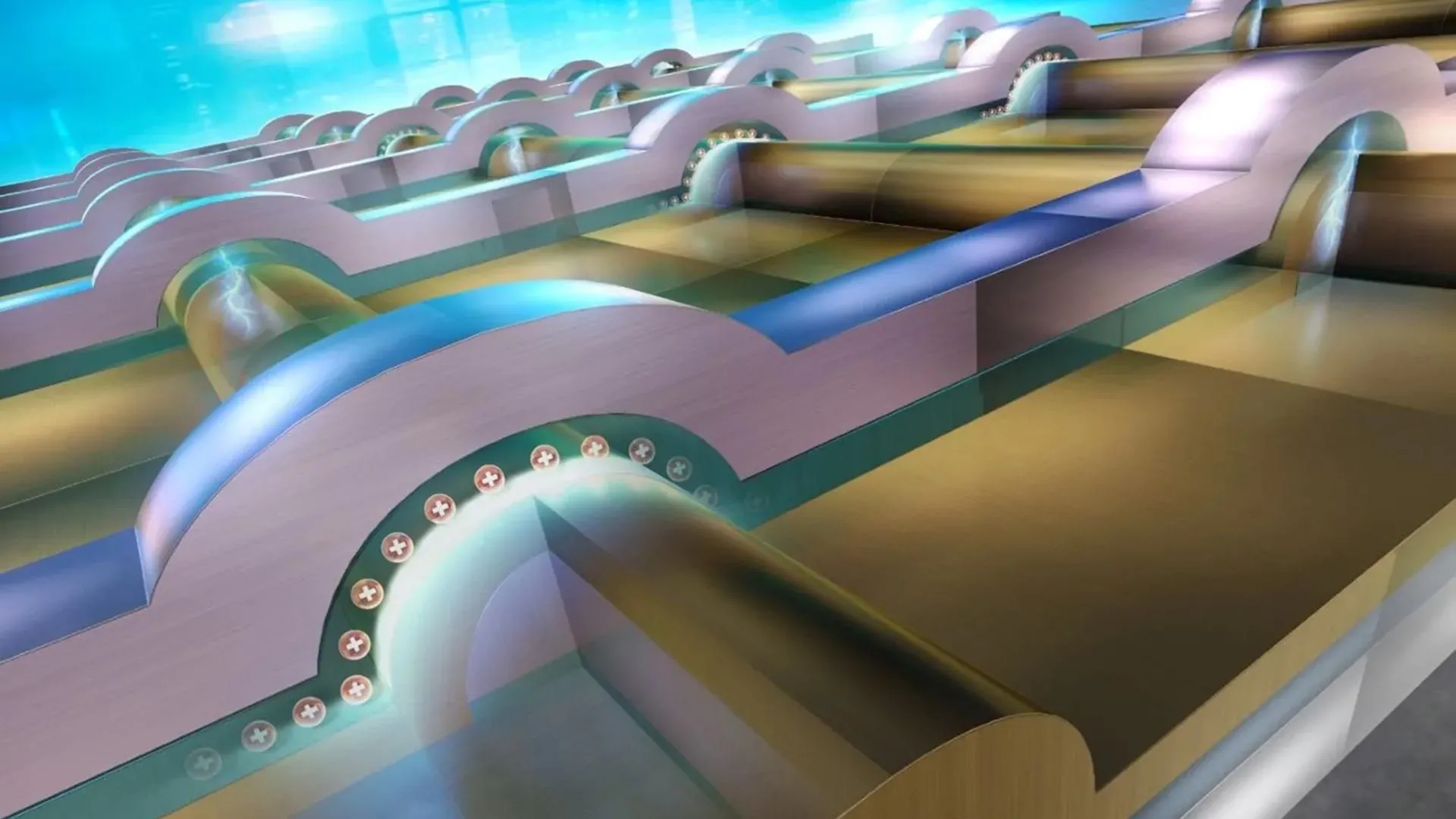
Researchers have created a memory chip that defies a fundamental rule of electronics. Smaller components normally generate more heat and drain batteries faster. This team reversed that pattern by redesigning the chip's structure at extreme scales, causing energy loss to decrease as the device shrinks.
The breakthrough addresses one of technology's persistent problems. Overheating and battery drain limit the performance of smartphones, wearables, and artificial intelligence systems. Conventional memory chips worsen both issues as engineers push miniaturization further.
The new design works by restructuring how the chip stores and accesses data at the atomic level. This approach eliminates energy waste mechanisms that plague traditional memory architecture. The result is a device that becomes more efficient as it gets smaller, a reversal of previous scientific expectations.
The implications are substantial. Ultra-compact devices could run longer on less power while maintaining cooler operating temperatures. Future smartphones might last days on a single charge. Wearable technology could become genuinely practical for continuous monitoring. AI systems requiring massive computing power could operate with dramatically reduced energy costs.
The team plans next steps focused on scaling the technology for commercial production and testing its performance across diverse applications. The discovery opens a path toward electronics that break free from the energy constraints that have defined the industry for decades.