# James Webb's Mysterious Red Dots May Be Black Hole Stars
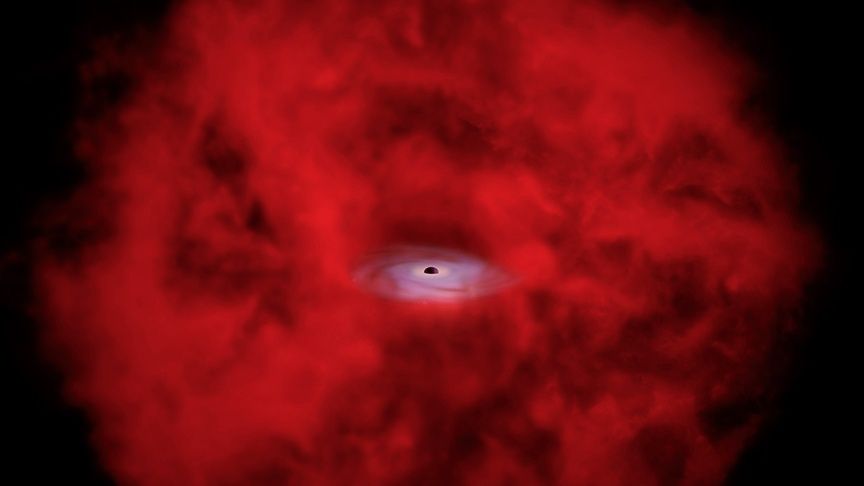
The James Webb Space Telescope discovered puzzling red objects in the early universe that defied conventional explanation. Astronomers now have new evidence about their identity. X-ray data from these objects reveals signatures consistent with "black hole stars," a theoretical object that combines properties of both black holes and stars.
Black hole stars form in the early universe when black holes absorb surrounding material and grow massive before stars finish forming. This process creates objects with characteristics unlike anything in the modern universe. The X-ray emissions detected from one of these red dots match predictions for black hole stars rather than ordinary galaxies or quasars.
This finding matters because it reshapes our understanding of the early universe's composition. Black hole stars may explain how supermassive black holes grew so quickly in the young cosmos, a problem that has puzzled astronomers for years.
Researchers plan to conduct more X-ray observations of other red dots to confirm whether black hole stars exist. Additional data will help distinguish between competing theories about these mysterious objects. If confirmed, this discovery represents a major breakthrough in understanding the universe's first billion years.