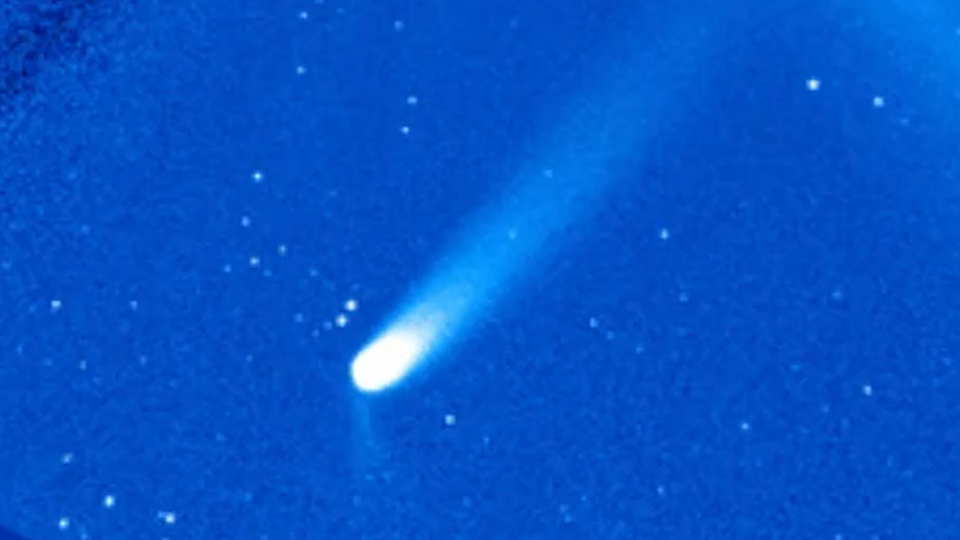
Comet C/2025 R3 PanSTARRS activated a second tail during its closest approach to Earth at 45 million miles away. The ion tail materialized as the comet drew nearer to our planet, a phenomenon driven by increased solar wind interaction.
Comets typically display two distinct tails. The dust tail forms from particles shed by the comet's nucleus and reflects sunlight. The ion tail, composed of ionized gas, glows from interaction with charged particles streaming from the sun. PanSTARRS' second tail became visible only when solar radiation intensified enough to strip electrons from the comet's gas, creating the characteristic blue glow.
This event matters because it demonstrates how comets respond dynamically to solar proximity. Astronomers studying such transitions gain insight into comet composition and behavior. The visibility of both tails simultaneously offers a rare opportunity to observe distinct physical processes on a single object.
Observers on Earth with telescopes or binoculars captured PanSTARRS during this phase. The comet continues its journey through the inner solar system, and its tail activity will evolve as distance from the sun changes. Future observations will help scientists refine models of cometary physics and predict similar events for other comets approaching Earth.