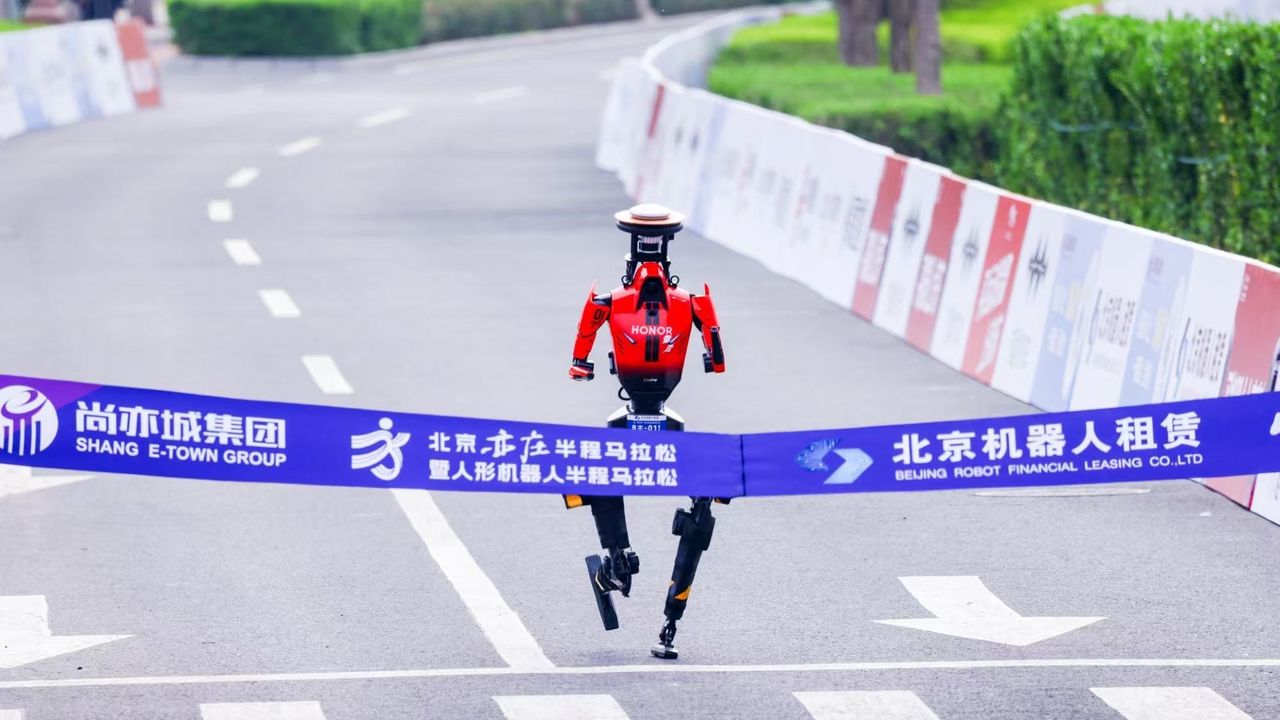
A humanoid robot named D1, created by a smartphone manufacturer, has shattered the human half-marathon world record by completing the 13.1-mile distance roughly seven minutes faster than the current human record holder.
The achievement marks a watershed moment in robotics. D1 succeeded where previous machines failed, demonstrating that humanoid robots can now outperform elite human athletes in sustained endurance tasks. The robot's engineering represents a convergence of advances in motor control, energy efficiency, and bipedal locomotion.
What makes this feat possible involves several innovations. D1 uses lightweight materials and optimized joint mechanics that reduce energy expenditure during repetitive motion. Its programming incorporates algorithms refined through machine learning, allowing the robot to maintain consistent pace and adjust to terrain variations without fatigue, a limitation that affects human runners regardless of training.
The implications extend beyond athletics. Successfully running a half-marathon requires a robot to solve complex balance, coordination, and endurance problems simultaneously. These same capabilities translate to practical applications like search-and-rescue operations, industrial inspection, and autonomous delivery in challenging environments.
Researchers now face the next challenge: scaling these advances to longer distances and more complex terrains. The breakthrough suggests humanoid robots will increasingly handle tasks requiring both strength and sustained performance.