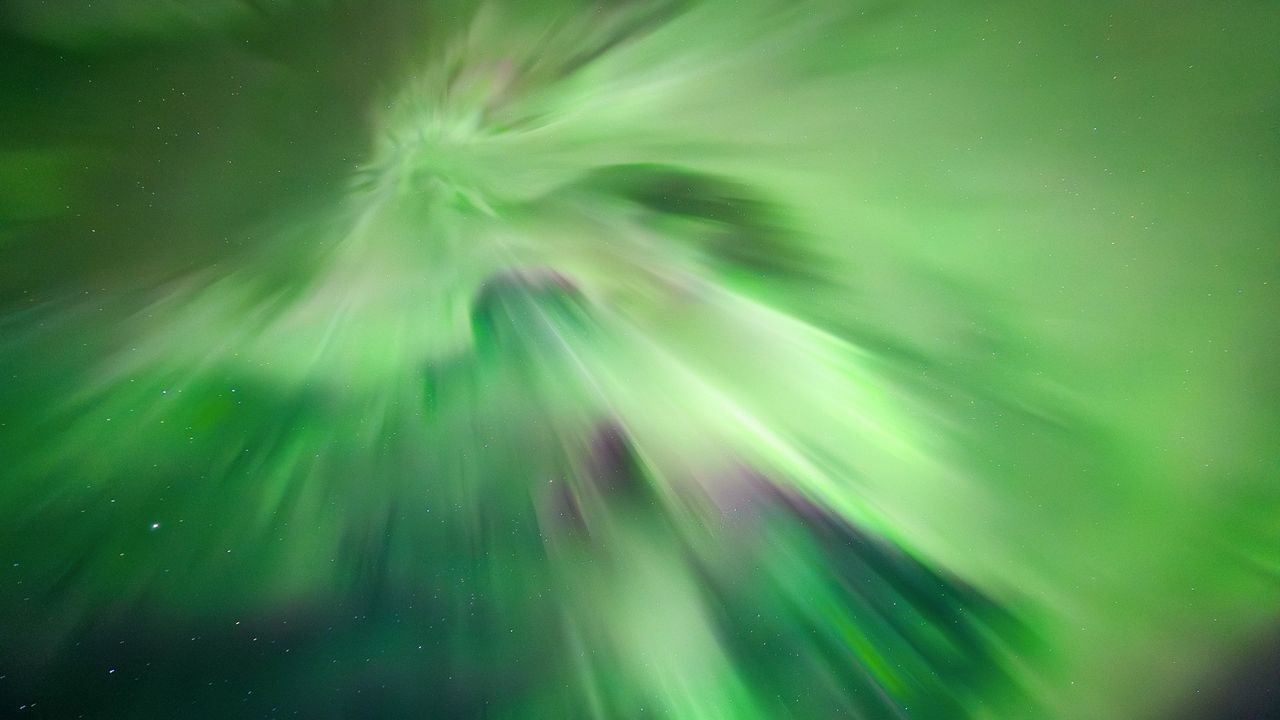
A geomagnetic storm produced an unusually intense pulsating aurora over Arctic Norway that persisted for nearly three hours. Aurora researcher Dag Lorentzen captured the display in exceptional detail, calling it "one of the most profound sightings of my career."
Pulsating auroras differ from the more familiar rippling curtains of light. They appear as waves of brightness that grow and fade rhythmically across patches of sky, often without the sweeping movements typical of other aurora types. The sustained intensity and duration of this event made it exceptionally rare.
The display coincided with a colossal geomagnetic storm, a result of powerful solar activity hurling charged particles toward Earth's magnetosphere. These particles interact with oxygen and nitrogen in the upper atmosphere, producing the characteristic green, red, and purple glows.
Lorentzen's detailed observations help scientists understand the physics behind pulsating auroras. Researchers still debate the precise mechanisms driving these rhythmic light patterns. The data from this event could refine models of how solar storms trigger specific aurora behaviors.
Future solar activity may produce similar displays. As the sun approaches peak activity in its 11-year cycle, aurora watchers in northern and southern latitudes should remain alert for additional opportunities to observe these phenomena.