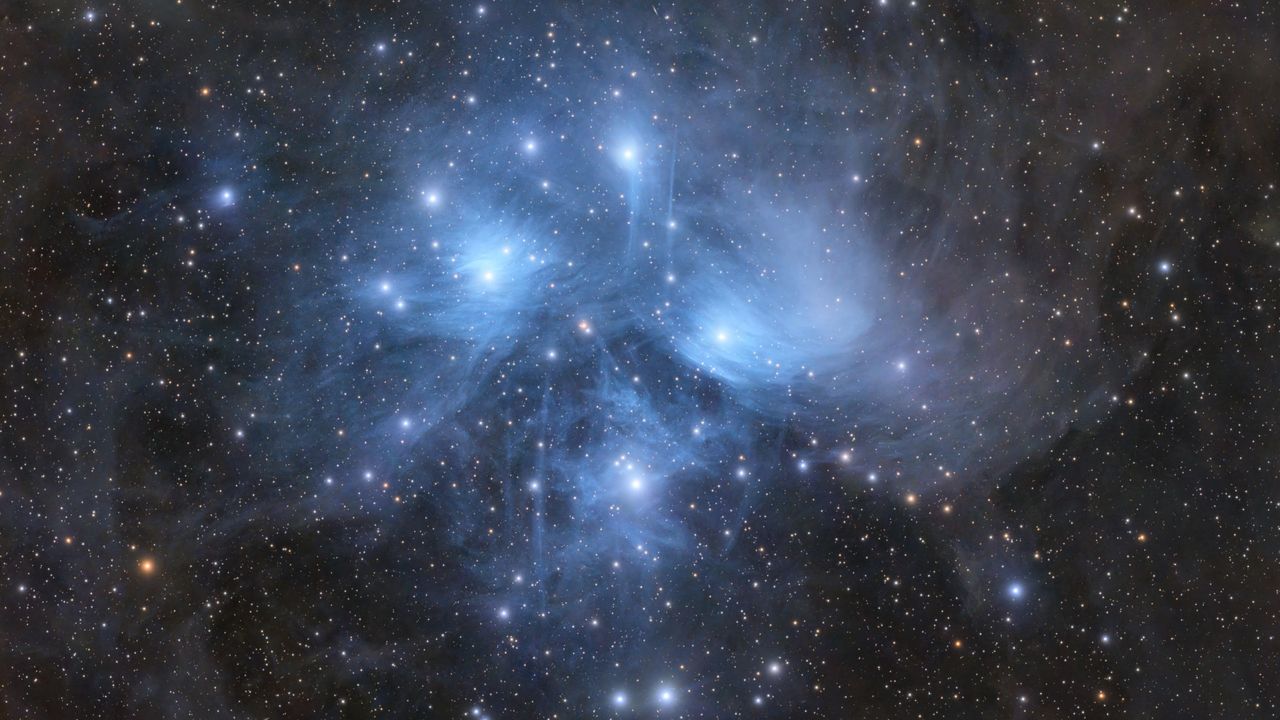
An amateur astrophotographer captured a striking image of the Pleiades star cluster surrounded by a ghostly blue nebula. The photograph reveals wispy clouds of dust and gas reflecting the intense blue-white light emitted by the cluster's young, hot stars. Located roughly 440 light-years from Earth, the Pleiades contains seven prominent stars visible to the naked eye, earning it the nickname "Seven Sisters."
The image demonstrates how reflection nebulae work. Unlike emission nebulae that glow from ionized gas, reflection nebulae simply bounce starlight off their dust particles, creating the ethereal blue appearance captured here. The Pleiades nebula exists within a vast cloud of material left over from the cluster's formation roughly 100 million years ago.
This observation holds value for amateur astronomers tracking the Pleiades' movement through space. The cluster gradually shifts its position relative to surrounding nebulae, making time-lapse photography useful for detecting subtle changes across decades or centuries. Professional observatories use similar observations to refine models of stellar motion and interstellar dust composition.
The photograph underscores how accessible modern astronomy equipment makes observations once reserved for major research institutions. Amateur astrophotographers continue contributing meaningful data to scientific understanding of nearby star systems.