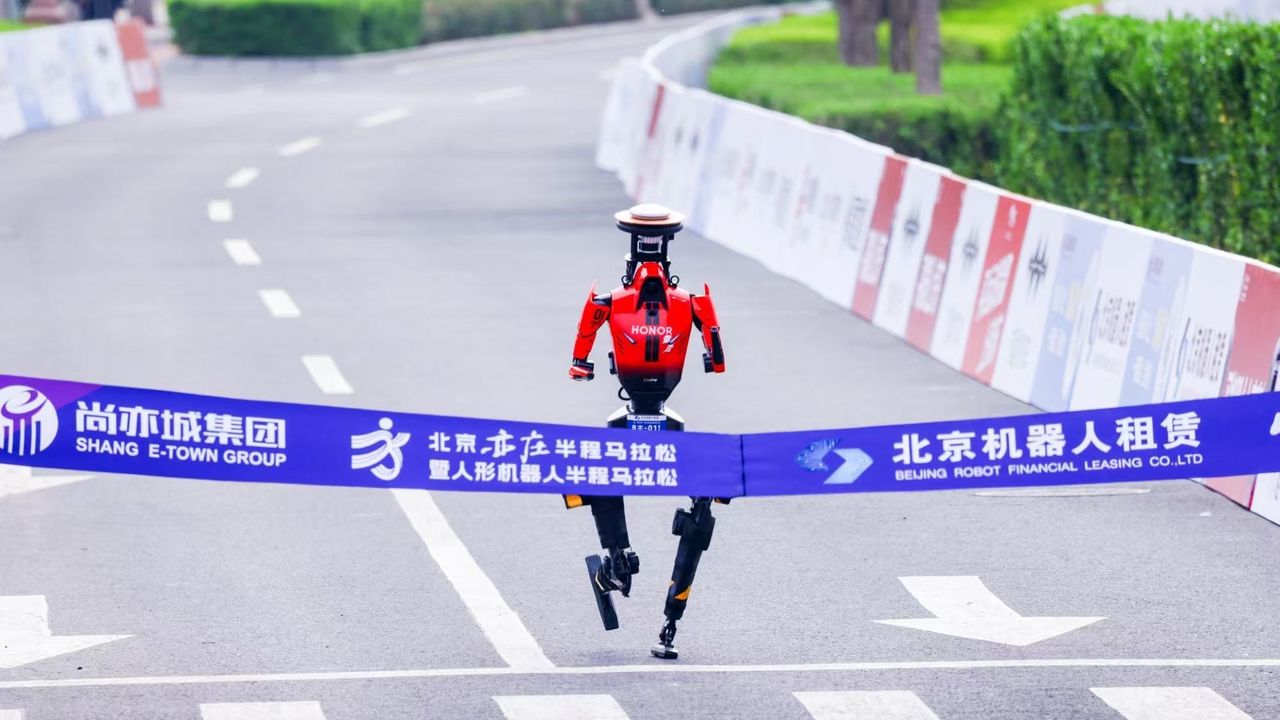
# Humanoid Robot Breaks Half-Marathon Record
The D1 humanoid robot, built by a smartphone manufacturer, has completed a half-marathon faster than any human runner. The robot finished approximately seven minutes ahead of the current world record holder.
This achievement demonstrates significant advances in robotics engineering, particularly in mechanical efficiency and endurance design. The D1's success highlights how machines can now match and exceed human athletic performance in specific tasks.
The robot's superior time stems from several engineering advantages. Humanoid robots operate without fatigue, requiring no breaks for rest or hydration. Their joints and motors can maintain consistent speeds across long distances without the physiological limitations that affect human muscles and cardiovascular systems. Engineers optimized the D1's energy consumption and weight distribution to maximize running efficiency.
This milestone raises questions about robot capabilities in physical tasks. While the D1 outpaced human marathoners, researchers have not yet designed robots that can handle the complex terrain variations or unpredictable obstacles that elite athletes navigate. The half-marathon record was likely achieved on a controlled, flat course.
Future developments may push robots into more challenging athletic domains. Engineers will work to improve durability, navigation systems, and adaptability. However, this achievement underscores the growing convergence between human and machine performance across multiple fields, from athletics to manufacturing.