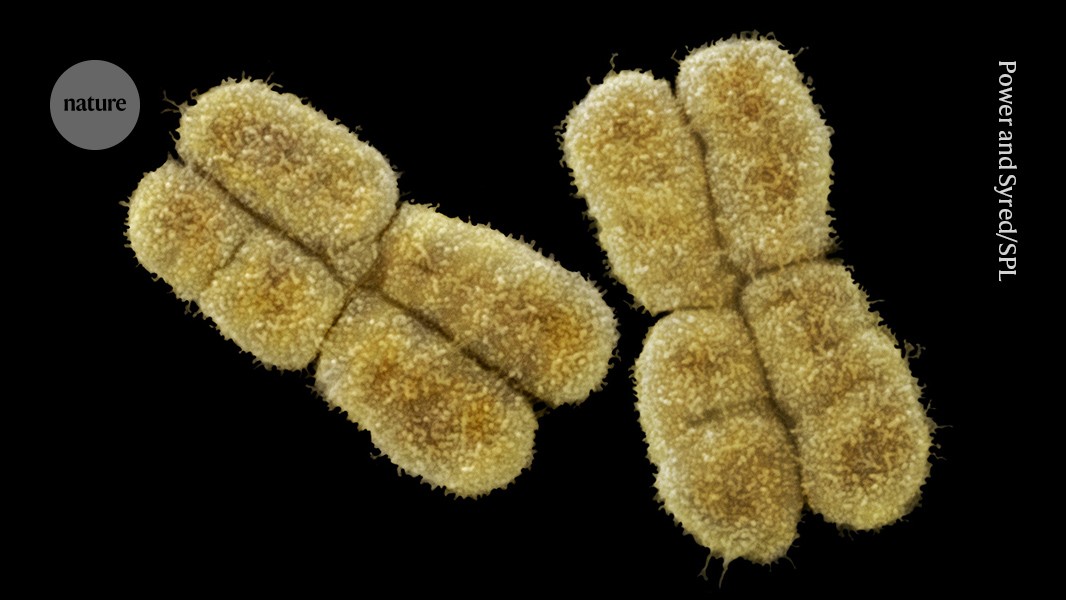
Researchers at Max Planck Institute for Multidisciplinary Sciences have engineered an artificial protein system called TALhesin that can stabilize chromosomes in aging mouse eggs. The work addresses a fertility problem tied to age: as women get older, protein structures called cohesins that hold chromosomes together naturally decline, causing chromosomes to separate prematurely during cell division. This premature separation produces eggs with too many or too few chromosomes, a condition called aneuploidy that leads to infertility, failed IVF treatments, and early pregnancy loss, particularly in women over 35.
Melina Schuh, a biochemist leading the research, and her team designed TALhesin to replace cohesin's function. They injected messenger RNA encoding the engineered proteins into immature mouse eggs, allowing the cells to produce the proteins themselves. The artificial system attached to chromosome regions where natural cohesin is normally lost. The researchers added a "molecular scissor" mechanism to turn off the artificial cohesion at the right time during cell division, allowing chromatids to separate properly.
In 17-month-old mice, the proportion of eggs without premature chromosome-separation errors increased from 46.7 percent to 74.1 percent after TALhesin treatment, matching levels seen in young mice. The team also tested the system in donated human eggs, confirming that TALhesin proteins accumulated in the correct regions and that chromosomes with high levels of engineered proteins had smaller distances between chromatids, demonstrating the system holds chromosomes together.
Bettina Mihalas, a reproductive biologist at the University of New South Wales in Sydney, called it "a very creative, well-engineered and well-thought-out approach" and noted it represents the first attempt to replace cohesin's function with an engineered system.
The findings appeared in Science on November 26.