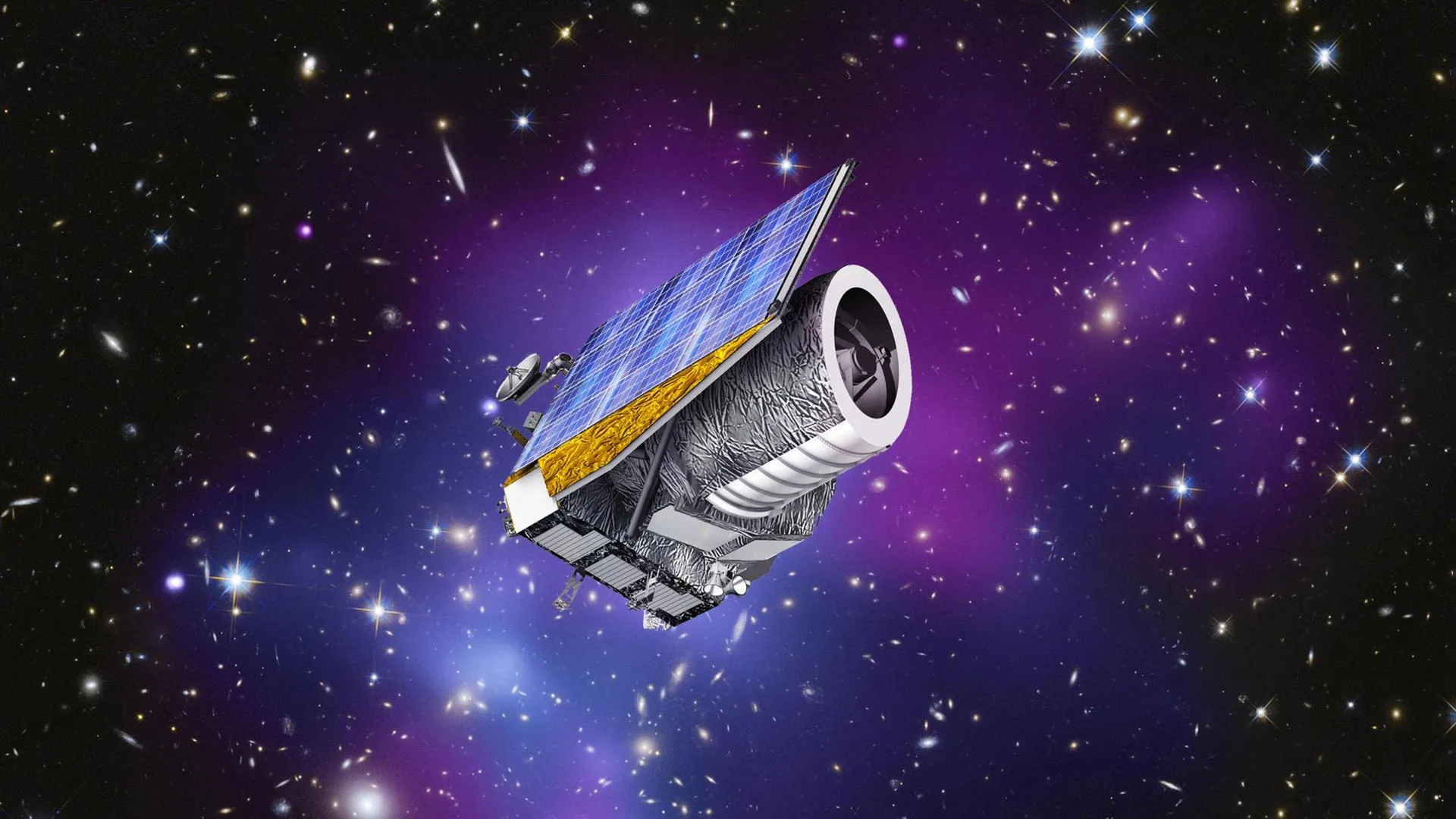
The European Space Agency's Euclid space telescope discovered a previously unknown comet while searching the distant universe for dark matter and dark energy. Images captured between September 16 and 24, 2026, revealed the comet, designated C/2026 S1 (Euclid), marking the first new comet found by the mission.
Mikko Pöntinen, a PhD student at the University of Helsinki, made the discovery using specialized software he developed to detect small solar system objects in Euclid's images. Pöntinen works with the Solar System Objects Science Working Group of the Euclid Consortium. He identified the comet by spotting a streak across multiple images, then confirmed it appeared in five separate image sets across 16 total exposures. Inspection revealed a fuzzy cloud around the object, indicating active outgassing typical of a comet.
The object sits approximately 1.3 billion kilometers from Earth, roughly the distance between the Sun and a point between Jupiter and Saturn's orbits. Unlike most solar system objects, it travels well outside the plane where planets orbit, positioned almost directly above the Sun on a path that takes thousands of years to complete.
Pöntinen submitted his observations to the International Astronomical Union's Minor Planet Center, which officially confirmed the discovery on October 8. Earth-based telescopes conducted additional observations to verify the find.
The discovery is unexpected given Euclid's design. The telescope intentionally avoids the flat plane where most asteroids and comets concentrate, since dust in that region interferes with observations of distant galaxies. Euclid also uses a "step-and-stare" strategy, imaging each sky section only once, making it difficult to track fast-moving objects.
"Very few comets are expected to be discovered by Euclid so it was a happy coincidence that the combination of the comet's orbit and Euclid's scanning over those days captured the object in multiple images," Bruno Altieri, Euclid Archive Scientist, said in a statement.
The discovery demonstrates coordination between Euclid and ESA's upcoming Comet Interceptor mission. Though this comet is not suitable for interception, the detection process provides a test case for future collaboration between the two missions.