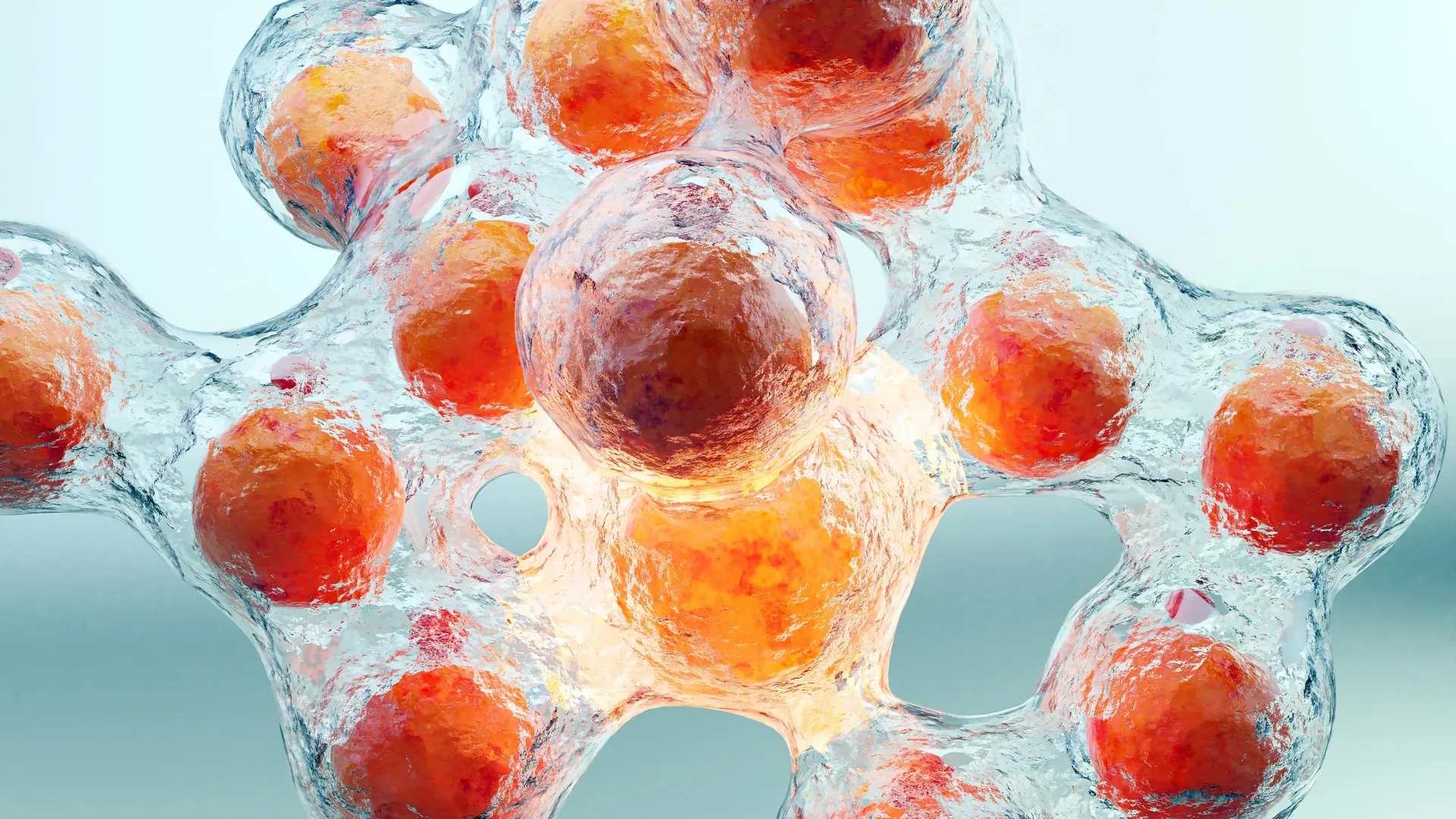
Scientists at the University of California, Riverside discovered that immune cells in body fat respond differently to obesity depending on biological sex. The finding centers on eosinophils, immune cells involved in allergies and asthma that behave distinctly in males and females.
Meera Nair and Adam Godzik led the study, published in PNAS Nexus. Using single-cell sequencing, the researchers identified six distinct eosinophil populations in adipose tissue, each with different gene activity patterns and potentially different functions.
Female mice possessed a protective population of eosinophils that communicated more effectively with macrophages, another immune cell type in fat tissue. This cooperation may create a healthier environment within fat tissue and support better metabolic function. Male mice showed a different pattern. When given a high-fat diet, they were more likely to develop eosinophil populations associated with inflammation, with gene activity suggesting weaker protective functions.
The researchers also identified a protein called RELM alpha that appears important in maintaining beneficial relationships between eosinophils and macrophages. Produced by macrophages, RELM alpha seemed to help stabilize communication between the two immune cell types in female mice.
Nair cautioned that the experiments were conducted in mice and that additional research is necessary before the discovery can lead to treatments. "A drug may not activate the same pathways or produce the same effects in males and females, particularly when it targets the immune system," said Xinru Qiu, a postdoctoral researcher in Godzik's lab.
The research team is now developing three-dimensional adipose organoids to investigate whether the protective behavior observed in mouse eosinophils occurs in human laboratory models. The goal is to determine whether changing communication between immune cells could encourage healthier responses in human fat tissue.