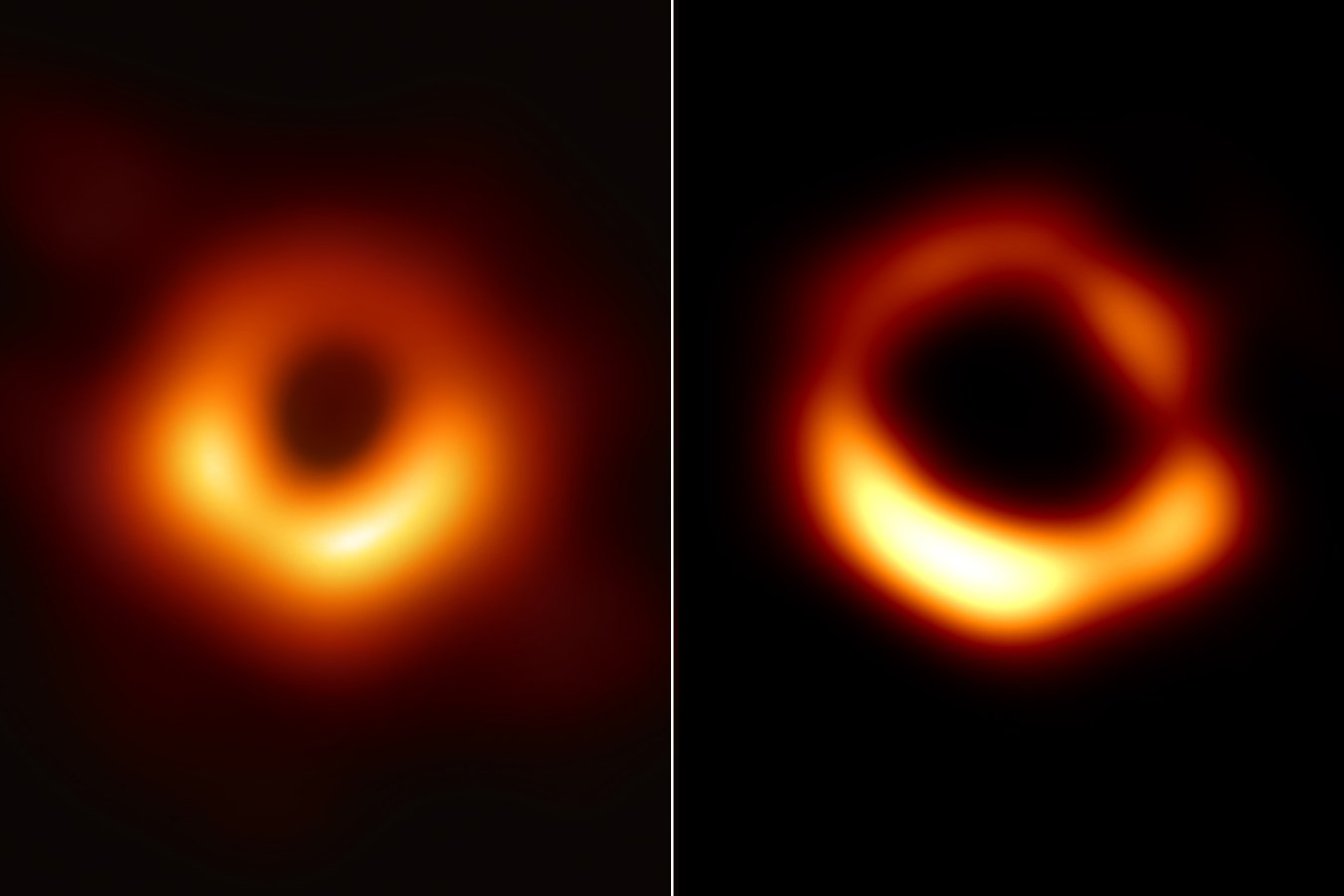
Nithyanandan Thyagarajan at CSIRO in Australia and colleagues reanalysed data from the Event Horizon Telescope's 2019 image of black hole M87* using an entirely new method. Instead of the standard approach of analysing pairs of telescopes before combining them, they grouped telescopes into triplets. This preserved information about the object's shape while cancelling out atmospheric and instrumental errors, according to Thyagarajan.
The team also used a machine learning algorithm trained on non-black-hole images to minimise bias from their own expectations. Their new image matched the original nearly identically, showing the characteristic ring structure predicted by general relativity.
The original 2019 EHT image sparked scepticism in following years as other teams reanalysed the data. One 2022 analysis found no ring at all. The EHT's structure, made up of a network of telescopes worldwide acting as one Earth-sized radio dish, leaves large gaps in measurements that imaging algorithms must fill in. The raw data is more subject to interpretation than most astronomical observations because the EHT observes at very short radio wavelengths where atmospheric distortion affects the signal.
Thyagarajan said the ring structure results from a key property of general relativity: the way light bends near an extremely massive object. The new independent analysis confirms that the EHT's finding of the ring shape is robust, supporting the accuracy of general relativity in describing spacetime around a black hole.