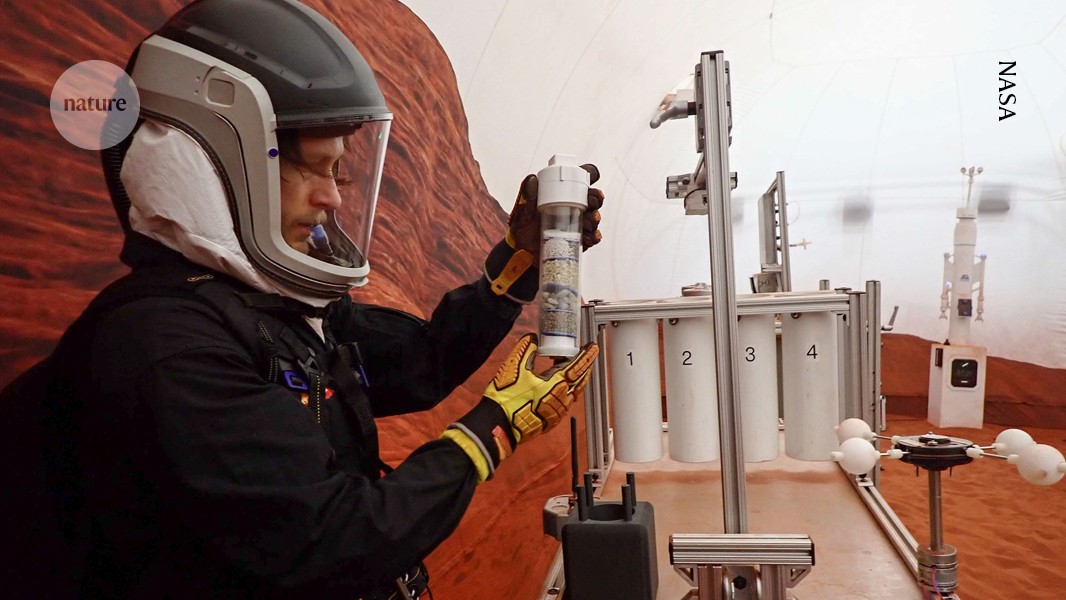
On October 31, four engineers emerged from NASA's 158-square-metre, 3D-printed habitat at Johnson Space Center in Houston, Texas, after spending just over a year living as if they were on Mars. This wasn't a stunt or a publicity exercise—it was the second in a series of extended NASA simulations designed to test how long-duration space missions affect astronauts' health and performance. What they experienced during those months offers crucial insights into whether humans are truly ready for the actual journey to the red planet.
The habitat itself represents significant progress in mission planning. The 3D-printed structure provided the crew with a controlled environment where they could conduct legitimate scientific work while NASA monitored their psychological and physiological responses. During their confinement, the four crew members grew their own crops, conducted science experiments, and performed 'Marswalks' on a model of the planet's surface outside their habitat. These weren't idle activities—they simulated the actual work that astronauts would need to accomplish during a real Mars mission.
What makes this simulation particularly valuable is its duration. A journey to Mars and back, plus time spent on the surface, would require astronauts to remain in isolated, confined conditions for extended periods—potentially years. One year may not sound like an eternity in the context of space exploration, but it's long enough to reveal patterns in crew dynamics, psychological strain, and the physical effects of isolation that shorter missions cannot capture. NASA needs this data to understand whether our current knowledge of astronaut selection and training is sufficient.
The second iteration of this simulation series is especially important because it allows NASA to refine its approach based on what was learned from the first mission. Each cycle of testing should build on previous findings, creating a more comprehensive picture of human performance in deep-space conditions. This iterative approach suggests that NASA is treating these simulations as serious developmental tools rather than one-off experiments.
However, simulation, no matter how sophisticated, has limits. A 3D-printed habitat at Johnson Space Center, while valuable, still offers escape routes and psychological anchors that a real Mars mission would not. The crew knew they could exit if a true emergency arose. Real Mars astronauts would not have that option. The gap between simulation and reality remains significant, and NASA must ensure that the lessons learned here translate meaningfully to actual deep-space exploration.
The emergence of these four engineers from their year-long isolation should prompt serious questions about what comes next. Have we learned enough to proceed toward human Mars missions, or do we need additional simulations? More importantly, are we prepared to answer the toughest question: what are we willing to ask of astronauts in terms of risk, isolation, and sacrifice? These simulations are invaluable, but they are only the beginning of a much longer conversation about humanity's future in space.