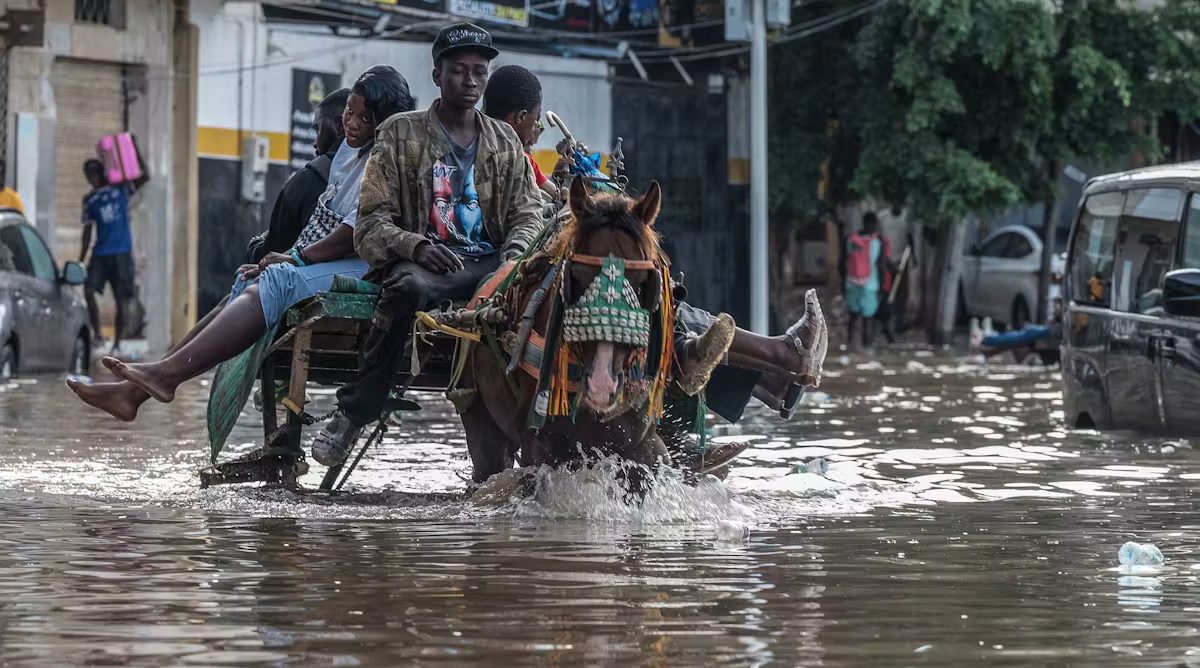
West African countries preparing for climate talks at COP31 in Türkiye face a challenge in measuring climate damage that extends beyond broken roads and failed crops. Researchers examined ten years of climate policies and disaster-management frameworks from Burkina Faso, Ghana, Nigeria, Senegal and Sierra Leone to understand how these nations account for what communities lose when climate disasters strike.
Olasunkanmi Habeeb Okunola and Susan S. Ekoh, researchers at the United Nations University Institute for Environment and Human Security and the German Institute of Development and Sustainability, found that the five countries recognize costs to infrastructure and livelihoods. But significant gaps exist.
The policies rarely address losses to culture, mental health and community bonds. A coastal community forced to relocate due to erosion may receive new housing, yet lose access to fishing grounds, family networks, burial sites and historical places. Schools rebuilt after disasters do not recover months of lost learning or undo effects on children's opportunities. Grief, anxiety and emotional consequences of displacement receive far less attention than physical damage.
The five countries address loss and damage differently, creating confusion about which agencies should assess climate impacts and coordinate support. Because official assessments shape government priorities and recovery budgets, losses that go unrecorded are less likely to influence decisions or secure international assistance.
The researchers recommend that governments combine cost assessments with input from affected communities. Local authorities, women's organizations, traditional leaders, young people, people with disabilities and civil society groups can identify overlooked losses. Existing climate and disaster management agencies could adopt one common way of recording these losses instead of creating new institutions.
This approach would strengthen access to international support through the Fund for Responding to Loss and Damage and the Santiago Network, which help vulnerable developing countries obtain technical assistance for climate-related losses. Evidence that includes impacts on health, education, culture and community life would help international assistance match people's actual experiences.