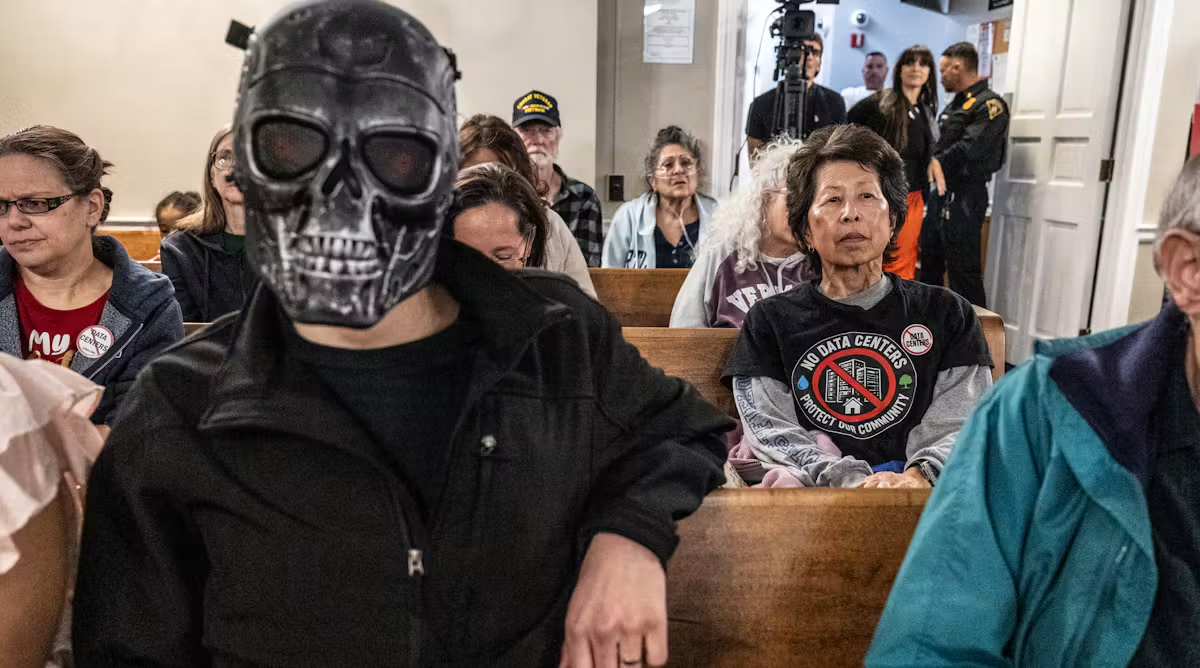
US voters delivered a sharp rebuke to data centre expansion in this week's midterms, with Americans in ten states overwhelmingly voting for candidates seeking local restrictions on the facilities. Exit polls found that 56% of voters said AI data centres were a crucial or major factor in their vote.
The backlash reflects a growing gap between the Trump administration's push to expand data centre development as a pillar of American technological leadership and mounting local opposition. In July 2025, President Trump signed an executive order to accelerate data centre development. Yet Pew Research documented hardening American sentiment against data centres between January and August 2025, with most Americans believing the facilities do more harm than good due to energy costs, environmental pressures, and noise.
Communities near US data centres have experienced wholesale electricity price increases of up to 267% over the past five years, straining household budgets during an affordability crisis. In the 2026 midterms, candidates from both parties who campaigned for stricter data centre oversight won races in Texas, Ohio, and Georgia, all major growth areas for the facilities. Democrat-led states including New Jersey, Michigan, Pennsylvania, and Oregon have already introduced local bans or are debating statewide restrictions. Following the Democratic sweep, US data centre stocks tumbled. States led by Democrats supporting restrictions account for roughly 45% of planned US capacity.
Australia faces similar tensions. In September, an A$1.2 billion data centre project in Sydney's north shore was scrapped due to community opposition. Melbourne residents have blocked construction of power lines for a West Footscray data centre project. Firmus, an Australian data centre operator, cancelled a planned stock market listing when overseas investor interest faded.
The Australian government is developing mandatory national standards for large data centres covering energy and water use, project siting, and community engagement. Requirements near homes and recreational facilities have been flagged. However, the stringency of these standards and how they interact with existing state and territory rules remain unclear.