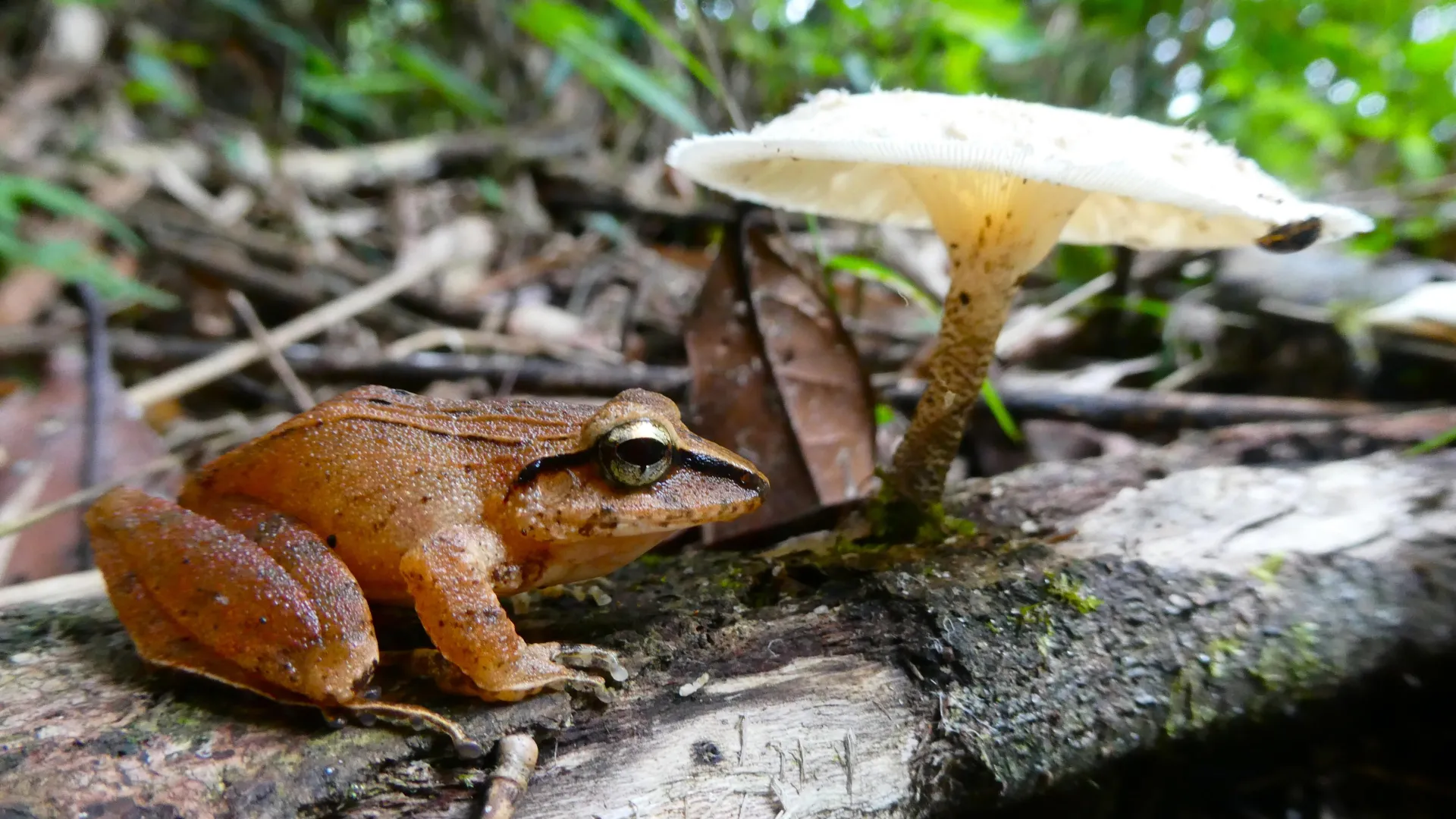
Scientists have identified chytridiomycosis, a fungal disease, as the likely cause of dramatic frog population declines in Brazil's Atlantic Forest between 1979 and 1982, solving a 50-year mystery.
Researchers at the Smithsonian's National Zoo and Conservation Biology Institute and Pennsylvania State University published their findings in Molecular Ecology. They analyzed more than 370 preserved amphibian specimens from 17 species collected by William Ronald Heyer in the 1970s and 1980s. None of the specimens collected before 1979 showed evidence of infection by the fungus Batrachochytrium dendrobatidis. Among specimens from the 1980s, however, more than half tested positive.
"After almost 50 years, we still aren't confident what caused many historical amphibian die-offs, making these declines some of the most enduring cold cases in wildlife epidemiology," said Jack Boyette, an NZCBI graduate fellow and doctoral candidate at Pennsylvania State University who led the research.
The researchers found an unexpected pattern. Species that suffered the most severe declines showed no detectable chytrid infection in preserved specimens, while stable species frequently carried the fungus. The team believes vulnerable species may have died so quickly after infection that few infected individuals were ever collected, whereas some frogs naturally tolerated the disease.
The fungus originated in Asia and spread globally during the 1970s and 1980s, though scientists did not formally identify it until 1999, decades after amphibian populations began collapsing.
Recent surveys at the site between 2022 and 2024 found 12 of the 17 historical species, suggesting recovery. Chytrid infections persist in local frogs, but Michael Campana, a genomicist at NZCBI, noted that modern testing methods allowed researchers to detect pathogens decades after outbreaks occurred by examining museum collections.