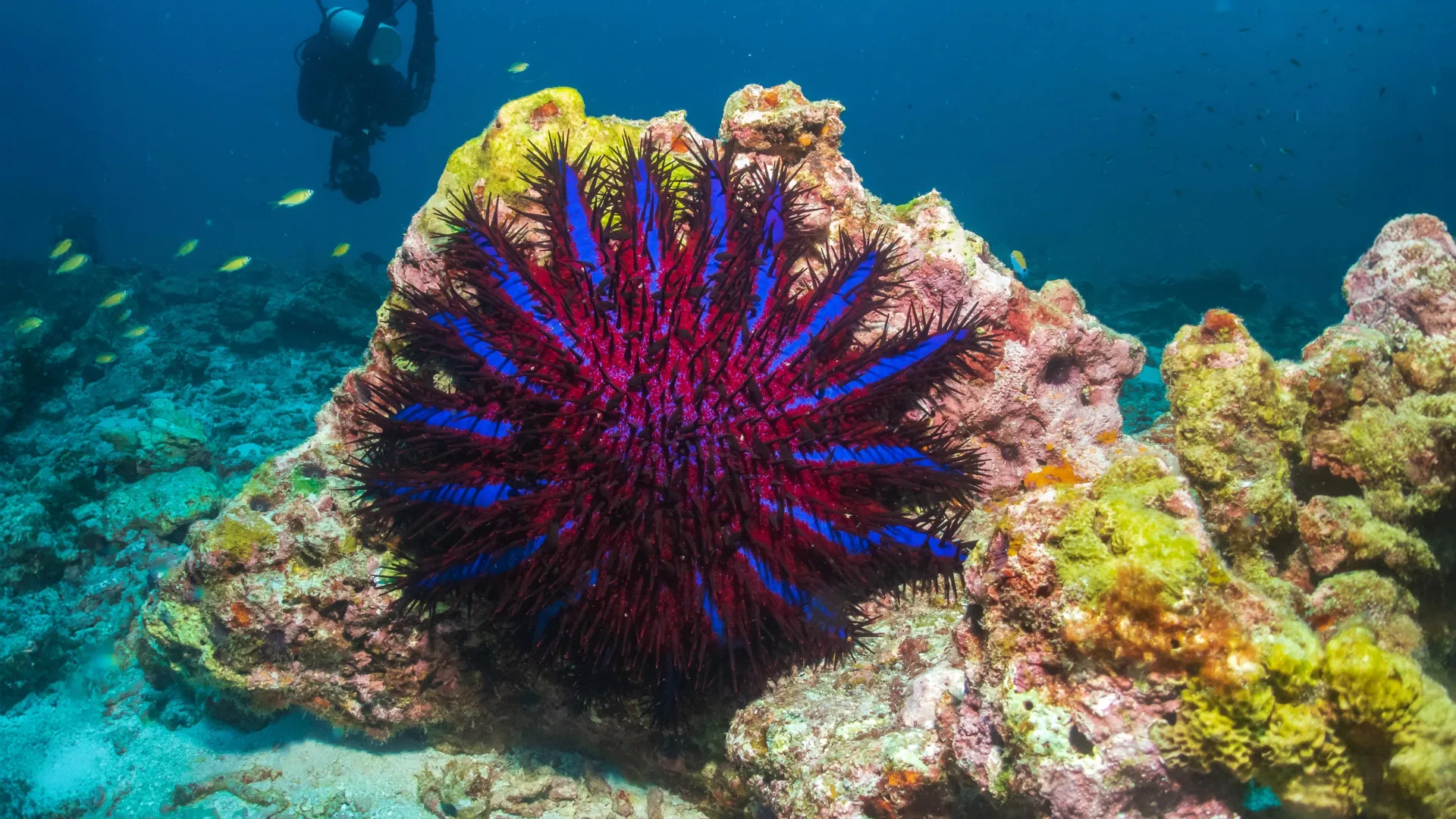
Researchers at the University of Sydney found that crown-of-thorns starfish, famous for devastating coral reefs, may help maintain reef health when their populations remain small. A study published in Ecology and Evolution examined feeding scars and surviving tissue at One Tree Island Research Station on the Great Barrier Reef.
Led by Dr. Shawna Foo, the team discovered that living coral tissue survived nearly 75 percent of observed feeding events. "At One Tree Reef, COTS appear to consume a relatively consistent amount of coral during each meal and move on, rather than demolishing the entire coral colony," Dr. Foo said. "This meant live coral tissue remnants were frequently left behind."
The study focused on protected reef areas where healthy fish populations keep starfish numbers under control, unlike other sections experiencing destructive outbreaks.
When starfish feed on fast-growing Acropora corals, they create space for slower-growing species like Montipora and Porites to survive. "By feeding on fast-growing corals such as Acropora, low-density COTS populations create space for slower-growing coral species to persist, helping to increase coral diversity," Dr. Foo said.
The findings align with the intermediate disturbance hypothesis, an ecological principle stating that ecosystems benefit from occasional, moderate disturbances preventing any single species from dominating. Co-author Professor Maria Byrne noted the results are "consistent with the intermediate disturbance hypothesis, an important framework in ecology and conservation."
Researchers caution that large starfish outbreaks remain a serious threat to reefs. The key distinction lies in whether populations stay at natural levels or explode into destructive events. Once outbreaks are suppressed, scientists suggest complete elimination of starfish may not be the best approach. Instead, culling should be "complemented by strong marine management to protect COTS predators and keep COTS populations in check."