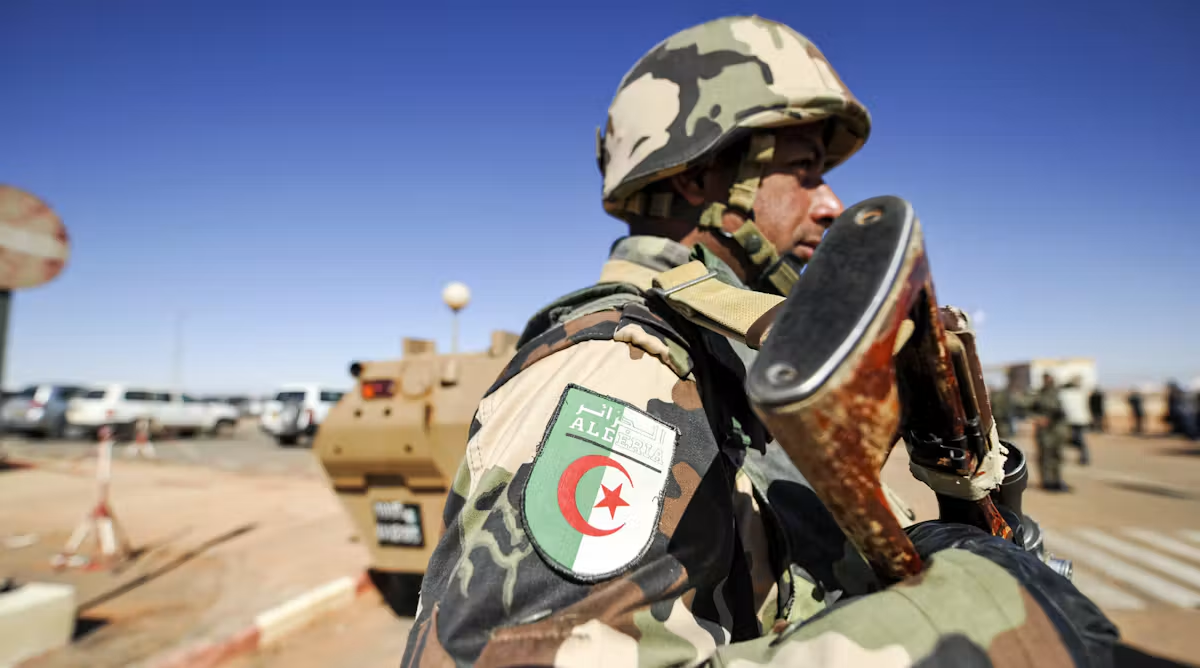
Algeria announced in October 2026 that it would deploy army units to Niger, marking its first military deployment outside its borders since the 1973 Arab-Israeli war. On October 25, both chambers of Algeria's parliament approved the move. President Abdelmadjid Tebboune authorized the mission the following day, stating it would protect the two countries' shared energy and economic interests. The nations share a 951-kilometer border and had signed a military cooperation protocol days before the deployment decision.
The deployment targets protection of Algeria's economic activities in Niger. Sonatrach, Algeria's national oil and gas company, is exploring the Kafra oil block in the Agadez region near the Algerian border. Niger is also key to the planned trans-Saharan gas pipeline project, which would transport natural gas from Nigeria through Niger to Algeria and onward to European markets. The Niger section would run through the north, a region affected by armed groups and illicit trafficking.
Lotfi Sour, who has studied Algeria's diplomacy and regional relations, notes the decision signals a shift in Algeria's approach to the Sahel. Algeria seeks to exert greater influence over regional security without becoming directly involved in the region's conflicts. However, protecting infrastructure requires securing surrounding areas, creating a challenge: the broader the area requiring protection, the greater the risk the military mission extends beyond its original scope.
Algeria must distinguish between three objectives, according to Sour: protecting energy facilities, ensuring economic activities continue without disruption, and shaping the broader regional security environment in the Sahel. The first requires a clearly defined mandate; the second calls for broader coordination; the third carries significantly higher costs and risks.
Details of the deployment remain unclear. The number of troops, mission duration, military mandate, deployment location and rules of engagement have not been made public. Coups in Mali, Burkina Faso and Niger have reshaped the Sahel's security arrangements. France withdrew troops in 2022 and the UN mission in Mali ended in 2023. The region faces armed groups, governance challenges and state rivalries. External powers including Russia, China and the US are expanding their influence.