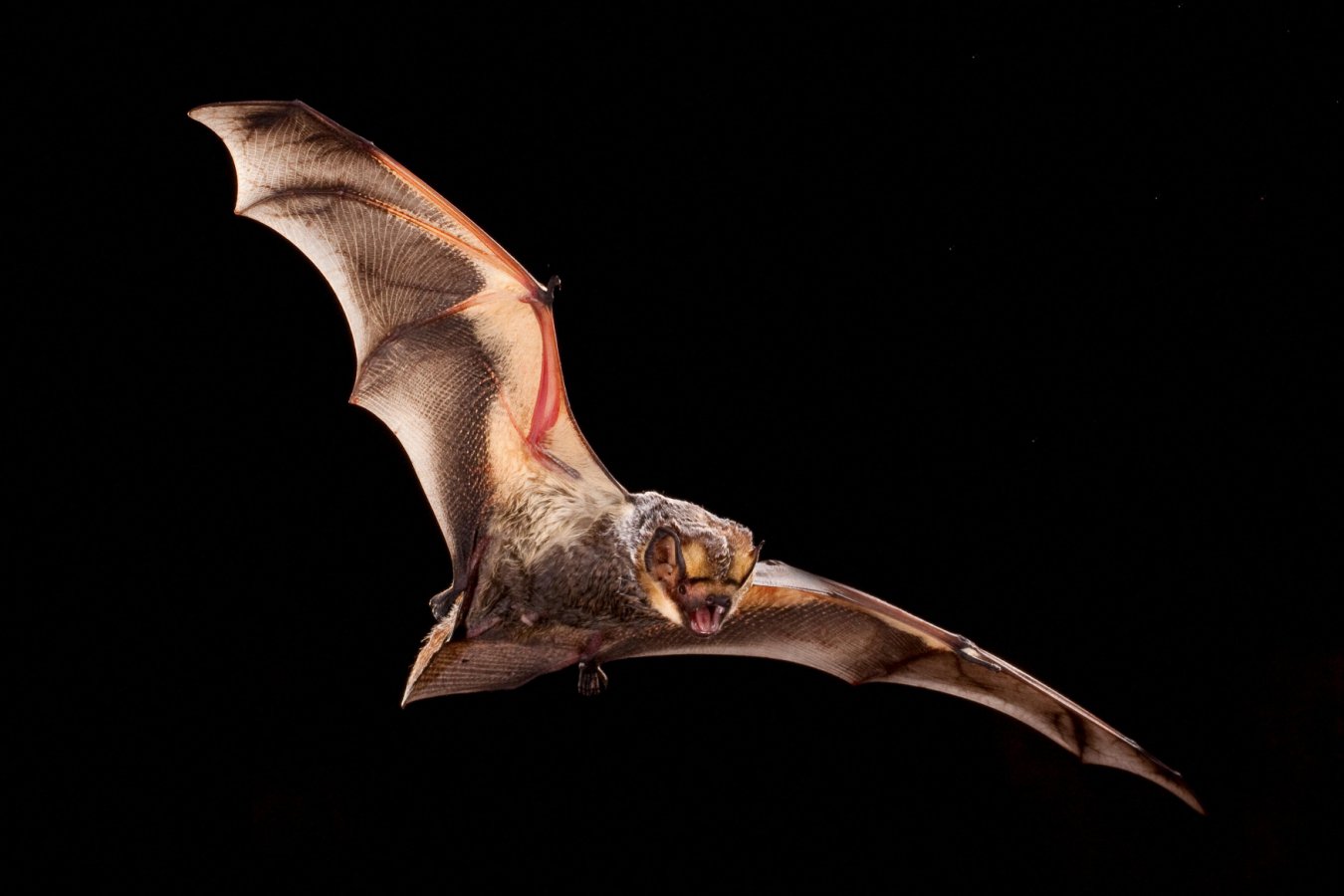
# Wind Turbines Kill 19 Million Bats Over Four Decades in the U.S.
Wind turbines killed approximately 19 million bats across the United States between 1981 and 2024, a new analysis reveals. The study quantifies a mounting environmental cost of renewable energy infrastructure while identifying feasible solutions to reduce the toll on bat populations.
Researchers developed models to estimate cumulative bat mortality from wind farms during this 43-year period. The number reflects both the expansion of wind energy capacity and the deadly interaction between rotating blades and airborne mammals. Most fatalities occur during fall migration, when bats travel through regions where turbines operate at night.
The leading cause of death is barotrauma, a pressure-related injury. As bats fly near moving blades, the rapid pressure changes rupture their lungs and air sacs. Direct blade strikes account for the remainder of deaths. Species most affected include eastern red bats, hoary bats, and little brown bats, all of which migrate long distances during seasonal transitions.
This collision toll poses conservation challenges. Bat populations regulate insect populations naturally. A single bat consumes hundreds of insects per night, providing ecosystem services worth millions to agriculture annually. Larger ecosystem impacts from bat declines remain poorly understood.
Researchers identified multiple mitigation strategies that reduce bat mortality without compromising wind energy production. Operational adjustments prove effective. Increasing cut-in wind speeds, the threshold at which turbines activate, from 4 meters per second to 5 or 6 meters per second can lower deaths by 50 to 80 percent. Bats forage less actively during lower wind speeds, reducing encounters with operating turbines.
Acoustic deterrents show promise as well. Ultrasonic sounds and recorded bat echolocation calls repel some species from turbine areas. Radar monitoring systems identify bat movements in real time, allowing operators to halt turbine operations during migration peaks and high-activity periods.
Habitat management near facilities offers another approach. Removing vegetation attractants around turbine bases reduces insect abundance, which draws fewer foraging bats to these zones. Strategic placement of future turbines away from migration corridors and critical habitat remains critical for new installations.
The wind industry has begun adopting these measures. Some operators implement seasonal shutdown protocols during peak bat migration. Research into additional deterrent technologies continues. The American Wind Energy Association and environmental groups now collaborate on best practice guidelines.
Balancing renewable energy expansion with wildlife protection remains complex. Wind power generates approximately 10 percent of U.S. electricity and offsets carbon emissions that drive climate change. Yet this climate benefit comes with local ecological costs that warrant management.
Economic incentives could accelerate adoption of mitigation measures. Some states offer tax credits for operators implementing bat-protective modifications. Federal funding for research on new deterrent technologies remains limited despite the scale of the problem.
The 19 million figure likely represents a conservative estimate. Carcass detection rates at turbine sites miss many deaths, and monitoring coverage remains incomplete across the country. Future deployments of offshore wind and distributed turbine networks will expand the population of affected bats.