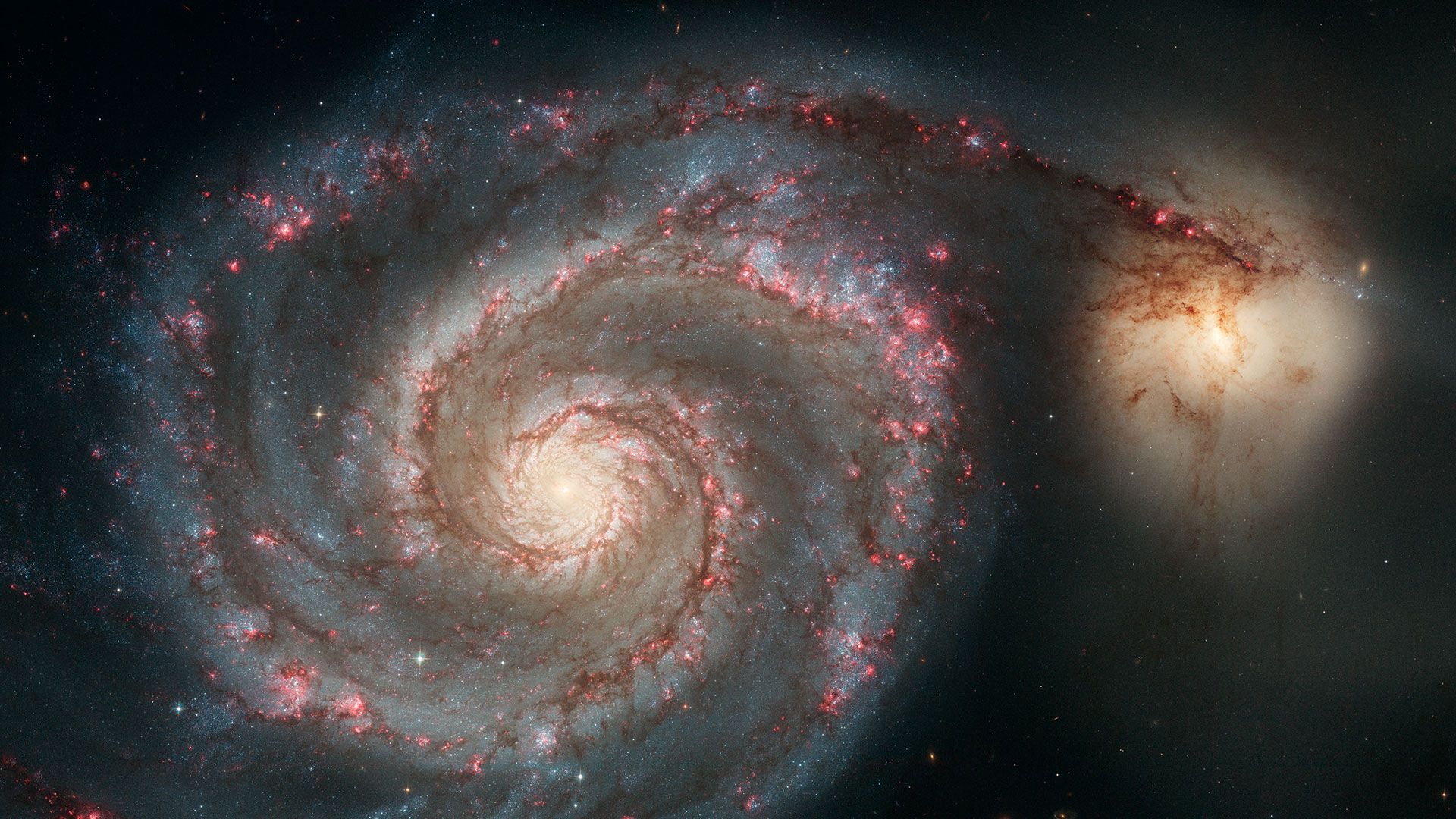
On October 13, 1773, French astronomer Charles Messier discovered the Whirlpool Galaxy, cataloged as Messier 51 or M51. Messier identified the object during his astronomical observations, though he did not recognize it as a galaxy at the time. The discovery occurred centuries before astronomers understood the true nature of such distant objects.
Messier compiled an extensive catalog of nebulous objects visible through telescopes of his era. He created this catalog partly to avoid confusing these fuzzy, cloud-like objects with comets during his comet-hunting work. The Whirlpool Galaxy earned its distinctive name from its spiral structure, which resembles a whirling pattern when viewed through optical instruments.
The object remained classified simply as a nebula for over a century after Messier's discovery. Astronomers in the 18th and 19th centuries lacked the tools to determine whether nebulae were nearby clouds of gas within the Milky Way or distant island universes far beyond it. This fundamental question about the structure of the universe persisted until the early 20th century.
The Whirlpool Galaxy's location in the constellation Canes Venatici made it relatively accessible to observers with modest telescopes. Its prominent spiral arms and bright core rendered it a notable object of interest to subsequent generations of astronomers who studied the night sky.
Messier's catalog, containing over 100 objects, became a standard reference for professional and amateur astronomers. His systematic documentation of nebulae and star clusters laid important groundwork for future astronomical research and classification systems that would eventually establish these objects as galaxies separate from our own.