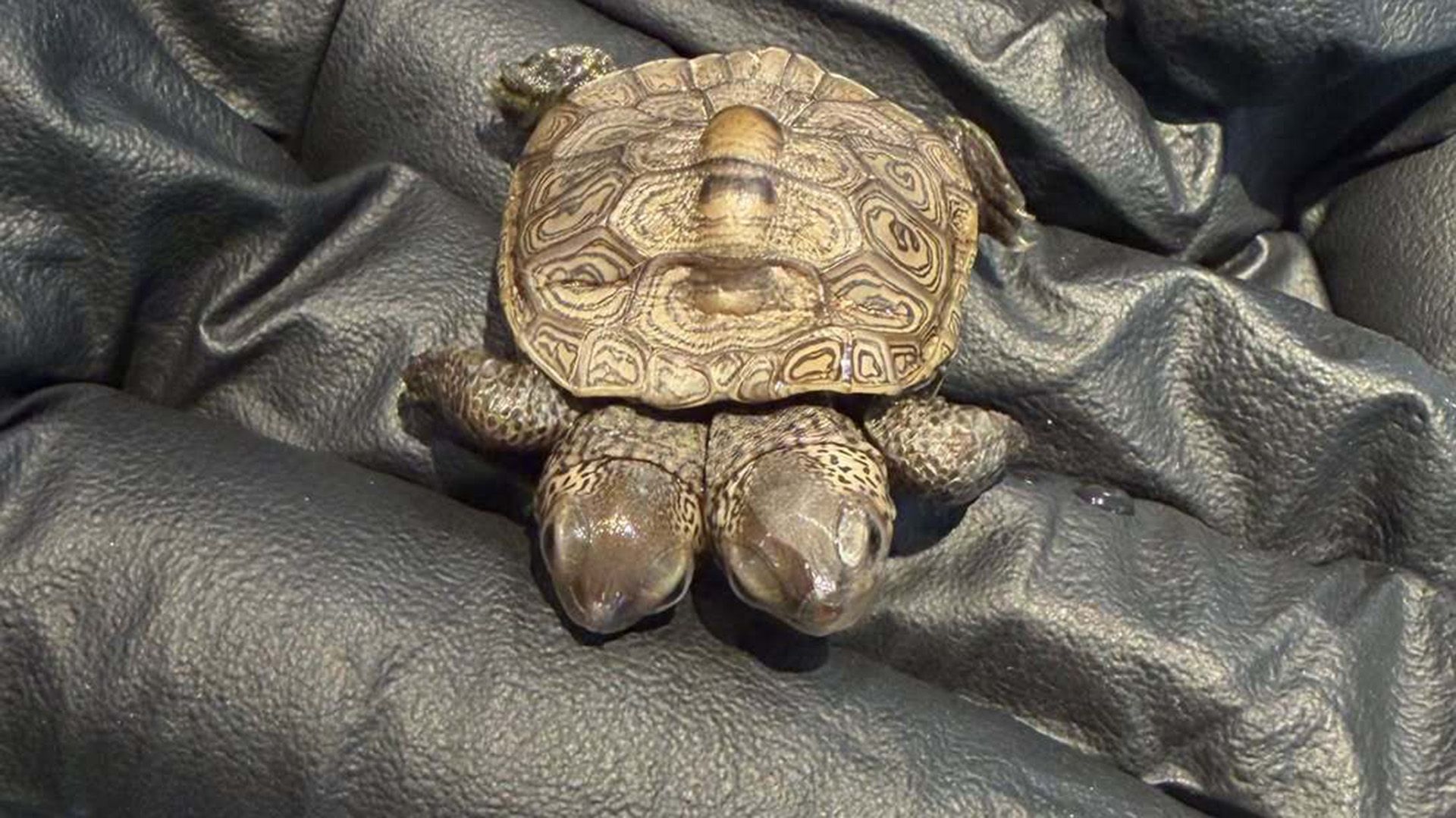
A two-headed turtle hatchling has been discovered on Cape Cod, marking the third bicephalic terrapin found in the region over the past five years, according to Live Science.
The hatchling represents a rare developmental anomaly. Bicephalic, or two-headed, animals result from incomplete embryonic division during development. In reptiles like turtles, this condition occurs when the embryo fails to fully separate into two distinct organisms.
The discovery adds to a small but notable cluster of similar cases in the Cape Cod area. Two other two-headed terrapins have been documented in the same location within the preceding five-year period, suggesting either a localized concentration of these rare occurrences or increased monitoring efforts in the region.
Two-headed animals face significant survival challenges. The condition typically creates complications with coordinated movement, feeding, and basic physiological functions. Each head may attempt to control the body independently, leading to conflicting motor commands. Turtles with this condition rarely survive to adulthood in the wild.
The rarity of bicephalic animals makes each discovery scientifically noteworthy. While conjoined twinning occurs across various species, documented cases remain uncommon. The repeated findings on Cape Cod warrant attention from researchers studying developmental biology and potential environmental factors that might influence embryonic development in local turtle populations.
Live Science did not specify which turtle species produced the hatchling or provide additional details about its current condition or prospects for survival.