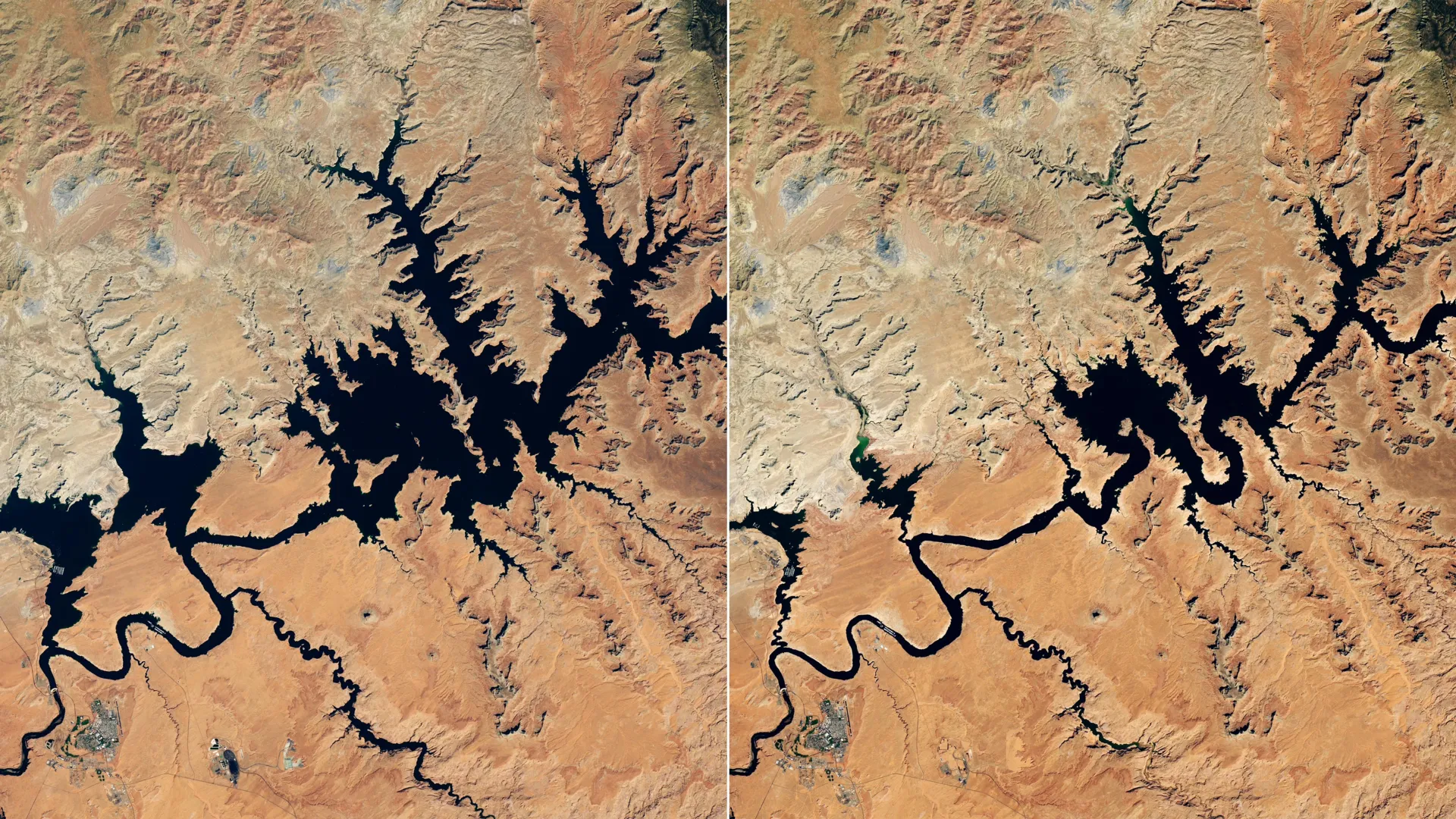
Lake Powell, one of America's largest reservoirs, has reached its lowest recorded level, marking an unprecedented crisis for the Colorado River system that sustains over 40 million people across the Southwest.
The dramatic decline stems from an exceptionally dry and warm winter that left the Colorado River Basin starved of mountain snowpack. Snow in the upper basin provides the critical water supply that feeds both Lake Powell and Lake Mead throughout the year. When winter precipitation falls short, the cascade of consequences ripples through the entire system. Lake Mead, the nation's largest reservoir by capacity, simultaneously hit record lows, compounding concerns about the region's water security.
The Colorado River supplies water for agricultural irrigation across California, Arizona, and Nevada, generates hydroelectric power at multiple dams, and provides drinking water to cities including Las Vegas, Phoenix, and Los Angeles. The twin crises at Powell and Mead threaten all these functions. Lake Powell alone generates approximately 5,000 megawatts of hydroelectric power capacity. As water levels drop, the reservoir loses ability to generate electricity and store water for dry periods.
Federal water managers have initiated emergency interventions to prevent catastrophic system failure. Officials authorized transfers from other reservoirs to bolster Lake Powell's levels. They also reduced water releases downstream, a step that protects the dam's operations but limits available water for agriculture and municipal use. These measures acknowledge the severity of the situation while buying time for longer-term solutions.
The record lows reflect a broader crisis in the American West. The Colorado River Basin has experienced more than two decades of drought, with recent years showing unprecedented severity. Climate change has intensified evaporation from reservoirs and reduced snowfall in mountain regions that feed the river. Higher temperatures mean more precipitation falls as rain rather than snow, and existing snow melts earlier in the season, reducing the sustained runoff that reservoirs depend on.
Water managers have implemented interim agreements rationing Colorado River water among the seven states sharing its resources. Arizona and Nevada have absorbed the deepest cuts. California has also agreed to reduce its allocation. These agreements prevent unilateral disputes but require ongoing cooperation among states with competing interests.
The situation poses long-term challenges that emergency measures cannot fully resolve. The Colorado River historically delivered about 16 million acre-feet of water annually. Current estimates suggest the basin now produces only 12 to 13 million acre-feet per year, a structural deficit that grows as climate change continues. Agricultural water demands remain substantial, particularly in the Imperial Valley and other farming regions. Urban populations in the Southwest continue growing, increasing domestic water needs.
Scientists and water managers increasingly recognize that the current system faces fundamental imbalance. Options under discussion include further reducing agricultural water allocations, investing in desalination plants, improving irrigation efficiency, and implementing demand management programs in cities. Each approach involves economic tradeoffs and regional conflicts.
The Powell and Mead record lows signal that the Colorado River system has entered a new era. Without substantial changes in water use patterns or climate conditions, the system will continue operating under stress, with periodic emergencies becoming routine.