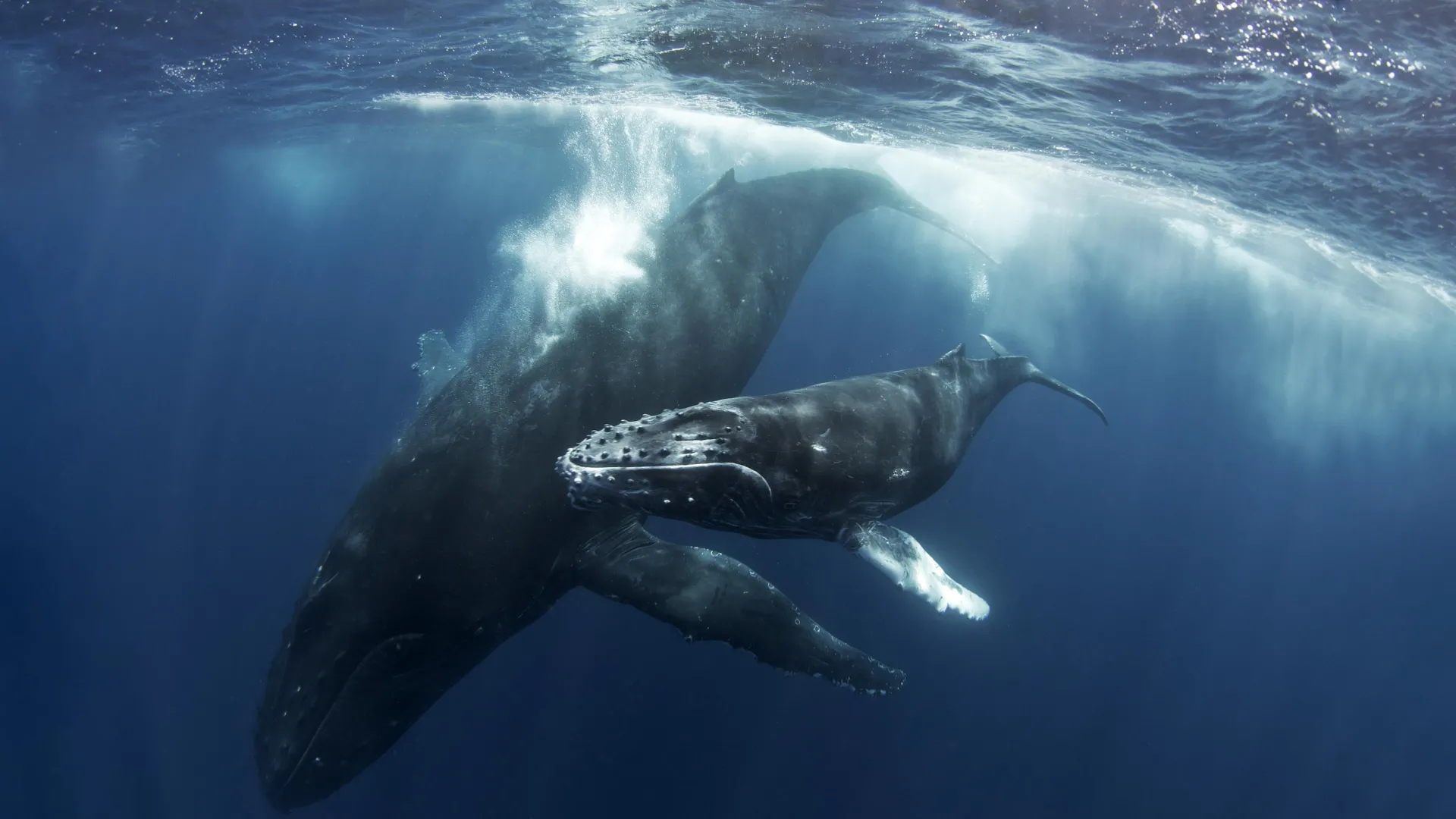
A humpback whale mother off Australia's Gold Coast spent hours and possibly days remaining beside her dead calf, maintaining close physical proximity and eye contact in what researchers interpret as possible mourning behavior. The observation, documented by marine scientists, offers unusual direct evidence of grief and maternal attachment in cetaceans.
The calf appeared stillborn or died shortly after birth. Throughout the extended observation period, the mother stayed near the body instead of abandoning it, a behavior departure from typical whale responses to deceased offspring. She positioned herself close to the calf and maintained visual contact, actions researchers categorize as consistent with caregiving and nurturing rather than indifference or predatory vigilance.
Marine biologists recognize this type of behavior holds weight because humpback whales typically face immense evolutionary pressure to move on quickly. A mother whale cannot nurse or protect a dead calf while simultaneously protecting herself and foraging for the enormous caloric intake required during migration. Prolonged attachment to a deceased offspring carries survival costs.
Yet the Gold Coast observation matches documented cases in other cetacean species. Orcas, dolphins, and sperm whales have all shown similar patterns where mothers carry dead calves for hours or days. In 2018, a Puget Sound orca named Tahlequah carried her stillborn calf for 17 days across hundreds of miles. That case generated global media attention and sparked serious scientific discussion about cetacean grief.
The humpback case differs in one respect. Scientists cannot definitively confirm the calf died before the observation began versus dying during the monitored period. This uncertainty means researchers must characterize the behavior as "possibly" demonstrating mourning rather than stating it conclusively. The distinction matters for scientific rigor. Behavioral interpretation based on limited observation windows requires cautious language, even when patterns seem clear.
Humpback whales migrate between Antarctic feeding grounds and tropical breeding areas annually, covering roughly 16,000 miles. The Gold Coast represents part of their Eastern Australian migration corridor. The extreme physical demands of this journey suggest any deviation from standard reproductive behavior reflects something beyond simple accident or coincidence.
Researchers studying this case emphasize that similar observations in dolphins and orcas suggest cetacean emotional complexity extends beyond what many assumed decades ago. The scientific community increasingly accepts that dolphins and whales possess self-awareness, emotional responses, and social bonds resembling those in humans and great apes. Grief represents a natural extension of these capabilities.
The limitations remain clear. Single observations cannot establish patterns. Different whale species behave differently. Observer bias influences interpretation of animal behavior across subjective categories like mourning. Scientists cannot access the whale's subjective experience directly.
Yet accumulating cases build a coherent picture. When multiple cetacean species show consistent behavioral responses to dead offspring across different research sites and time periods, the collective evidence suggests genuine emotional attachment rather than random behavioral variation.
Future research will likely involve systematic documentation of similar incidents, behavioral comparisons across cetacean species, and integration of vocal data that might reveal emotional states during these incidents. Understanding animal grief has implications for conservation efforts and for fundamental questions about consciousness and emotion in non-human animals.