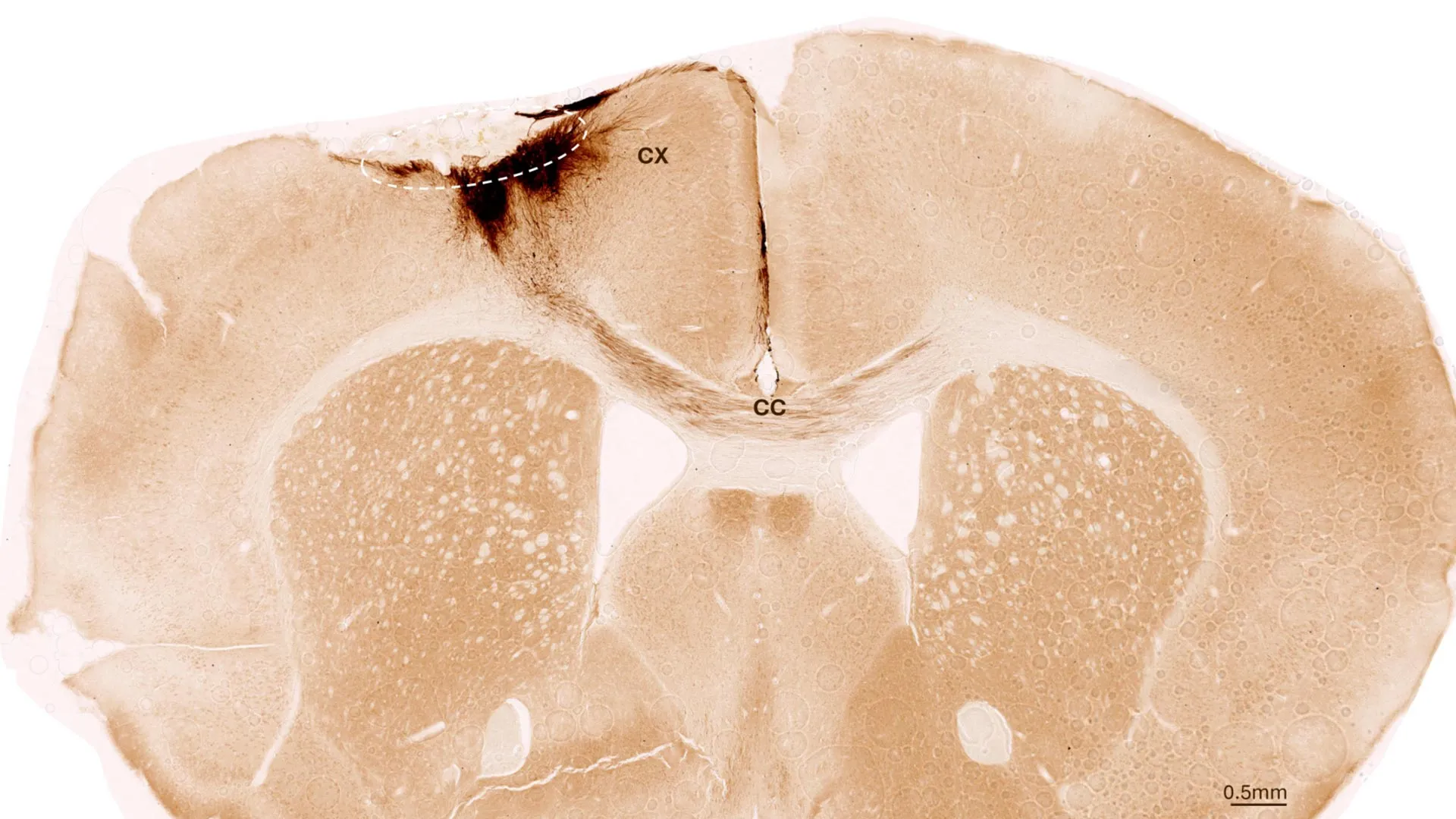
Researchers demonstrated that stem cell transplants successfully reverse motor deficits caused by stroke in mice, regenerating damaged brain tissue and restoring movement lost after cerebral injury. The findings, reported through ScienceDaily, suggest a potential therapeutic pathway for treating stroke patients in the future.
The study involved transplanting stem cells into the brains of mice that had suffered strokes. The transplanted cells differentiated into new neurons, replacing tissue destroyed by the stroke's ischemic damage. Beyond neuronal regeneration, the treatment produced broader benefits across multiple biological systems affected by stroke.
The stem cells promoted vascular recovery by improving blood vessel function in the damaged region. They also reduced inflammation, a key pathological feature of stroke that perpetuates secondary brain injury. Additionally, the transplants strengthened the blood-brain barrier, the specialized membrane that protects the brain from harmful substances while allowing beneficial molecules to cross.
Restoring motor function represents a major goal in stroke recovery research. Most stroke survivors experience lasting paralysis or weakness, particularly on one side of the body. Current rehabilitation approaches offer modest improvements, but no biological treatment reverses stroke-induced neuronal loss. This stem cell approach targets that fundamental limitation by replacing dead neurons rather than simply managing symptoms.
The mechanism underlying recovery appears multifactorial. New neurons integrate into existing neural circuits, reestablishing damaged pathways. Improved vascular function enhances oxygen and nutrient delivery to recovering tissue. Reduced inflammation decreases ongoing damage to surviving neurons adjacent to the stroke zone. These complementary effects create conditions favoring neural repair and functional recovery.
Stroke remains a leading cause of disability worldwide, affecting approximately 15 million people annually. Many survivors face years of disability despite intensive rehabilitation. While some spontaneous recovery occurs through neuroplasticity and collateral circulation, most gains plateau within months. A stem cell therapy offering biological repair could dramatically alter stroke outcomes.
The research builds on decades of investigation into neural stem cells and their regenerative capacity. Earlier work established that stem cells can differentiate into multiple brain cell types and survive long-term within the brain. This study advances the field by demonstrating functional recovery in an animal model closely resembling human stroke pathophysiology.
Translation to human trials faces obstacles. Establishing optimal stem cell sources, dosages, and transplantation timing remains uncertain. The immunological compatibility of transplanted cells requires careful management to prevent rejection. Determining which stroke patients would benefit most, and whether the approach works across different stroke types and severities, demands additional research.
The blood-brain barrier presents both challenge and opportunity. While this barrier protects the brain, it also blocks many therapeutic agents from reaching stroke-damaged tissue. Stem cell transplants may overcome this limitation through direct placement, though ensuring controlled integration and preventing unwanted proliferation demands rigorous preclinical validation.
Safety assessments will prove essential before human testing begins. Researchers must confirm that transplanted stem cells do not form tumors or become malignant. Long-term studies in animal models will establish safety margins and identify any delayed adverse effects.
Despite these hurdles, the results justify optimism. Restoring motor function in stroke-damaged brains represents a major therapeutic breakthrough. If stem cell transplantation proves effective in humans, it could substantially improve quality of life for millions of stroke survivors worldwide, potentially reducing long-term disability and healthcare costs associated with chronic stroke sequelae.