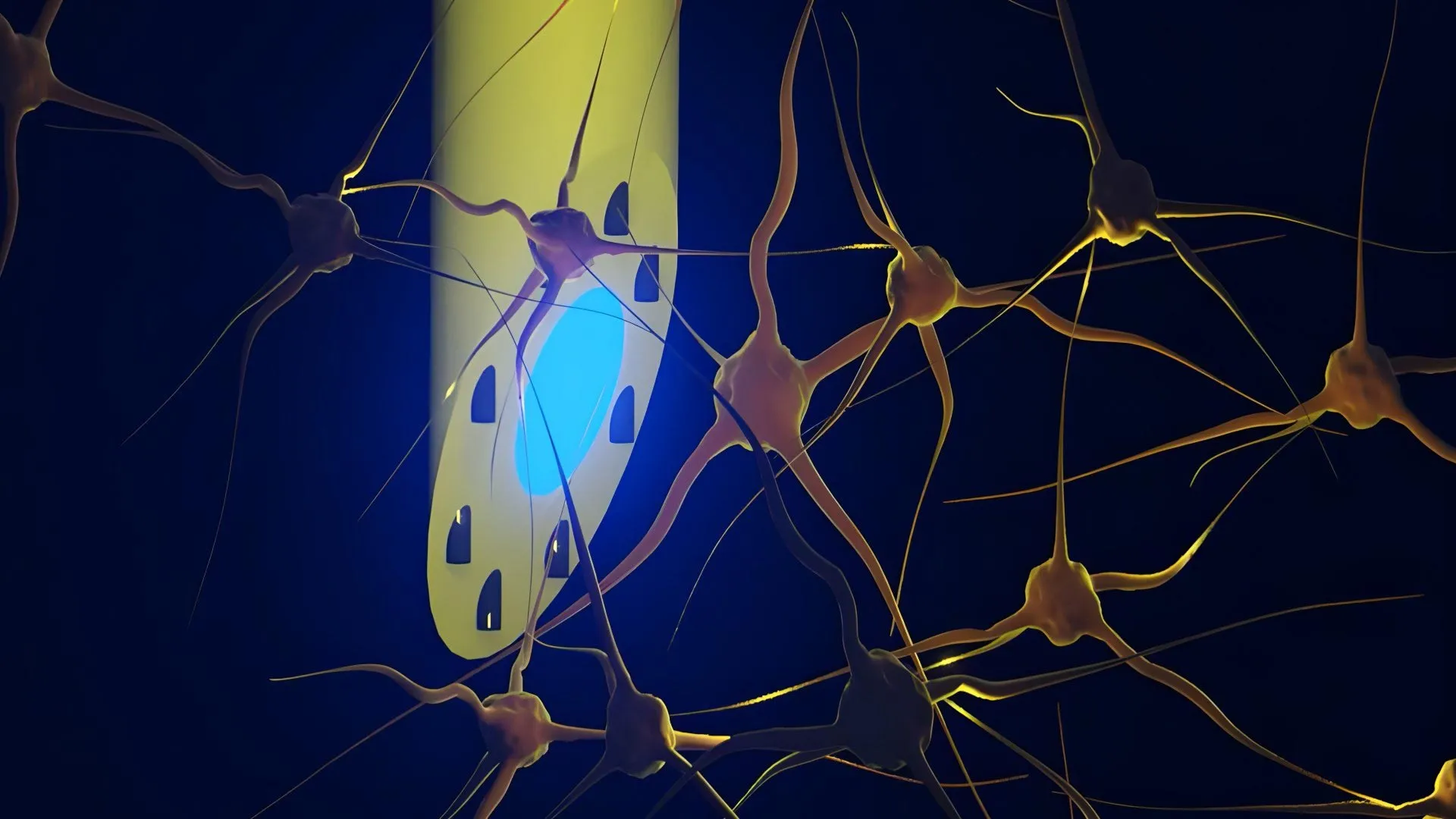
Researchers have developed a multifunctional brain implant thin enough to thread through neural tissue with minimal damage. The device, described by teams working on neural interfaces, combines three capabilities into a single flexible fiber: it records electrical signals from neurons, delivers pharmaceutical compounds directly to brain tissue, and stimulates targeted neural circuits.
The implant's needle-like geometry sets it apart from conventional brain interfaces. Most existing devices require either multiple separate implants or bulky housings that damage surrounding tissue. This unified approach uses a flexible fiber design that slides through the brain rather than displacing it, reducing inflammatory responses that typically degrade device performance over time.
Testing in mice demonstrated the implant's ability to perform all three functions simultaneously. Researchers recorded neural activity while delivering drugs and applying electrical stimulation to specific brain regions. The flexibility of the fiber proved critical. It moves with natural brain tissue shifts during animal movement and breathing, preventing the micromotion-induced scarring that degrades traditional rigid electrodes.
The technology addresses a longstanding challenge in neuroscience: current brain interfaces force researchers to choose between recording, stimulation, or drug delivery. Combining these capabilities in one implant opens new experimental possibilities. Neuroscientists can now observe how drug administration affects neural firing patterns in real time. They can correlate electrical stimulation responses with chemical changes in targeted brain regions.
Clinical applications extend beyond basic research. Epilepsy treatment represents an early target. Current approaches rely on broad-spectrum anti-seizure medications that produce significant side effects. A localized implant could deliver drugs precisely where seizures initiate while recording the neural signatures of seizure activity. This feedback loop enables adaptive treatments that respond to detected abnormal patterns rather than delivering fixed doses.
Other neurological conditions stand to benefit. Parkinson's disease patients receive deep brain stimulation therapy, but current devices cannot deliver medications or record from multiple sites simultaneously. Depression, addiction, and chronic pain management could similarly benefit from the multimodal approach.
The flexible fiber design also reduces surgical trauma. Traditional brain implants require larger burr holes and more extensive tissue disruption. The needle-thin approach minimizes bleeding risk and reduces recovery time. This matters clinically because smaller surgical footprints mean faster healing and fewer post-operative complications.
Durability remains under investigation. The researchers are testing whether the flexible fibers maintain function over months-long implantation periods. Encapsulation by glial cells typically limits electrode performance, but the device's biocompatible materials and minimal tissue displacement may extend functional lifespan.
The implant uses thin-film technology to integrate multiple channels within the flexible fiber. Materials scientists incorporated conductive polymers, microfluidic channels for drug delivery, and electrode sites for stimulation and recording into a structure measured in micrometers.
Scale-up to human testing likely remains several years away. Regulatory pathways for combination devices require extensive safety and efficacy data. However, the mouse experiments provide proof of principle. Next steps involve testing in larger animal models with longer implantation periods and more complex behavioral tasks.
This development exemplifies how miniaturization and materials science accelerate neurotechnology. By consolidating functions into a single, less invasive implant, researchers create tools that cause less biological disruption while capturing more neural information. The approach suggests future brain interfaces will do more while asking the brain to tolerate less.